Well disinfection after flooding: Somerset County guide
Floodwater does not need to leave visible mud inside a well to make the water unsafe. A submerged well can take in bacteria, sewage, fuel, agricultural chemicals, and other contaminants through the wellhead, casing, cap, or surrounding soil.
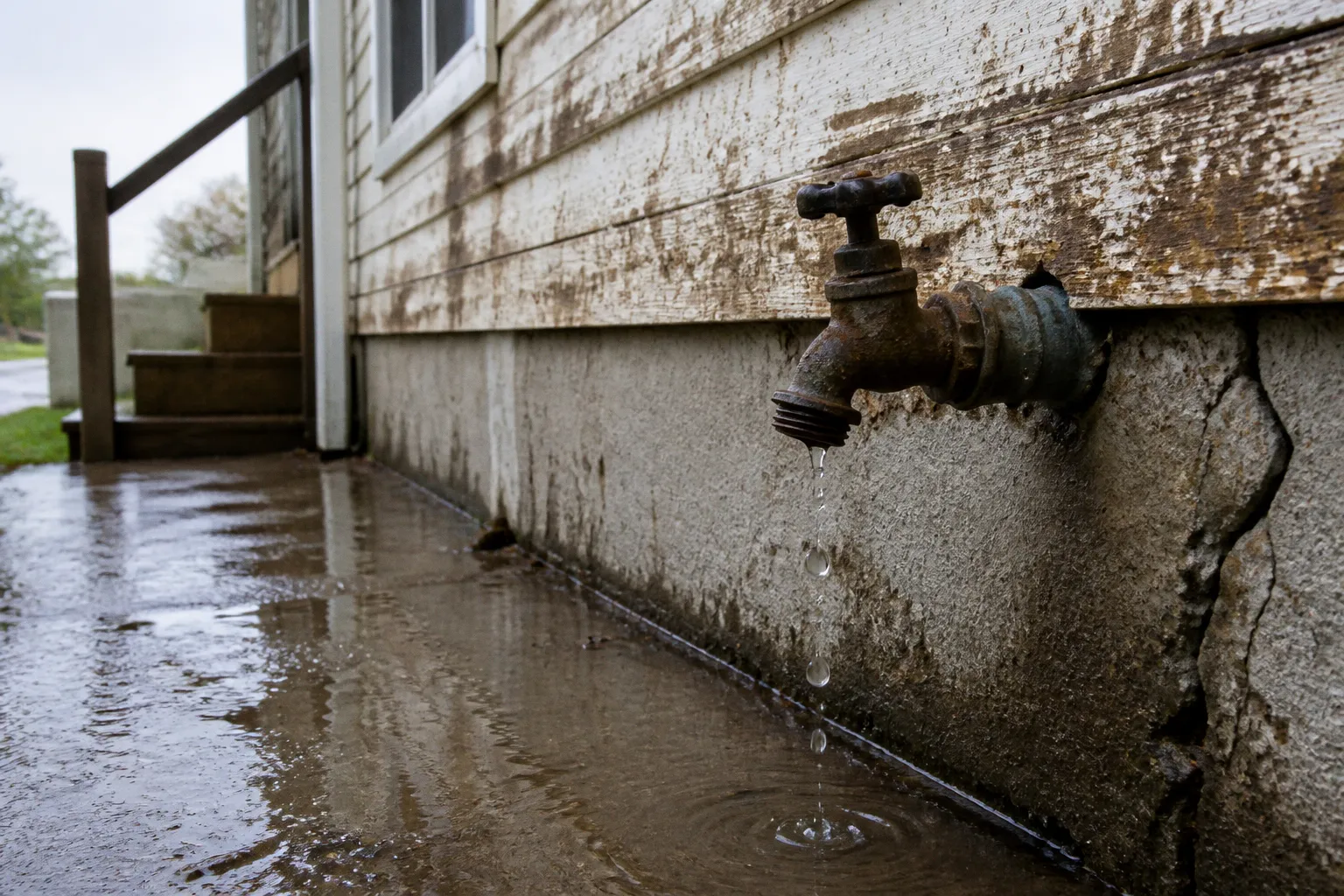
Clear water is not proof of a safe water supply. Neither is the absence of an odor.
For Somerset County property owners, the rule is simple: stop using a flooded private well for drinking and domestic purposes until the floodwater has receded, the well and plumbing have been disinfected, and follow-up bacteriological testing by a state-certified laboratory confirms that the water is safe. This is not a cosmetic cleaning job. It is a contamination-control problem involving the well, the pump, the household plumbing, treatment equipment, and the septic system.
Shut down the water supply before doing anything else
If floodwater has reached the wellhead, electrical equipment, pressure tank, or pump controls, keep clear of the system until it can be assessed safely. Floodwater can damage electrical components, undermine the ground around the casing, and carry contamination into places that are difficult to inspect from the surface.
Do not use the water for:
- Drinking or cooking
- Brushing teeth
- Making ice
- Washing dishes
- Bathing young children
- Preparing infant formula
- Washing food
- Any other domestic use that could result in ingestion
Use bottled water while the well is out of service. If bottled water is unavailable and a local health authority directs residents to disinfect water temporarily, boiling is a bacteriological safeguard only: bring clear water to a rolling boil for 1 minute. Local emergency guidance may call for 3 to 5 minutes in some circumstances. Let the water cool in a clean, covered container.
Emergency disinfection with household bleach is another short-term measure for clear water. Guidance commonly uses 8 drops of unscented household bleach per gallon of clear water, or 16 drops if the water is cloudy. That treatment is not a substitute for repairing and disinfecting the well. It also does not remove fuel, heavy metals, pesticides, or other chemical contaminants.
Flooded well water is not safe because it looks clean. It is safe only after disinfection and certified testing.
Before shock chlorination, contact the Somerset County Health Department’s Environmental Health division or the appropriate Maryland environmental health authority. The county division oversees private well testing, well permits, and Certificates of Potability. That office can confirm the current sampling procedure, identify certified laboratories, and flag conditions that require more than routine chlorination.
Bacterial contamination and chemical contamination are different problems
Shock chlorination is designed to control bacterial contamination. It is not a universal reset button for a damaged well.
Floodwater may carry sewage organisms and other bacteria into the well. Those contaminants can spread through every faucet and branch of the household plumbing. Chlorination treats that biological risk when it is performed correctly and followed by adequate flushing and testing.
Chemical contamination is a separate matter. Floodwater can mobilize:
- Fuel and oil from tanks, vehicles, or equipment
- Agricultural chemicals
- Solvents and household chemicals
- Heavy metals from damaged materials or contaminated soil
- Other pollutants carried by runoff
Boiling does not remove these substances. Chlorine disinfection does not remove them either. In some cases, heating or concentrating contaminated water can make the situation worse. If the water has a fuel, solvent, petroleum, or unusual chemical odor—or if the property has known chemical storage nearby—do not rely on shock chlorination alone. Keep using bottled water and ask the health department or environmental authorities what additional sampling is required.
A practical distinction is useful:
| Risk | What disinfection can address | What it cannot address |
|---|---|---|
| Bacteria introduced by floodwater | Shock chlorination, followed by flushing and laboratory testing | A damaged well structure that continues to admit contamination |
| Sewage-related contamination | Chlorination and bacteriological testing | Chemical residues carried with the sewage or runoff |
| Fuel, oil, pesticides, or solvents | Nothing reliable through boiling or chlorination | Requires investigation and chemical testing |
| Heavy metals | Nothing through routine shock chlorination | Requires laboratory analysis and a separate treatment decision |
| Contaminated household plumbing | Chlorination can disinfect plumbing when the full system is treated | Filters, membranes, and treatment media may be damaged or require replacement |
The hard part is not pouring bleach into a well. The hard part is proving that the source and the distribution system are clean enough to use again.
Shock chlorination: the basic process
Shock chlorination should be treated as a controlled procedure, not a guess based on how much bleach happens to be available. Use regular, unscented household bleach. Do not use scented bleach, splashless formulations, detergent-added products, or pool chemicals unless the health department or a qualified well professional gives specific instructions.
Maryland health guidance uses approximately:
- 1 gallon of unscented household bleach for a standard drilled well
- 2 gallons for a dug well
Those quantities are general disinfection guidance. Well diameter, depth, water volume, construction, contamination severity, and the plumbing layout can change the actual requirement. If the well is unusually large, damaged, or heavily impacted by flooding, get site-specific direction before proceeding.
1. Inspect the well and restore safe access
Wait until floodwater has receded enough to expose the wellhead and surrounding ground. Remove mud and debris around the cap without pushing material into the casing. Check for a loose or displaced cap, cracked casing, damaged sanitary seal, exposed wiring, or soil washed away around the well.
Do not operate a submerged electrical pump or control box. Electrical repair comes first where floodwater has reached energized equipment. A well that cannot maintain a sanitary seal is not fixed by chlorination alone.
If the casing has shifted, the cap is missing, or the wellhead has been physically damaged, the system needs professional evaluation. Otherwise, the next storm can put the same contamination back into the well.
2. Bypass treatment equipment
Water softeners, cartridge filters, reverse osmosis systems, ultraviolet units, and other treatment equipment should be switched to bypass before chlorination. High chlorine concentrations can damage treatment media, oxidize membranes, and leave contaminated or degraded material inside the equipment.
Remove disposable filters where the equipment manufacturer permits it. Do not assume that a filter labeled for bacteria or sediment can simply be left in place. Filters are not a substitute for disinfection, and they can become a contamination reservoir.
The treatment equipment should not be returned to normal operation until the well and plumbing have been flushed, the equipment has been serviced as required, and the water has passed the necessary testing.
3. Introduce the chlorine solution into the well
Follow the county or state procedure for introducing the bleach solution. The goal is to distribute chlorine through the standing water in the well and then circulate that chlorinated water through the household plumbing.
Do not pour bleach into a well blindly if the well construction is uncertain or the casing is damaged. Avoid splashing. Wear appropriate protective equipment, keep children and pets away, and follow the product label for handling and ventilation.
After adding the chlorine, circulate water through the plumbing by opening an outdoor spigot or another suitable outlet until a chlorine odor is detected. Then open household fixtures one at a time until chlorinated water reaches them. Include hot and cold lines where the system design allows it. Toilets, utility sinks, washing-machine connections, and lesser-used fixtures can retain untreated water if they are skipped.
Do not run chlorinated water through reverse osmosis membranes or other treatment units that have not been bypassed.
4. Allow contact time
The chlorinated water needs time to work through the well and plumbing. Maryland guidance identifies a contact period of roughly 12 to 24 hours before flushing.
During this period, do not drink the water or use it for cooking, bathing, laundry, or other domestic purposes. Put a notice on faucets if necessary. A household can easily forget that the system is under treatment, particularly when the chlorine odor fades at one fixture but remains in another.
Longer is not automatically better if the plumbing or treatment equipment is vulnerable to chlorine. Follow the procedure provided by the health department or well professional.
5. Flush the system without overloading the septic system
After the contact period, flush the chlorinated water from the well and plumbing through an appropriate outdoor discharge point. Direct the flow away from the wellhead, foundation, neighboring property, surface-water channels, and areas where people or animals may come into contact with it.
Do not send highly chlorinated water into the septic tank. A large chlorine discharge can overload the system and disrupt septic function. This is a physical capacity issue as much as a treatment issue: the septic system is not a convenient drain for a well-cleaning operation.
Flush until the chlorine odor is gone or greatly reduced, but recognize that complete removal may take two to three days in some well systems. Avoid dumping the entire discharge in one place. Watch for erosion, standing water, and flow toward ditches or waterways.
If the well produces cloudy water, sediment, or a strong odor after flushing, stop and investigate rather than assuming more flushing will solve it. Flooding may have damaged the casing or introduced material that ordinary chlorination cannot correct.
The plumbing is part of the well system
A private well is not just the hole in the ground. The pressure tank, pump, pipes, faucets, water heater, filters, softener, and reverse osmosis unit all form one distribution system. If only the well is treated, untreated or contaminated water can remain in the rest of the system.
The water heater deserves particular attention. It can hold a substantial volume of water and may retain chlorinated or contaminated water after the rest of the plumbing appears clear. Follow the manufacturer’s instructions and seek professional guidance before draining or disinfecting it. Improper draining can damage the appliance or create a separate plumbing failure.
Treatment equipment should be inspected after the chlorine has been flushed:
- Replace disposable sediment or carbon filters as directed.
- Check softener operation and media condition.
- Have reverse osmosis membranes evaluated if they were exposed to high chlorine.
- Confirm that bypass valves are returned to their normal position only after the system is ready.
- Watch for leaks at fittings, pressure tanks, and fixtures disturbed during flooding or flushing.
Do not use the return of normal water pressure as evidence that the system is safe. Pressure tells you that the pump and tank are moving water. It says nothing about bacteria or chemical contaminants.
Testing is the release point, not an optional final step
After shock chlorination and flushing, collect a follow-up water sample through a state-certified laboratory using the required sampling container and procedure. Improper sampling can contaminate the bottle or produce a result that does not represent the water coming from the well.
The Somerset County Health Department Environmental Health division can provide direction on private well testing and the Certificate of Potability process. The exact requirements may depend on the well, the property, the type of contamination, and whether the water system is associated with a sale, permit, or other regulatory action.
Do not resume drinking the water merely because:
- The chlorine smell has disappeared
- The water is clear
- The pump is working
- A neighbor’s well tested clean
- One faucet produces better-looking water
- A household filter has been installed
A bacteriological test is the minimum proof needed to establish that the disinfection worked for bacterial contamination. If floodwater may have carried fuel, agricultural chemicals, heavy metals, or other pollutants, ask whether chemical testing is also necessary. A clean bacterial result does not certify that the water is free of chemicals.
Until the laboratory result and any required county approval are complete, continue using bottled water for drinking, cooking, brushing teeth, ice, and infant preparation.
Common mistakes that create a second problem
Flood recovery rewards speed, but rushed well work creates avoidable failures. The most common mistakes are straightforward.
Using the water too soon
A well may test clean at the surface and still contain contamination in the casing or plumbing. The first flush is not the final clearance. Keep the system out of service until testing confirms safety.
Using the wrong bleach
Scented, splashless, or detergent-containing bleach is not an acceptable substitute for plain unscented household bleach. Additives can create new problems in the well and plumbing.
Leaving filters and membranes online
Chlorine can damage treatment equipment. Bypass the equipment first, then service it afterward. A failed membrane or saturated filter is not a minor inconvenience when the entire system is already under contamination stress.
Discharging chlorine into the septic tank
The septic system is not built to receive a concentrated slug of chlorinated water. Plan the discharge route before beginning the work.
Treating chemical contamination as a bacterial problem
This is the most serious error. Chlorination can make a property owner feel that the job is finished while fuel or agricultural chemicals remain in the water. If the contamination may be chemical, obtain professional direction and appropriate laboratory analysis.
Skipping the certified laboratory
Home test strips and visual inspection have limited value here. They do not replace bacteriological testing by a state-certified laboratory, and they do not establish a Certificate of Potability.
Shock chlorination is a treatment step. Certified testing is the decision point.
Coordinating with Somerset County officials
The county health department is not a paperwork detour. It is the local control point for private well testing, permits, and Certificates of Potability. Contact Environmental Health before sampling if you are unsure which laboratory to use, how to collect the sample, or whether a flooded well requires additional testing.
Have useful information ready:
- The property address
- Whether the wellhead was submerged
- How long the well or surrounding ground was under water, if known
- Whether the casing, cap, pump, or electrical controls were damaged
- Whether the property uses a septic system
- Whether fuel, pesticides, livestock waste, sewage, or other chemicals were present nearby
- The type of well, if known
- Any previous well-construction or water-quality records
This information helps separate a routine post-flood disinfection from a damaged-source or chemical-contamination investigation.
Somerset County’s low-lying coastal geography makes flood exposure a recurring infrastructure concern, not a one-time household inconvenience. A wellhead with poor drainage, a damaged cap, or inadequate protection will remain vulnerable after the cleanup crew leaves. Repairing the physical entry point is the load-bearing part of resilience. Without that, repeated chlorination is deferred maintenance disguised as recovery.
The correct sequence is not complicated, but every step matters: stop using the flooded well, secure the site, identify whether chemical contamination is possible, bypass and protect treatment equipment, shock-chlorinate the well and plumbing, keep chlorine out of the septic system, flush safely, and obtain certified laboratory testing before returning the water to service.
That is how Somerset County well disinfection after flooding should be handled: as a controlled restoration of a damaged utility, not as a quick dose of bleach and a hopeful sip from the tap.