Septic design errors in Somerset flood zones
In Somerset County, a septic system can fail long before the tank reaches the end of its service life.
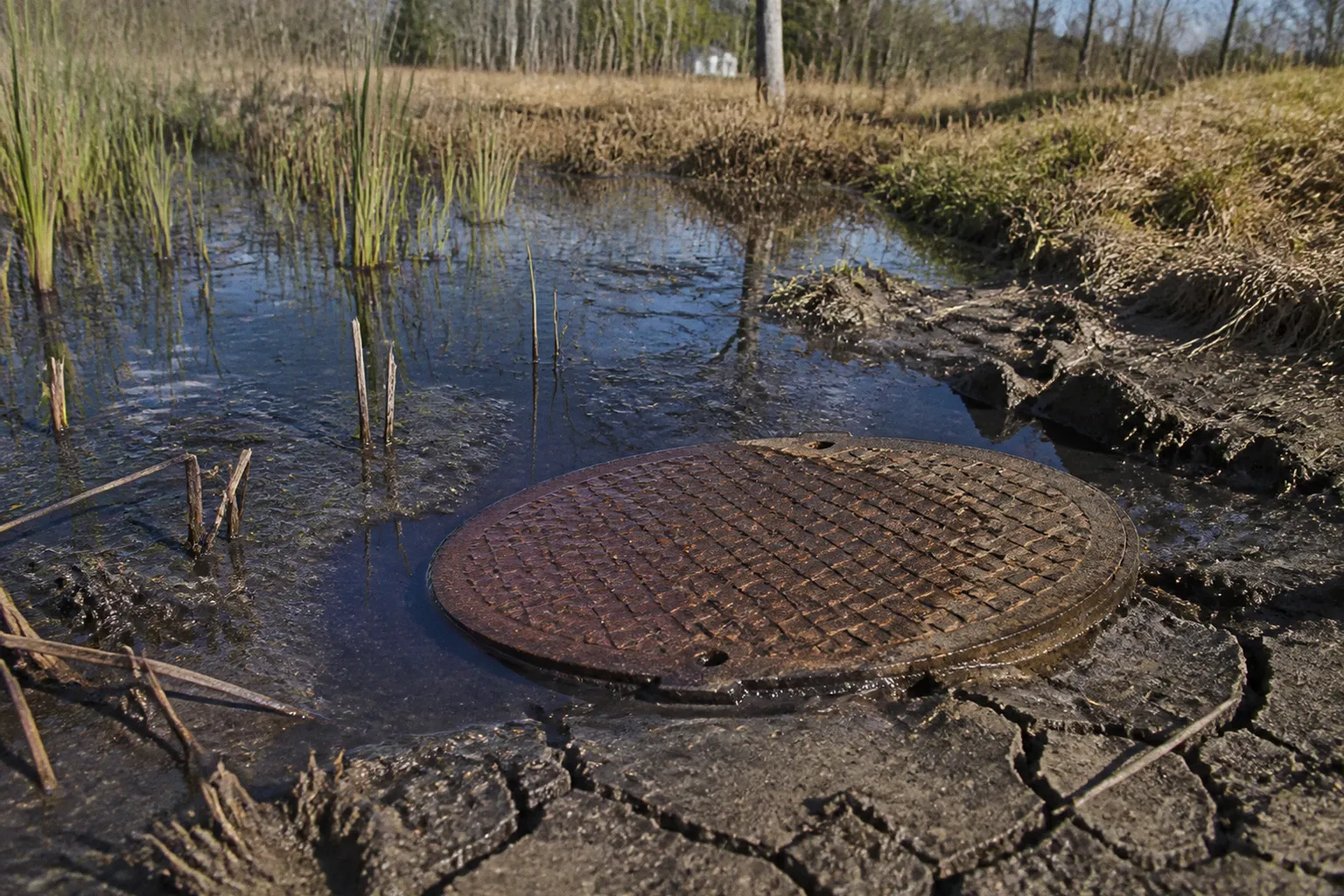
Septic Design Errors in Somerset County Flood Zones
The weak point is often the soil beneath the drainfield: when the seasonal water table rises, the soil loses the air space needed to treat wastewater and move it away from the dispersal area. A permit may still exist. The tank may still look intact. The system can still be hydraulically failing.
That distinction matters for anyone researching Somerset County septic system flood zone rules. Flood exposure is not determined by the elevation of the house alone. A home can sit above the required flood elevation while its drainfield occupies saturated ground, lies too close to the seasonal high water table, or has no legal reserve area for replacement.
This is a physical problem first and a permitting problem second. A septic system that fails under saturated soil does not politely warn the homeowner. It may produce slow drains, sewage odors, wet ground, or surfacing effluent. In a more serious failure, untreated wastewater can move toward a ditch, creek, tidal wetland, or drainage channel that ultimately connects to the Chesapeake Bay. Once a drainfield is persistently surfacing, another pumping appointment is rarely the real solution. The property needs a technical assessment and, often, a redesigned treatment or dispersal system.
The 2050 Water Table Problem
Somerset County sits on low-lying land shaped by tidal rivers, marshes, drainage ditches, and shallow groundwater. Parts of Princess Anne, Crisfield, Westover, Deal Island, and the county's rural communities are mapped within or near flood-prone areas. But the FEMA flood zone on a map is only one part of the septic question. Seasonal groundwater, perched water, soil texture, drainage patterns, and the elevation of the drainfield all matter.
Long-term sea-level-rise and groundwater projections point toward a more difficult future for older residential plats on Maryland's lower Eastern Shore. The exact timing and depth of that change vary by location, ground elevation, storm exposure, and local drainage. It would be a mistake to treat a countywide projection as a survey of every individual lot. It would be an equally serious mistake to assume that a lot that passed a soil evaluation years ago will have the same usable separation forever.
A drainfield needs unsaturated soil beneath it. That unsaturated zone provides the oxygen and treatment environment that allow wastewater to move through the soil while bacteria and other processes reduce contaminants. When the seasonal high water table rises into that zone, the system loses part of its treatment capacity. The wastewater has fewer places to go, and the soil can no longer accept the same hydraulic load.
A septic system that sits in saturated soil is not slowly failing. It may already be failing hydraulically, even if the biology has not finished telling you yet.
What that looks like on the ground is not always dramatic at first:
- Soft areas in the yard that remain wet after surrounding ground has dried.
- Grass that grows unusually fast or appears greener over the drainfield.
- Slow fixtures, gurgling pipes, or wastewater backing up during heavy rain.
- Sewage or sulfur odors near the tank, cleanout, ditch, or property edge.
- Standing water or dark effluent surfacing above or downhill from the field.
- A pump alarm that appears more frequently than it did during dry weather.
None of these signs, by itself, proves that the drainfield has failed. A blocked line, a damaged distribution box, a failing pump, or a full tank can create similar symptoms. The point is that flooding and saturation change the diagnostic order. Before paying for another routine pump-out, the owner needs to know whether the problem is the tank, the conveyance line, the pump system, the soil, or the water table.
Wet-Season Testing and the Four-Foot Rule
Maryland onsite sewage regulations use vertical separation between the bottom of the treatment or dispersal area and the seasonal high water table as a central design control. The commonly cited four-foot separation is a minimum requirement in situations where that standard applies; it is not a guarantee that a conventional system will perform well under every future condition. A local health department review may also involve soil limitations, site constraints, floodplain requirements, replacement areas, and the type of system proposed.
The practical problem is that groundwater moves through the year. A lot can look workable during a dry period and show a much shallower seasonal high water table during the wet season. A deep-hole evaluation or other site investigation performed under favorable conditions may therefore provide a less conservative picture than an evaluation conducted when the ground is wet.
That is why the date and conditions of the soil evaluation deserve attention. Home buyers are often shown a septic permit as if it were a permanent certification of the land. It is not. The permit reflects the information available at the time, the design that was reviewed, and the rules that applied to that project. An old permit may not answer whether the field has adequate separation today, whether the system was built as approved, or whether a replacement field could be approved under current standards.
County procedures and the local health department should be confirmed for the particular property rather than inferred from a contractor's schedule. In a flood-prone area, a wet-season investigation can be especially important because it captures conditions closer to the system's worst ordinary operating environment.
| Site-evaluation issue | Why it matters in a Somerset flood zone | Question for the owner or designer |
|---|---|---|
| Evaluation date | Groundwater may be lower during a dry season than during the period when the lot is most vulnerable | When and under what field conditions was the site evaluated? |
| Soil profile | Texture, restrictive layers, mottling, and drainage features affect how wastewater moves | Does the soil record identify evidence of seasonal saturation or perched water? |
| Drainfield elevation | The field, not the living floor, determines whether the system has usable separation | What is the elevation of the field relative to the seasonal high water table and flood elevation? |
| Reserve area | A small or constrained lot may have no practical place for a replacement field | Is a replacement area shown and still available? |
| Design type | Gravity, pressure-dosed, mound, advanced treatment, and holding-tank systems have different operating needs | Does the current system match the conditions documented in the permit? |
One common design error is treating a November or summer observation as proof that a lot will remain suitable in late winter or after a sequence of heavy storms. Another is measuring the house elevation and assuming the drainfield shares it. On a sloping or filled lot, the difference can be substantial.
If a property is being sold, the buyer should request the complete permit file, not just a permit number. The soil evaluation, approved plan, as-built information, repair history, pump records, and any notices of violation tell a more useful story than the permit front page. If the file is incomplete, that is not proof of failure, but it is a reason to make the site evaluation part of the transaction rather than an afterthought.
BAT Requirements in the Chesapeake Bay Critical Area
The phrase “BAT” is used loosely in real-estate conversations, and that creates expensive confusion. In Maryland, Best Available Technology requirements can apply to onsite sewage systems in designated parts of the Chesapeake Bay Critical Area and in other situations established by state or local regulation. Whether a particular Somerset County property requires BAT depends on the property's location, the type of project, the existing system, the proposed replacement, applicable exemptions, and the determination of the reviewing authorities.
For that reason, the correct question is not simply, “Is this house near the water?” It is:
- Is the lot inside the applicable Critical Area boundary or buffer?
- Is the work a new installation, a replacement, an expansion, or a repair?
- Does the project trigger a Maryland BAT requirement?
- Has the local health department identified an exemption or alternative compliance path?
- What operation, maintenance, inspection, and reporting obligations come with the proposed unit?
A BAT system is an engineered treatment system intended to reduce nitrogen and, depending on the approved design, improve treatment before effluent reaches the dispersal area. It does not turn a flood-prone lot into a conventional lot. Advanced treatment and hydraulic dispersal are separate parts of the design. A system can produce better-treated effluent and still be unable to disperse that effluent when the drainfield is surrounded by groundwater.
This is the point at which a Maryland BAT septic requirement in Somerset should be handled as a regulatory determination, not a sales pitch. A contractor may recommend a particular treatment unit, but the recommendation does not replace approval by the appropriate authority. The owner needs to understand the approved design, the electrical requirements, the alarm system, service contract, sampling or inspection obligations, and what happens if the unit loses power or the maintenance agreement lapses.
Costs vary with the site and the design. A conventional field, a pressure-dosed system, a mound, an advanced treatment unit, and a holding tank do not carry the same installation or lifetime operating costs. Nor should a homeowner assume that a grant or Bay Restoration Fund assistance will be available at the moment a replacement is needed. Funding programs can have eligibility rules, application periods, and limited availability. They should be treated as potential assistance, not as money already committed to the property.
BAT Does Not Solve a High Water Table
BAT improves treatment. It does not raise a drainfield, remove groundwater from a saturated soil profile, or create a missing replacement area.
If the basic failure is that the dispersal field is too close to the seasonal high water table, the design may need elevation, pressure dosing, engineered fill, a different dispersal method, or another approved solution. In some locations, the field may need to be moved. On a small lot, the available options may be constrained by wells, property lines, wetlands, floodplain limits, easements, and setbacks.
The treatment requirement and the floodplain problem must therefore be designed together. Installing an advanced treatment unit without addressing hydraulic separation is not a complete correction.
Freeboard, Flood Zones, and Where the Drainfield Can Actually Go
Flood-elevation rules for structures and septic-design requirements are related but not interchangeable. A house may be required to meet a specified elevation above the Base Flood Elevation, while the septic field is evaluated under separate standards for soil, groundwater, wastewater treatment, and floodplain impacts.
That difference produces a recurring mistake in older neighborhoods: the home is elevated or rebuilt to meet current floodplain standards, but the drainfield remains at its original low elevation. The house is safer from floodwater while the septic system is still exposed to saturation. Raising the living floor does not raise the wastewater system.
A site plan for a flood-prone property should show more than the tank. It should identify the drainfield, replacement area, wells, easements, structures, surface-water features, and the elevations that control the design. The approved plan should also be compared with what was actually built. Fields are sometimes shifted during construction because of trees, grading, access, or an unexpected obstruction. A field that moved without an approved revision may create a permitting problem as well as a technical one.
A mound or elevated dispersal system can provide additional separation by placing engineered fill above the natural grade. That does not make the site immune to flooding. The mound still needs appropriate grading, stable side slopes, protection from erosion, suitable dosing equipment, and a design that accounts for how floodwater moves across the lot.
A raised system can also create a new failure mode if the pump chamber, controls, electrical components, or access covers are not protected. The elevation of the sand or treatment area is only one part of the system. The entire installation must be considered, including the force main, tank buoyancy, inspection ports, alarms, and the route by which a service technician can reach the equipment after a storm.
A holding tank may be considered where no compliant dispersal area is available, but it is not a maintenance-free solution. The tank must be sized, secured, monitored, and pumped on a schedule that matches household use. The owner pays for every gallon removed, and an alarm or missed pump-out can become a public-health emergency. It is a continuing operating obligation, not simply a cheaper replacement for a failed field.
Before choosing a correction, the designer should compare the actual alternatives:
| Option | What it addresses | What it does not address |
|---|---|---|
| Conventional replacement field | Replaces a failed or undersized dispersal area where soil and groundwater conditions allow | Does not overcome inadequate separation or a lack of usable reserve area |
| Pressure-dosed or elevated system | Improves distribution and may place dispersal media higher on the site | Still requires power, controls, maintenance, and an approvable site |
| BAT with approved dispersal | Reduces nitrogen where state or local requirements call for advanced treatment | Does not by itself correct flooding, buoyancy, or a high water table |
| Connection to available public sewer | Removes the private drainfield from service | Requires a usable connection, capacity, approvals, and payment of connection and ongoing service costs |
| Holding tank | Provides containment where an approved dispersal field cannot be placed | Creates a permanent pumping, alarm, access, and management obligation |
Sewer Availability Is a Property-Specific Question
Public sewer can remove the septic system from the flood-risk equation, but sewer service should not be described as a countywide solution without checking the individual address. The existence of a nearby main does not necessarily mean that a property can connect. Capacity, service boundaries, road crossings, connection charges, easements, pump requirements, and local utility policies all matter.
Nor should a homeowner rely on an informal statement that “sewer is coming.” A planned extension, a map notation, or a discussion at a public meeting is not the same as an executed project with a funded schedule and an available connection. Sewer expansion can require design, easements, permits, construction funding, and coordination among county, municipal, and utility authorities. The status may differ from one district or road segment to the next.
The useful document is a written sewer-availability or connection determination from the utility or sanitary district serving the property. It should identify whether the parcel is currently serviceable, whether connection is mandatory or optional, what work the owner must perform, and what costs or capacity conditions apply.
For a Somerset property that is not presently connectable, the septic review should answer four practical questions:
1. What is the elevation and condition of the existing tank and drainfield?
2. Was the original system evaluated and installed under documentation that can still be located?
3. Is there a legally available reserve area, and would that area remain usable under current flood and Critical Area requirements?
4. What approved system could operate if the existing field fails during a wet period?
That is a more reliable approach than assigning a property to a presumed percentage of “sewer-served” or “sewer-unserved” homes. The relevant fact is not a countywide average. It is whether this parcel has a compliant wastewater path.
Operational Errors: Why Pumping During Floods Causes Structural Failure
Pumping a septic tank is routine maintenance under normal conditions. Pumping it while the surrounding soil is flooded or saturated can be a structural mistake.
A tank that has been emptied is lighter. If groundwater rises around it, the tank can become buoyant and shift or float. That movement can shear the inlet and outlet pipes, separate the tank from the building sewer, damage the pump connection, crack the tank, or disturb the bedding that supports it. Plastic and fiberglass tanks are particularly important to secure correctly, but concrete tanks are not automatically immune to movement.
The risk is highest when the tank is pumped because the homeowner is responding to a flood symptom rather than an actual tank-capacity problem. Slow drains during a heavy-rain event may be caused by a saturated drainfield. Pumping the tank removes the weight that was helping hold it in place while leaving the hydraulic constraint untouched.
| Situation | Risky response | More appropriate response |
|---|---|---|
| Yard is saturated and the field is under water | Pump the tank immediately | Reduce indoor water use and obtain site-specific advice |
| Drains slow during heavy rain | Assume the tank is full | Determine whether the restriction is in the building sewer, tank, pump, or drainfield |
| Tank has shifted or surfaced | Push it back or refill it without inspection | Keep people away from the area and arrange an evaluation by a qualified installer |
| Pump alarm is active | Silence the alarm and continue normal water use | Conserve water, protect electrical components, and follow the system's emergency instructions |
| Floodwater has entered the tank or treatment unit | Treat it as ordinary maintenance | Have the system inspected for contamination, damage, and required disinfection or repair |
The right response depends on the system and the immediate hazard. If sewage is backing into the house, the owner may need urgent professional help. If floodwater has contaminated the yard, children and pets should be kept away from the affected area. Electrical equipment should not be opened or handled while standing water is present.
Once the water recedes, the system may need more than a pump-out. The tank should be checked for movement, cracks, displaced pipes, damaged baffles, failed risers, and compromised electrical connections. The drainfield should be inspected for erosion, sediment deposition, ponding, and signs that floodwater entered the distribution network. A septic contractor can identify physical damage, but changes to the approved design or a replacement field require the appropriate permit and review.
The Difference Between a Full Tank and a Failed Field
A full tank has limited storage capacity and may cause backup even when the drainfield is functioning. Pumping can correct that immediate condition. A saturated drainfield has a different problem: the soil cannot accept wastewater at the required rate. Pumping the tank may temporarily create storage, but ordinary household flows soon fill it again.
The symptoms can overlap, which is why the diagnosis matters:
- Backup at the lowest fixture may point toward a blocked building sewer or full tank.
- A high liquid level in the tank can indicate restricted outlet flow, a saturated field, or unusually high household use.
- Ponding above the field suggests a dispersal or groundwater problem rather than routine tank capacity alone.
- A pump chamber alarm may indicate a failed pump, a tripped circuit, a blocked line, or a downstream field that cannot accept the dose.
- Odors near the field can occur when wastewater is surfacing, but odors around a vent or tank opening may have another cause.
A qualified evaluation should distinguish these conditions before a repair is selected. “Pump it and see” is not a design strategy for a flood-exposed property.
The Permit Trail Is the Only Honest Answer
There is no shortcut through the paperwork because the paperwork describes the physical limits of the lot. The Somerset County Health Department, Maryland environmental regulators, local floodplain authorities, and, where applicable, Chesapeake Bay Critical Area requirements each address a different part of the wastewater problem. A septic permit does not override floodplain restrictions. A BAT designation does not replace a soil evaluation. A sewer rumor does not create a connection.
For a buyer or current owner, the most useful file may include:
- The original soil evaluation and site sketch.
- The approved septic design and any revisions.
- Construction or as-built information.
- Tank and pump specifications.
- Service, inspection, and repair records.
- Notices, variances, waivers, or recorded restrictions.
- Documentation showing whether the parcel lies within a regulated Critical Area location.
- Written confirmation of sewer availability or the lack of a current connection.
The file should then be compared with the site as it exists. Is the tank where the plan shows it? Is the field still open and accessible? Has grading directed stormwater toward it? Has a shed, driveway, pool, addition, or landscaping occupied the reserve area? Does the current system have a working alarm and a reachable cleanout? Small changes can become significant when the lot has no spare elevation or land.
Get the permit file. Read the soil evaluation date. Confirm the separation. Then check the drainfield against the current flood and groundwater conditions.
Owners should also separate three questions that are often bundled together:
1. Can the system treat wastewater adequately?
This concerns the treatment unit, septic tank, BAT equipment where required, and maintenance.
2. Can the soil disperse the treated effluent?
This concerns groundwater separation, soil conditions, field elevation, hydraulic loading, and reserve area.
3. Can the system remain physically stable during flooding?
This concerns tank anchoring, pipe connections, pump chambers, electrical controls, erosion, and flood-resistant construction.
A property may pass one question and fail another. An advanced treatment unit may meet a nitrogen requirement while the field remains too low. A high house elevation may protect the living space while the tank floats. A well-maintained tank may discharge into a drainfield that has no effective unsaturated soil beneath it.
The lower Eastern Shore does not need more confident guesses about what a septic system “should” do. It needs designs tied to the actual lot, the actual permit record, the actual groundwater conditions, and the rules that apply to the proposed work. For homeowners in Somerset County flood zones, that means checking the drainfield elevation rather than stopping at the house elevation, verifying whether the project triggers Maryland BAT requirements, confirming sewer status in writing, and treating wet-season performance as a design condition rather than an inconvenience.
The systems most likely to remain reliable are not necessarily the newest or the most expensive. They are the ones designed with enough separation, enough information, and enough room for the site to behave as it actually does.