New York Aquarium tickets: common booking mistakes to avoid
The New York Aquarium runs on a fixed-capacity reservation system, and the bottleneck is real. Coney Island’s 602 Surf Avenue venue has a finite floor footprint, exhibits like Ocean Wonders: Sharks!
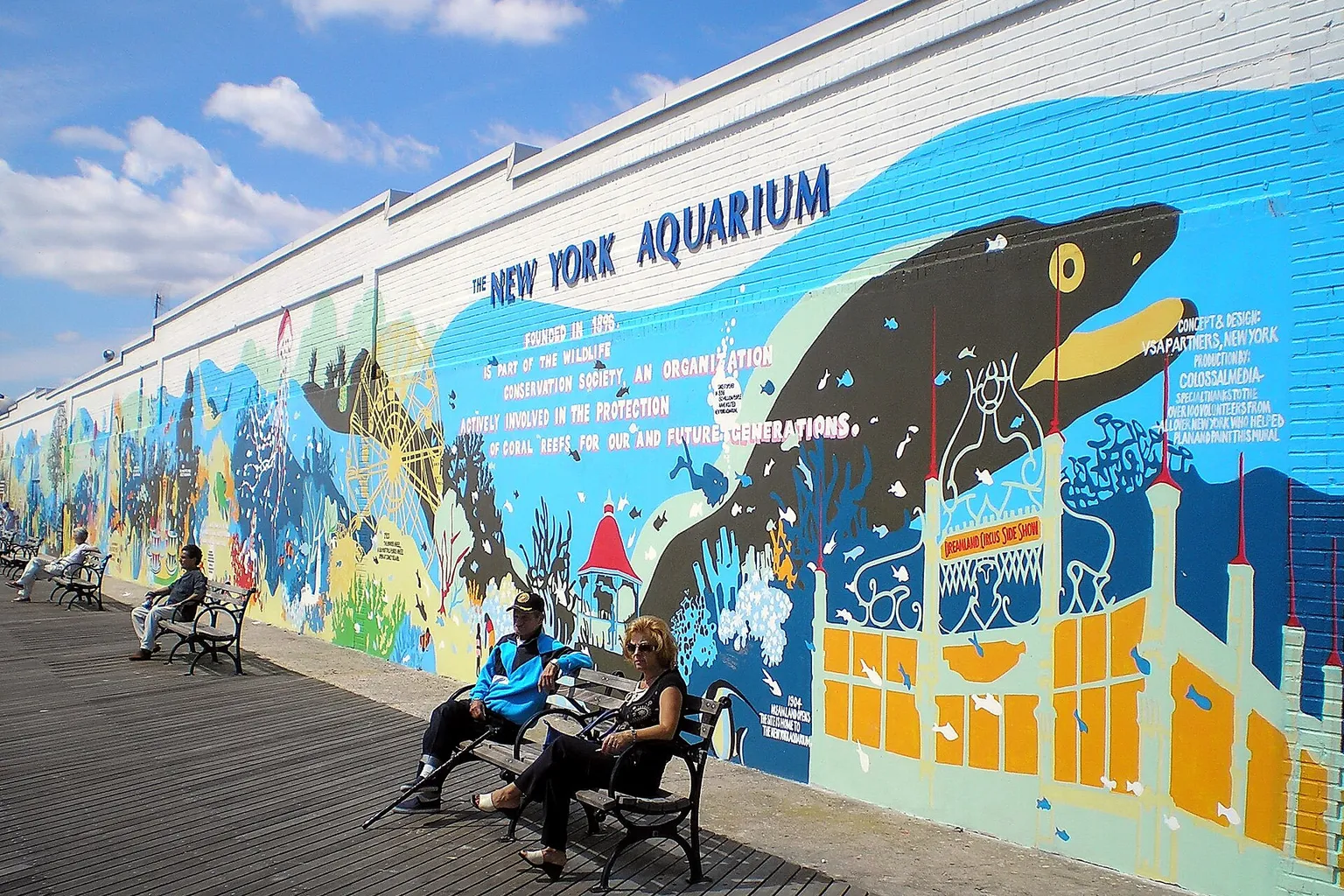
draw heavy throughput, and Aquatheater programming adds timed crowds. When you treat admission like a walk-up attraction — show up at the gate and figure it out — you are betting against a system designed to make advance planning part of the visit. The consequences can be a denied entry, a less convenient time slot, or a significantly higher bill at the window.
Tickets and prices
New York Aquarium
New York
01 · GetYourGuide
Entry Ticket · Exhibits & sea lion show
USD32.47
02 · Official
Official Ticket · Off-peak adult (13+)
USD29.95
Box office and online booking
New York Aquarium — At the box office
The booking process looks simple on its face. It is not. The policies are strict, the time windows are narrow, and the on-site infrastructure — parking especially — is brittle. The mistakes below are predictable failures of a system that gives visitors little room to improvise.
The aquarium does sell tickets at the gate, but the pricing reflects the on-demand premium, and availability is never guaranteed.
Walk-up at the gate is a losing bet
The most expensive mistake is also one of the easiest to make: assuming you can buy tickets when you arrive. The venue sells date-specific timed-entry tickets, and the on-site window generally reflects higher pricing than the online rate. Walk-up availability is also subject to sellout. A ticket may exist in the system, but not for the time slot that works for your group — or not at all on a particularly busy day.
That distinction matters. Buying at the gate is not simply the same purchase made a few minutes later. It means accepting whatever inventory remains, at whatever price applies on site. For a couple with a flexible schedule, that may be an inconvenience. For a family, school group, or visitor coordinating subway, parking, and a fixed afternoon plan, it can unravel the entire visit.
What this means operationally:
- Pre-purchase online. Every visitor needs a ticket tied to a specific date and entry window for general admission during operating hours.
- Treat the gate as a fallback, not a plan. If walking up is your only option, budget for the higher rate and accept the possibility that your preferred time — or admission itself — is unavailable. The exact surcharge is not published as a single fixed amount; the gap can vary with the date and available inventory.
- Do not assume last-minute group inventory will be held. Reserving for a family of five shortly before arrival may be difficult, particularly if the available time slots have already been claimed.
- Check the date and time before leaving home. A confirmation for the right venue but the wrong day does not solve the access problem. The reservation layer is tied to the visit date and entry window.
The logic is not punitive. It is capacity management. The building can accommodate a finite number of people at once, and timed entry is how the venue keeps popular exhibits from becoming a shoulder-to-shoulder crush. The system works when visitors respect the reservation layer. It becomes expensive when they leave the decision until arrival: first through the higher gate price, then through the possibility of having to wait, change plans, or turn around.
Online booking also gives you a chance to compare dates before committing. If your schedule allows a weekday rather than a weekend, or an earlier rather than later entry window, that flexibility can be more valuable than it looks. The mistake is not merely failing to save money online. It is surrendering control over the part of the visit that is hardest to replace once you are already at Coney Island.
The non-refundable, non-exchange admission policy
New York Aquarium tickets are sold under a no-refund, no-exchange policy. Once the purchase has cleared, the standard terms do not provide a routine way to recover the money or exchange the ticket as a matter of convenience. That is different from saying that every unusual situation has been publicly resolved in advance. The published policy establishes the general rule; it does not answer every possible emergency or date-change request.
The practical implication is still serious: choose the date carefully before completing checkout. A ticket purchased for a particular day should be treated as a committed reservation, not as a temporary hold while the group continues deciding whether to go.
Two assumptions cause trouble here:
1. Booking now and deciding later. The no-refund/no-exchange policy means that changing your mind is not ordinarily a reason for a refund or exchange. If plans become uncertain, review the date, attendance details, and operating hours before buying rather than assuming the ticket can be unwound later.
2. Assuming customer service will automatically move the ticket. A routine date change is not guaranteed by the published policy. If an emergency or exceptional circumstance makes the selected date impossible, contact the aquarium directly and ask whether any assistance is available. Do not buy on the assumption that a request will be approved.
That last point is where precision matters. The policy confirms no refunds and no exchanges. It does not establish that every emergency date-change request will be rejected, nor does it promise that the aquarium will reschedule a ticket. The responsible reading is narrower: the standard purchase is non-refundable and non-exchangeable, while exceptional requests should be addressed to the aquarium rather than treated as an entitlement.
The practical discipline remains straightforward: do not book until the core plan is firm. If you are coordinating a school trip, family reunion, birthday outing, or visit involving several households, settle the date with the group before opening the checkout page. Confirm how many people are attending, whether any visitors are members, and whether the selected time works with transportation.
Keep the confirmation email and review it immediately. Check the venue, date, entry window, number of tickets, and any separate event details. This will not change the policy, but it can catch an ordinary booking error while the information is still fresh. If the problem is not a simple mistake but an unexpected emergency, the next step is contact with the aquarium — not an assumption that the system automatically permits a new date.
A no-refund, no-exchange policy is a reason to slow down before checkout. It is not proof that every exceptional request has the same answer, so ask the aquarium rather than guessing.
The policy also changes how you should think about weather, illness, and loosely planned outings. A visitor who is comfortable accepting the risk can book early for a preferred slot. A visitor whose plans are genuinely uncertain may decide that the convenience of advance booking is not worth the possibility of losing the admission cost. Neither choice removes the policy; the important thing is to make it knowingly.
Free Wednesday afternoon admission: the Monday 3 PM release
The aquarium offers free admission on Wednesday afternoons, and this is where the booking system becomes especially unforgiving. The free slots do not accumulate or carry over. They are released online at a specific time, and the available inventory can disappear before a casual search later in the week.
Here is how the release works:
- Release time: Every Monday at 3:00 PM, the reservation system opens the window for that Wednesday’s afternoon free admission.
- Order limit: Each transaction is capped at four tickets. If you need five or more, you will need to coordinate multiple orders or divide the group across transactions.
- Reservation requirement: Visitors still need a reserved timed ticket to enter during Wednesday afternoon hours. The free-admission policy does not turn the afternoon into an unrestricted walk-up period.
- Limited inventory: Free admission applies to the tickets made available through that release. It is not an open-ended benefit that guarantees a place to everyone who arrives on Wednesday.
The common failure is timing. People check on Tuesday or Wednesday morning and find nothing available because the inventory was already claimed Monday afternoon. That is not necessarily a website malfunction. It is what happens when a limited pool is released on a first-come basis.
If free admission is the goal, set a reminder for Monday at 3:00 PM. Have the party size ready, decide in advance who is placing the order, and complete the booking carefully rather than rushing through without checking the details. The four-ticket limit matters for families and larger groups: one person cannot necessarily complete a single order for everyone.
Larger parties should also think about coordination before the release. Multiple transactions can create separate confirmations and may not produce adjacent entry availability. Splitting a group may be the only practical way to stay within the order limit, but it can make the visit less tidy. If being together matters more than free admission, compare the available options before committing the group to a fragmented booking.
The Monday release also illustrates a broader feature of New York Aquarium online booking errors: visitors often look for a problem after the inventory has gone, when the real mistake was missing the release window. The system rewards preparation more than persistence. Rechecking the same sold-out page on Wednesday does not create additional free capacity.
WCS membership: what the card actually covers
Wildlife Conservation Society members — the aquarium operates under the WCS umbrella alongside the Bronx Zoo and the Central Park Zoo — have a different entry path. Regular daytime visits generally do not require the same advance timed reservation used for standard admission. That can look like a way around the reservation system. It is better understood as a separate set of access rules, with its own documents and limitations.
The distinction between member entry and member convenience is where many problems begin. Membership may simplify admission, but it does not eliminate the need to verify the membership, bring the required credentials, or understand what the specific tier includes.
What members should have ready at the entrance:
- A valid membership card, digital or physical, presented at the time of entry.
- A matching photo ID. The name on the membership should correspond to the person presenting it.
- The correct membership information for the visit. If the membership has guest privileges, named-card requirements, or other conditions, check those details before arriving.
- Awareness of the operating period. Regular daytime admission is not the same as access to every special event, after-hours program, or separately ticketed experience.
Membership does not automatically include:
- Free parking at every tier. Some membership levels include parking benefits; others do not. Verify the terms of the specific plan before assuming the lot is covered.
- Unlimited guest admission. If your tier includes guests, those guests are covered according to the membership terms. If it does not, additional visitors need their own tickets.
- Guaranteed access to every high-traffic program. Member access may bypass the ordinary timed-reservation requirement for general admission, but special programming and capacity controls can still matter.
The most common member-side mistake is showing up without the physical or digital card. A name, account number, or remembered membership detail may not be enough for the entrance staff to verify the benefit. Bring the card, bring the ID, and make sure the identifying information matches. Without the required credentials, a member can end up trying to solve an access problem at the same line as visitors who bought standard tickets.
There is another planning issue for groups. A member may be able to enter without purchasing a regular admission ticket, while accompanying guests may not have the same access. Count the member, the covered guests, and everyone who still needs a separate reservation. Doing that at home is much easier than discovering at the entrance that one child or relative was left outside the membership allowance.
Members should also distinguish general admission from add-on experiences. The fact that a membership covers daytime aquarium entry does not mean it automatically covers every event or special program listed on the calendar. If the visit is built around a particular presentation or after-hours activity, check the terms for that event instead of relying on the general membership benefit.
Parking infrastructure at Coney Island: the real constraint
The aquarium sits at 602 Surf Avenue, and the on-site parking lot is one of the least predictable parts of the visit. It is not large, it is not reserved for ticket holders, and it can fill up. Parking is a separate transaction from admission: you pay for it on top of your New York Aquarium tickets, and non-member rates are tiered by duration. Short stays cost less, longer stays cost more, and stays over four hours run at the top tier.
A valid admission reservation answers the question of whether you may enter the aquarium. It does not answer whether a parking space will be waiting when you arrive.
Operational realities of the parking situation include:
- Parking is not guaranteed. The lot is first-come, first-served, and its capacity is limited by the physical footprint of the site.
- The lot is not an extension of the ticket system. Buying admission does not reserve a space, reduce the parking fee, or create priority access.
- There is no bus parking on site. Visitors arriving by coach, school bus, or another oversized vehicle need to coordinate off-site bus parking separately.
- Short stops still have a cost. There is no free grace period for a quick drop-off or pickup. Even a brief use of the lot can incur the posted fee for the relevant duration tier.
- Arrival time matters. A timed aquarium entry window does not give drivers extra time to circle for a space. Build transportation uncertainty into the plan rather than aiming to arrive at the last minute.
The subway is the more predictable alternative for many visitors. The West 8th Street–New York Aquarium station is served by the F and Q lines and places visitors a short walk from the entrance. For people traveling from elsewhere in the five boroughs, public transportation can remove two variables at once: the search for a space and the possibility that parking costs more than expected.
Driving can still make sense for visitors carrying equipment, traveling with someone who has mobility needs, or coming from a place where transit is impractical. The point is not that every visitor must use the subway. The point is that the parking lot should be treated as limited infrastructure, not as a guaranteed part of the admission purchase.
For groups, settle the drop-off plan before the day of the visit. A school or family group can lose time if one vehicle enters the lot, another waits on the street, and everyone assumes the aquarium’s parking arrangement will accommodate them. If the vehicle is oversized, do not discover the bus restriction at the entrance. Coordinate the alternative in advance.
Seasonal schedules and the limits of a booking window
The venue runs on a seasonal schedule, and your ticket is valid only during the operating window in effect on the selected date. The fall schedule runs from early September through the end of October, with last entry in the mid-afternoon. The winter schedule, from November through March, shortens the day further, with last entry pulled back earlier.
The booking mistake is to treat a timed ticket as a promise of a full-length visit. It is a reservation for access within a particular operating schedule.
What this means for planning:
- Last entry is not closing time. The final admission window occurs before the exhibits shut down. If your ticket is for the last available entry, the visit will be more compressed than one earlier in the day.
- Seasonal daylight affects the experience. Late fall and winter visits have less natural light for outdoor areas such as the sea lion pool and boardwalk-facing tanks. The schedule may look manageable on paper while the day feels shorter in practice.
- Operating hours can shift around special events. Holiday periods, school breaks, and WCS member events can affect the daily calendar. Check the schedule close to the visit date rather than relying only on a general seasonal pattern.
- Transportation needs to match the entry time. A late entry combined with a long subway journey or a parking search leaves little margin. The ticket window is only one part of the day’s timing.
A ticket bought for a particular date inherits the operating conditions for that date. That is why date selection deserves attention before checkout. A winter visit and a fall visit may offer different daylight, hours, and overall pacing.
The policy point, however, should not be overstated. The published terms confirm that tickets are non-refundable and non-exchangeable; they do not establish an absolute rule for every exceptional request to change a date. If an emergency makes the selected date impossible, contact the aquarium and ask what options, if any, are available. A request may not be approved, but the answer should come from the venue rather than from an assumption that all circumstances are handled identically.
Pricing tiers: how the cost structure actually works
Standard adult admission is divided between off-peak and peak rates, with peak pricing applied to higher-demand dates. Senior pricing follows the same tiered structure at a reduced level. Child pricing applies to a defined age band. Children aged two and under are typically admitted free of charge, but confirm the current requirements for the youngest visitors when booking, particularly if an event or special program has its own rules.
The practical implications are straightforward:
- The date affects the price. A weekend or high-demand day may cost more than a weekday. If your schedule is flexible, compare dates before selecting the reservation.
- Age boundaries matter. A child who has turned three by the date of attendance falls into the paid category, while a two-year-old may be admitted free. Count ages for the visit date, not the date on which you happen to buy.
- Online and gate prices are not interchangeable. The gate rate is higher than the online rate, while the exact difference can vary with demand and available inventory.
- Parking is separate. The admission price does not include the on-site parking charge unless a particular membership benefit says otherwise.
- Special programming may have different terms. General admission pricing should not be treated as a complete price for every event on the calendar.
The no-refund/no-exchange policy makes date comparison more important, not less. If you are deciding between a peak Saturday and an off-peak weekday, make that decision before payment. Once the transaction is complete, the standard policy does not provide a routine refund or exchange simply because another date would have been cheaper or more convenient.
That does not justify claiming that no exceptional date change can ever happen. It means the visitor should not plan around one. If a genuine emergency arises, contact the aquarium with the booking details and ask whether assistance is possible. Until the venue confirms otherwise, treat the original ticket as governed by the no-refund/no-exchange terms.
The booking details that actually matter
Strip away the marketing language and the reservation system has a short list of hard requirements:
1. Every general-admission visitor needs the appropriate date-specific ticket. Do not assume that one booking covers an entire group or that a member benefit applies to every companion.
2. Book online in advance when you can. The gate is more expensive and may be sold out or limited to less convenient entry times.
3. Free Wednesday afternoon slots are released Monday at 3:00 PM. The order limit is four tickets, so larger groups need a separate plan.
4. Members should bring the card and matching photo ID. Membership without the required credentials can create an entry problem.
5. Parking is a separate, paid, first-come transaction. A ticket does not reserve a space. The F and Q lines offer a more predictable arrival for many visitors.
6. The standard admission policy is no refunds and no exchanges. If an exceptional emergency affects the visit date, contact the aquarium rather than assuming a change will be granted or refused.
7. Seasonal hours govern last entry. A ticket for the final window may produce a shorter visit than an earlier reservation.
8. Review the confirmation before traveling. Check the venue, date, entry time, ticket count, and any membership or event details while the booking information is still easy to verify.
These are not merely suggestions. They are the operating parameters of a venue that uses timed entry and limited capacity as its primary access controls. The system works cleanly for visitors who plan ahead, verify their membership credentials, and understand what the no-refund/no-exchange policy actually says. It becomes difficult when visitors expect the gate, the parking lot, or customer service to repair a decision that was left until the last minute.
The booking process for New York Aquarium tickets is not complicated. It is strict, and several separate systems overlap: online inventory, timed entry, free-ticket releases, membership verification, seasonal hours, and parking capacity. Treat each one as its own constraint. Choose the date carefully, reserve before arrival, bring the documents that support any membership benefit, and do not confuse an admission confirmation with a parking reservation.
If an emergency disrupts the plan, ask the aquarium directly about the available options. That is more accurate than promising that a ticket can be moved — and more useful than declaring that every request is automatically impossible. The confirmed rule is simple: refunds and exchanges are not part of the standard policy. The rest depends on the circumstances and the venue’s response.
FAQ
Can I buy tickets at the New York Aquarium gate?
What happens if I need to change the date of my visit?
How do I get free tickets for Wednesday afternoons?
Do I need a reservation if I am a WCS member?
Is parking included with my aquarium ticket?
What is the age limit for free admission?
Photo: David Shankbone / CC BY 2.5 — Wikimedia Commons