Citizen advisory committees in Maryland planning explained
You got the postcard in the mail—the cream-colored envelope from the county, the one with the map on the back and the meeting time in fine print.
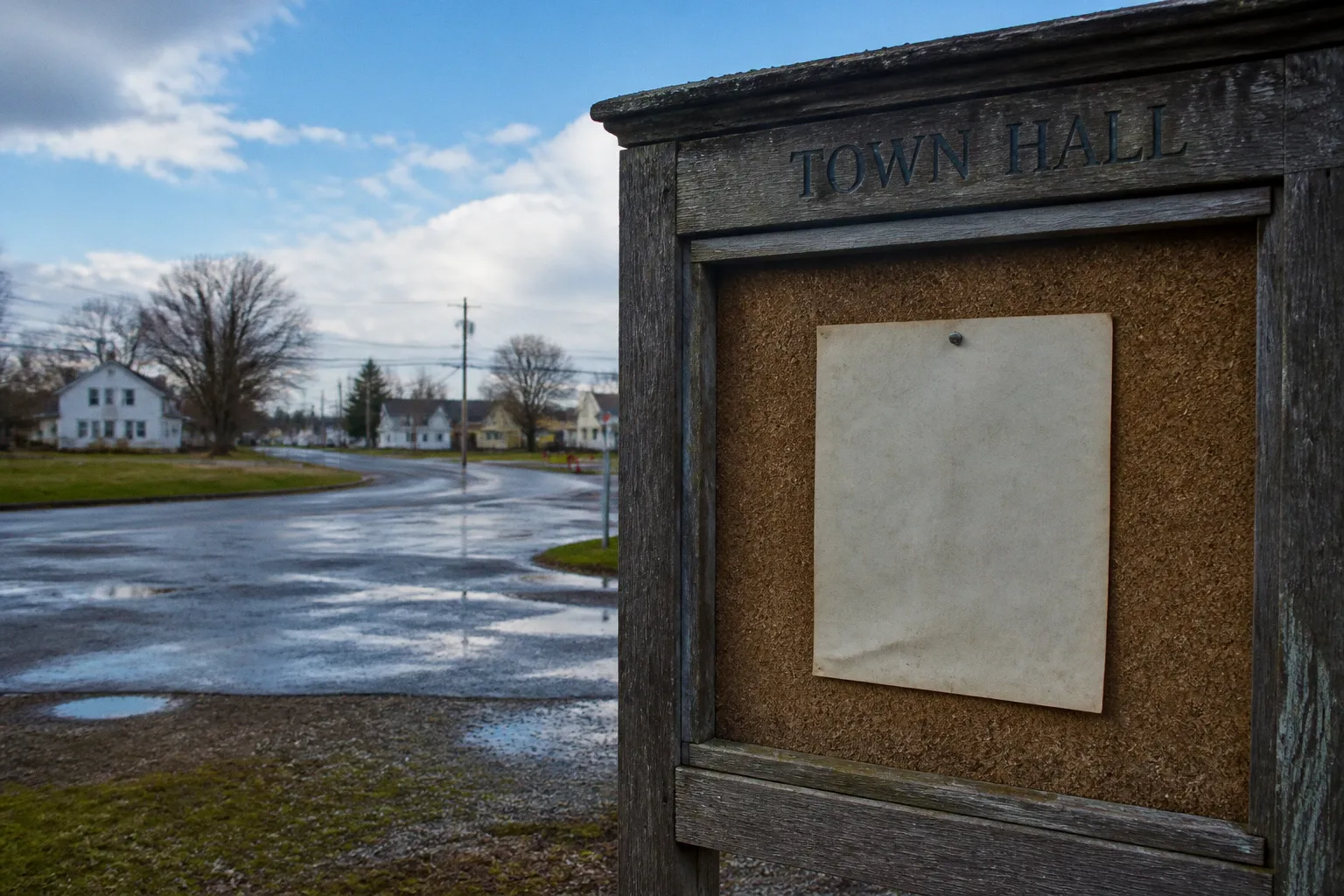
Maybe you've seen it before a council session, or maybe it sat on the kitchen counter for a week because you weren't sure what it was asking you to do. Here's the part most of us miss: the people who drafted that notice and the people who will act on the land-use decision that follows are not the same group, and somewhere between those two points sits a citizen advisory committee—a body that does real work in Maryland planning but doesn't have the authority we often assume it carries.
That gap between "what we think a committee does" and "what the law actually lets it do" matters, especially here on the Eastern Shore where development pressure, chronic flooding, and rural land conservation all collide at the county line. If you've wondered whether showing up to a planning commission meeting will actually change anything, whether your letter to the county will get read by anyone besides a clerk, or who exactly is supposed to represent your block when a comprehensive plan gets rewritten every six years—this is the piece that walks through how it works, why it matters, and where you fit into the picture.
What a Citizen Advisory Committee Is—and What It Isn't
Let's start with a clean definition, because the term gets tossed around loosely. A Citizen Advisory Committee—often shortened to CAC—is a volunteer body convened by a local jurisdiction, usually a county, a municipality, or a state program operating in your area, to gather public input, surface community perspectives, and recommend actions to the people who actually hold decision-making power. The members are typically your neighbors: residents, small business owners, farmers, retirees, parents, and anyone else who cares enough about a specific issue to show up regularly for months at a time.
Here's the part worth saying twice: a CAC does not pass ordinances, approve zoning changes, or override a planning commission. It advises. That word—advises—carries the entire weight of how these committees function. They listen, they deliberate, they produce a written recommendation, and then they hand that recommendation to the elected officials, planning commissioners, or agency staff who hold the legal authority to act. Under Maryland's planning guidelines, forming a CAC is highly recommended for planning commissions working on a comprehensive plan, but it is not a legal requirement. That distinction is what explains why your county may have several advisory bodies and your neighbor's town has none.
There's a practical reason the state encourages these bodies even without mandating them. Comprehensive plans are sprawling documents—they touch on land use, transportation, housing, economic development, environmental protection, and community facilities all at once. No planning commission, however diligent, can independently hold all of those perspectives in mind while drafting hundreds of pages of policy language. A well-composed CAC acts as a sounding board, catching blind spots and surfacing trade-offs before they reach the public hearing stage. The Maryland Department of Planning's guidance materials consistently point to advisory committees as a best practice for meaningful public engagement precisely because they produce a structured, documented dialogue rather than a series of disconnected three-minute speeches at a lectern.
| What a CAC does | What a CAC does not do |
|---|---|
| Convenes community conversations | Pass zoning ordinances |
| Surfaces neighborhood concerns | Approve or deny development applications |
| Drafts recommendations in writing | Override the planning commission |
| Represents stakeholder groups | Bind the county commissioners |
| Creates a documented record of input | Adopt the comprehensive plan |
Think of it as the connective tissue of the planning process—the layer that turns raw public comment into something decision-makers can actually use. When that tissue is healthy, the recommendations that reach the planning commission carry the weight of dozens of community conversations rather than a handful of meeting-night speakers.
A citizen advisory committee can shape what gets recommended, but it cannot decide what gets adopted. Knowing where that line falls is half the work of being an effective participant.
The 12 Visions: Where Public Participation Lives in Maryland Law
To understand why CACs exist at all, you have to back up to 2009. That's the year Maryland passed the Smart, Green & Growing Planning Legislation, which amended the state's planning laws—then housed in Article 66B and now codified under the Land Use Article—to establish what's known as the Twelve Visions. These are guiding principles every comprehensive plan in the state is supposed to honor. They cover everything from growth boundaries to environmental stewardship, transportation corridors to housing diversity, but the second vision is the one that brings us into this conversation: Public Participation.
That vision didn't invent citizen advisory committees, but it gave them a formal home in state planning philosophy. It told counties and municipalities: when you write a comprehensive plan, build a process that lets residents actually weigh in, not just file comments on a docket. CACs became one of the most common ways local jurisdictions operationalized that vision, because they're structured, they're visible, and they create a documented record of community input that planners can point to when state reviewers ask, "How did you engage the public?"
It's worth noting that the Twelve Visions themselves grew out of earlier legislation. The 1992 Maryland Economic Growth, Resource Protection and Planning Act laid much of the groundwork for how the state balances development and conservation. The 2009 update sharpened that balance and explicitly elevated public participation as a planning principle rather than an afterthought. So when a Somerset County planner talks about aligning local goals with state visions, that's the lineage they're drawing from—and it's also the framework that justifies the staff time and travel budget a real CAC process requires.
The other eleven visions—addressing smart growth, resource protection, infrastructure coordination, and the like—provide the substantive policy skeleton. Public Participation, sitting prominently among them, is the procedural muscle that gives those policies democratic legitimacy. Without it, the Twelve Visions would be a technocratic wish list. With it, the state is acknowledging that good planning requires not just technical competence but a sustained, structured conversation with the people whose lives the plan will shape.
How Committees Form—and How They Actually Work
Picture the kitchen-table version of how this happens. A county decides it's time to update its comprehensive plan—Maryland requires these reviews on a six-year cycle, so this isn't optional. The planning director or commission chair realizes they need broader input than the regular public comment period will produce. They put out a call, often through a press release, a county website, or a network of civic groups, asking residents to apply or be nominated for a citizen advisory committee.
From there, the composition varies. Some committees try to mirror the geography of the jurisdiction—one member from each election district, one from each small planning area. Others build around stakeholder categories: environmental advocates, agricultural representatives, developers, business owners, faith leaders, public health professionals. The Anne Arundel County Plan2040 process, for instance, assembled a 23-member CAC specifically to represent varied small planning areas and interest groups, with the goal of feeding diverse perspectives into the general development plan update. That kind of breadth matters when the plan you're writing will guide land use for the better part of a decade.
What you should expect as a committee member: meetings every few weeks for several months, reading packets that may run to a hundred pages, and the steady, often unglamorous work of turning messy community feedback into a written recommendation. You won't get paid. You may not get much public recognition. What you will get is direct access to the planners and decision-makers, the chance to ask questions that public comment periods don't allow time for, and the satisfaction of seeing your concerns survive into the language that ends up in front of the planning commission. That last part is the real currency of civic engagement, and it's something no amount of letter-writing alone can replicate.
A few things worth knowing before you volunteer: most CACs operate under some form of open-meeting expectation, meaning your deliberations are part of the public record, not backroom conversations. Meeting minutes, draft recommendations, and final reports typically become public documents. Some committees allow public observation even if speaking is reserved for members. If transparency matters to you—and in a county small enough that everybody knows somebody, it should—this structure is one of the CAC model's real strengths.
Lessons from the Shore: Crisfield, Anne Arundel, and the Coastal Bays
Theory gets us only so far. What does a CAC look like when it's actually doing the work? Three examples from the last few years show how the model flexes depending on the problem at hand—and each one is closer to home than you might think.
In Crisfield—a small Somerset County town that has spent years wrestling with coastal flooding and repetitive-loss properties—a 15-member Citizen's Advisory Committee was established in 2023 in partnership with The Nature Conservancy, George Mason University, and the University of Maryland. The committee's job was to refine flood adaptation strategies and feed community-grounded recommendations back into local planning conversations. Crisfield's case is especially instructive because the stakes are concrete: when a flooding strategy gets recommended, it affects whether your street gets elevated, whether your insurance rates change, whether your neighbor's waterfront property remains buildable. The CAC became the bridge between technical modeling and lived experience, and it showed how a small town with limited staff can still run a credible, well-supported advisory process when the right partners step in.
Anne Arundel County's Plan2040 effort shows the model at a much larger scale. A 23-member CAC represented the county's small planning areas and brought in environmental, agricultural, and development-sector voices. The committee's recommendations didn't write the plan—that responsibility stayed with the Office of Planning and Zoning and ultimately the County Council—but they shaped which trade-offs got foregrounded and which community concerns survived into the final document. For residents watching how a much bigger county navigates the same state requirements Somerset County is navigating, Anne Arundel offers a useful map of what a mature CAC process can produce.
Then there's the Maryland Coastal Bays Program, which operates primarily in Worcester County but touches the same watershed and coastal systems that define life here on the Lower Shore. Its Citizen Advisory Committee is composed of fishermen, developers, farmers, and conservation stakeholders, and it advises on the Comprehensive Conservation and Management Plan for the coastal bays. That committee can recommend legislative or operational changes; it doesn't enact them. The Chesapeake Forest Lands—acreage that includes parcels in Somerset County—similarly relies on a CAC to review draft plans and advise the Department of Natural Resources on public land use and hunting programs. So even when Somerset County itself doesn't convene a particular committee, our community fabric is being represented through these regional and state-level bodies.
What connects all three cases isn't geography—it's the underlying dynamic. Each committee was formed because the decision-makers recognized a gap between what they could gather from standard public hearings and what they actually needed to write a credible plan. The Crisfield CAC existed because flood adaptation requires granular, property-level insight that no hydrology model alone provides. Anne Arundel's CAC existed because a county of over half a million people needs a representative cross-section, not just whoever shows up on a Tuesday night. The Coastal Bays CAC exists because the management plan touches livelihoods—fishing, farming, development—that require sector-specific knowledge to balance. In every case, the committee earned its place by filling an information gap the formal process couldn't close on its own.
The pattern across these cases is consistent: the advisory committee builds the bridge, but the bridge has to land somewhere on the other side. Your job as a resident is making sure someone is waiting on the far bank.
Where Somerset County Fits—and How Your Voice Reaches the Committee
Somerset County is currently in the early stages of a Comprehensive Plan update, and this is where the abstract framework becomes your lived reality. The county's planning commission and staff are responsible for drafting the plan; the county commissioners hold the final adoption authority. Somewhere between those two poles is the question of how public input gets gathered, weighed, and reflected. What we know from comparable Maryland counties: a dedicated, county-wide CAC for the Comprehensive Plan update is not something Somerset County is required to convene, but doing so would align the process with the Twelve Visions and with the practices of neighboring jurisdictions that have used CACs successfully for similar updates.
Whether the county establishes a formal CAC, relies on public workshops and surveys, or uses a hybrid model is a decision that local leadership makes—and a decision that residents can weigh in on by showing up to planning commission meetings and asking. The Technical Advisory Committee, which handles site plan reviews, operates separately and has its own roster and schedule. If you've tried to track down who's currently serving on either body and hit a wall, you're not alone—public-facing rosters and meeting calendars for some of these groups are not always updated in real time, which is itself a civic engagement issue worth raising at your next public comment opportunity.
There's also the question of what kind of input actually survives the journey from a CAC recommendation to a final plan document. Experience from other Maryland counties suggests that recommendations tied to specific, localized concerns—a particular intersection that needs redesign, a stretch of farmland worth protecting, a neighborhood that lacks stormwater infrastructure—tend to survive more reliably than broad aspirational statements. That's not a criticism of aspiration; it's a recognition of how planning staff work. They need to translate community input into policy language that can be codified, and the more concrete your recommendation, the easier that translation becomes.
If you're reading this and thinking, "Fine, but how do I actually get involved?"—here's the practical pathway, the one that works regardless of whether a formal CAC exists for your specific issue:
1. Find the calendar. Somerset County publishes planning commission meeting agendas, and most of those agendas list public comment periods at the start or end of the session. Showing up to one meeting, even just to listen, tells you who the players are and which issues are active.
2. Sign up for notifications. Subscribe to whatever alert system the county uses—email lists, website updates, social media posts from the planning office. If a CAC or a workshop series gets announced, you'll see it before the meeting happens, which is the only window that lets you shape an agenda rather than react to one.
3. Write it down. Comments submitted in writing—by email, letter, or online form—become part of the permanent public record. Verbal comments at a meeting may or may not be transcribed verbatim depending on how the session is run. Written input survives.
4. Follow the recommendation. When a CAC issues a report or a recommendation document, read it. See whether your concern made it in. If it did, track what happens to that recommendation as it moves through the planning commission and the county commissioners. If it didn't, you now know which decision-makers to approach directly.
5. Bring your network. A single voice at a public hearing is easy to set aside. Five voices raising the same concern from different parts of the county—concerning the same road, the same watershed, the same housing pressure—are much harder to deprioritize. Civic engagement compounds when it's coordinated.
This is what navigating the board actually looks like in practice—not a single dramatic act of civic heroism, but a sequence of small, persistent steps that build a record over months and years.
The Honest Picture—and Why Your Participation Still Matters
We owe each other some straight talk here. Citizen advisory committees in Maryland have real influence on how comprehensive plans get written, but they have no legal authority to adopt those plans. They can elevate community concerns; they cannot override a planning commission or a county council. If you've ever walked out of a public meeting feeling like the decision was already made before you spoke, that feeling is grounded in the structure, not in your imagination.
But here's the other side of that same honesty: the planning documents that govern land use, housing density, transportation investments, and environmental protection in Somerset County for the next six years are being written right now, in this cycle, by people who are influenced by who shows up. The CAC model works because it gives residents a structured seat at the table—and when the residents who fill those seats are informed, organized, and persistent, the recommendations carry weight that a single public comment at a public hearing rarely does.
There's a reason the state elevated public participation to the level of a guiding vision rather than burying it in procedural footnotes. Maryland learned—through decades of contentious rezonings, environmental disputes, and development battles—that plans written without genuine community input don't hold. They get challenged, amended, or ignored. The advisory committee model isn't a concession to democracy; it's a tool for building plans that actually stick.
What this means for your block, your farm, your neighborhood association, your church group, your kids' school zone: if you care about how Somerset County grows over the next decade, the advisory committee process is one of the clearest on-ramps available. Apply when applications open. Read the packets. Ask the awkward questions. Bring your neighbors. The plan that emerges will be better, and more honestly ours, because you were in the room.