Community planning workshops: Somerset MD hosting guide
Maryland does not hand out gold stars for civic engagement. It sets requirements, review points, and deadlines.
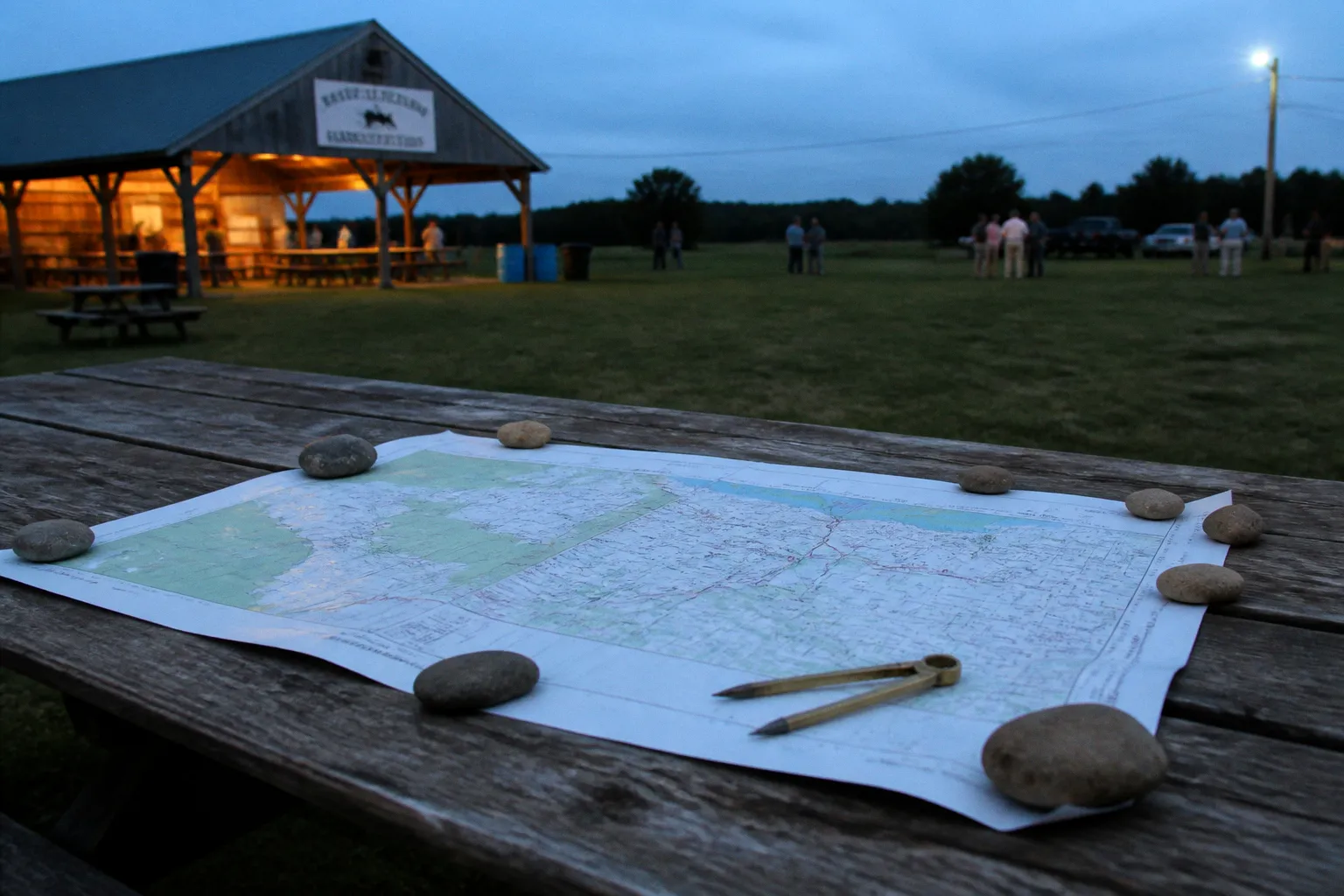
Navigating Maryland’s 10-Year Comprehensive Planning Cycle
Under Title 3 of the Land Use Article, every jurisdiction with planning and zoning authority in the state must maintain and update a comprehensive plan on a 10-year cycle, with the plan looking roughly 20 years ahead. That is not a suggestion buried in a state guidance pamphlet. It is the legal framework around local planning.
If you are organizing a planning workshop in Somerset County, you are not staging a feel-good community conversation. You are building one of the inputs that can shape where development goes, how infrastructure is prioritized, how water is managed, and what the county says it wants to become over the next two decades.
The 10-year cycle sounds leisurely until you count backward. A jurisdiction that updated its plan in 2014 was working toward the next cycle in 2024. A jurisdiction that began in 2019 may still be moving through outreach, draft revisions, planning commission review, and adoption hearings. Those steps take time, and public engagement cannot be bolted on at the end without weakening the document.
Workshops are often treated as the most visible part of the process: reserve a room, put up a few maps, take comments, and write a summary. In practice, the quality of the workshop depends on less visible decisions. Are the questions connected to the plan? Can the answers be used by staff? Are residents being asked about trade-offs rather than invited to produce a pile of disconnected preferences? Does anyone report back after the meeting?
A planning workshop is not a town hall with refreshments. It is a structural member of the comprehensive plan. Skip the maintenance and the whole document sags.
For anyone working on somerset md planning workshop organization, the first task is to understand the planning document the workshop is supposed to support. The meeting format comes after that. A room full of comments is not automatically useful input. The comments need a route into the plan.
Designing Hybrid Engagement: Digital Portals and Paper Questionnaires
The easiest mistake is to treat an online survey as the entire engagement strategy. A web form is convenient for the people who receive the link, trust the platform, have reliable internet access, and are willing to complete a government questionnaire on a phone or computer. That is a meaningful audience, but it is not the whole county.
A more durable approach gives residents more than one way to enter the process. That can include an online portal, paper questionnaires, public workshops, telephone or staff-assisted participation, and smaller meetings with groups that may not attend a general evening session. The point is not to assemble a predetermined number of channels. The point is to remove unnecessary barriers between residents and the planning questions.
Paper still matters in rural and small-county outreach because access is not only a question of broadband. Some residents prefer paper. Some are more comfortable writing comments than navigating a digital interface. Some encounter the planning process through a library, community organization, public meeting, or personal contact with staff rather than through a county webpage.
That does not mean paper questionnaires are automatically effective. They require distribution, collection, secure handling, data entry, and a consistent method for recording open-ended comments. A paper form left on a counter without explanation is not an engagement program. It is stationery.
The same discipline applies online. A portal should explain what the plan is, why the questions are being asked, how long the questionnaire will take, and what will happen to the responses. If the form uses planning terms such as growth area, sensitive area, infill, or community facilities, those terms need plain-language explanations. Residents should not have to decode the vocabulary before they can offer an opinion.
A hybrid approach works best when the channels are connected rather than run as separate campaigns. The online questionnaire and paper version should ask comparable questions. Workshop facilitators should know how comments from the meeting will be recorded alongside survey responses. If one group is answering a question about housing and another is answering a different question under the same heading, the resulting data will be difficult to interpret.
| Engagement route | What it does well | What organizers need to account for |
|---|---|---|
| Online portal or survey | Makes distribution and basic tabulation easier; allows residents to participate outside meeting hours | Requires internet access, usable design, clear privacy information, and a way to prevent the process from becoming a link-sharing exercise |
| Paper questionnaire | Gives residents a non-digital way to respond and can be placed in familiar public locations | Requires physical access, collection procedures, data entry, and a plan for handling handwritten or narrative responses |
| In-person workshop | Surfaces disagreement, local knowledge, and questions that a fixed survey may miss | Needs skilled facilitation, accessible timing, and a method for distinguishing individual comments from broad community patterns |
| Small-group or targeted session | Creates space for residents and stakeholders who may not speak in a large public meeting | Can overrepresent a narrow interest unless organizers explain its role and compare the input with broader participation |
The word “hybrid” should not become a synonym for “we posted a link and brought paper copies.” It describes a connected process in which each participation route serves a different purpose. Surveys can reveal recurring priorities. Workshops can explain why those priorities exist. Targeted conversations can identify practical constraints that do not surface in a general questionnaire.
That is especially important in Somerset County, where planning questions can involve agricultural land, shoreline conditions, small communities, housing availability, public services, and the cost of extending infrastructure. Residents do not experience those issues through the same channel, and the outreach design should not assume that they do.
Lessons from Recent Outreach: Surpassing the 300-Response Benchmark
A local outreach effort that set a goal of 300 responses and received more than 360 is useful as a benchmark, but not as a formula. The number shows that a county-scale planning effort can generate participation beyond an initial target. It does not prove that one particular survey length, distribution method, or channel mix caused the result.
That distinction matters. Outreach numbers are easy to turn into folklore. A later organizer hears that a previous survey crossed a threshold and starts copying visible details: the same number of questions, the same locations, the same promotional language. The underlying conditions may have been different. The timing, subject matter, existing relationships, and level of public interest all affect participation.
The more transferable lesson is that participation needs an operating plan.
Make the purpose legible
Residents are more likely to participate when they can tell what the process is for. “Tell us what you think about the future of the county” is broad enough to sound harmless and vague. A better invitation identifies the decisions under discussion: where growth should be directed, what kinds of housing are needed, how transportation connections should work, which natural resources require protection, or what facilities are missing from a community.
This does not require promising that every comment will become policy. In fact, overpromising creates a credibility problem later. The invitation should explain that public input will inform the draft plan, while elected officials, planning staff, and appointed bodies will still weigh legal requirements, technical information, infrastructure capacity, and competing priorities.
Keep the response task proportional
A questionnaire should ask enough to produce useful information without turning participation into unpaid administrative work. The right length depends on the subject and the audience. A short preference question may be appropriate for broad outreach, while a longer exercise may be justified when residents are reviewing maps or comparing growth scenarios.
What matters is that every question earns its place. A question can be removed if its answer will not affect the plan, cannot be interpreted, or merely repeats another item in different language. The goal is not to make the form look efficient. It is to make the response useful.
Open-ended questions also need restraint. One carefully framed comment box can reveal local knowledge that a multiple-choice list misses. Six broad comment boxes can produce a large volume of text with no clear method for coding or summarizing it.
Make participation possible beyond one evening
An in-person workshop can be valuable and still exclude people who work evenings, lack transportation, care for children, have mobility limitations, or do not feel comfortable speaking in a public room. Online and paper options extend the window, but they do not solve every access problem.
Organizers should consider the practical details:
- Whether the location is reachable by transit, walking, and private vehicle
- Whether the room is accessible to people with mobility, hearing, or vision needs
- Whether the meeting time excludes a predictable part of the community
- Whether materials are available in a form residents can read and keep
- Whether residents can submit comments without speaking publicly
- Whether staff can assist someone who has difficulty with a digital or paper form
These decisions are not decorative. They determine who is able to appear in the record.
Explain the benchmark without making it the whole story
A target such as 300 responses can help organizers communicate scale. It gives the public a concrete way to understand the ambition of the outreach. But a response count is not the same as representativeness, and it should not be presented as a pass-fail test for public legitimacy.
The response record needs to be read alongside participation patterns. Who responded? Which communities were missing? Were comments concentrated around one issue? Did residents answer the same questions through different formats? Did a high number of responses come from a coordinated campaign? Those are not reasons to discount participation. They are reasons to interpret it carefully.
A useful report can show both the volume and the shape of the input. It can identify recurring priorities, explain areas of disagreement, note gaps in participation, and describe how the planning team intends to address those gaps before the plan advances.
A response target is a measuring stick, not a verdict on public engagement.
Integrating Statutory Elements into Local Workshop Agendas
Maryland comprehensive plans are not blank canvases. The required elements give organizers a practical structure for the agenda. The commonly used six-part framework includes land use, housing, transportation, community facilities, sensitive areas, and water resources.
These elements overlap in real life. A proposed housing area affects transportation. Transportation investment can change land-use pressure. Community facilities influence where families can live. Water resources and sensitive areas constrain what can be built and where. The categories are useful because they prevent the conversation from narrowing to the most familiar topic, usually development, while the workshop itself should still acknowledge the connections.
Land use
Land-use discussion should move beyond asking whether residents support growth in the abstract. Useful questions ask where different types of growth belong, what should remain agricultural or rural, whether existing communities can absorb additional development, and what infrastructure would be required.
Maps are often more productive than long presentations. Residents may identify a road, drainage problem, vacant parcel, or community edge that does not stand out in a countywide policy document. The facilitator’s job is to capture that local knowledge without allowing the map to become a debate over one parcel before the broader pattern is understood.
Housing
Housing questions should distinguish between supply, price, location, and type. Residents may be talking past one another when one person says the county needs more housing and another says new development is unaffordable. A workshop can ask what kinds of homes are missing, where additional housing could fit, what services residents need nearby, and which barriers make construction or rehabilitation difficult.
The discussion should also include people who are often absent from planning rooms: renters, younger residents, older adults, people seeking accessible homes, and households that work locally but cannot find suitable housing nearby.
Transportation
Transportation is more than road widening. A useful agenda can address maintenance, safety, walking connections, bicycle access, transit, school travel, freight movement, emergency access, and the relationship between transportation investment and land use.
Residents often know where the system fails because they encounter those failures repeatedly. The workshop should capture the location and nature of the problem, not just the preferred project. “Improve this road” is a starting point. “This intersection is difficult for pedestrians because the crossing is too far from the bus stop” is planning input.
Community facilities
Schools, libraries, parks, emergency services, public buildings, and other facilities shape whether a community can support growth. Ask residents where facilities are adequate, where they are strained, and what services are difficult to reach.
This is also where capacity questions should be made visible. A development pattern may look attractive on a map but become less practical if water, sewer, emergency response, or school capacity cannot support it. The workshop does not need to resolve every technical question. It does need to identify which questions require technical follow-up.
Sensitive areas
Sensitive-area discussions should be specific enough to be meaningful. Residents may be concerned about wetlands, forests, steep slopes, flood-prone land, habitats, shoreline conditions, or other environmental constraints. They may also have local observations that do not appear in a generalized map.
The purpose is not to ask residents to make a final environmental determination. It is to identify places, relationships, and conflicts that deserve attention as the plan’s policies and maps are developed.
Water resources
Water belongs in the center of the conversation, not in a technical appendix that no one sees until adoption. Watersheds, stormwater, aquifer recharge, drainage, flood risk, and the capacity of water and sewer systems all affect the feasibility of land-use decisions.
A workshop can ask where residents see recurring drainage problems, which areas experience flooding or water-quality concerns, and how future development should account for watershed conditions. Those answers should be passed to the staff and technical teams responsible for evaluating them. Public knowledge is not a substitute for engineering, but engineering is not a substitute for public knowledge.
A simple agenda matrix can keep the discussion disciplined:
| Workshop activity | Planning connection | Record to preserve |
|---|---|---|
| Map review | Land use, sensitive areas, water resources | Locations identified by residents and the reason each location matters |
| Housing discussion | Housing, land use, community facilities | Housing needs, barriers, preferred locations, and concerns about services |
| Mobility exercise | Transportation, land use | Safety issues, missing connections, access problems, and priorities |
| Facility assessment | Community facilities, housing, transportation | Gaps in service, access concerns, and capacity questions |
| Closing prioritization | All elements | Which issues residents consider urgent, and where opinions diverge |
The matrix is not a replacement for facilitation. It is a guardrail. It keeps the meeting from producing an attractive but unusable transcript.
Leveraging the Town of Somerset’s New Civic Engagement Architecture
There is an important geographic distinction that organizers must get right: the Town of Somerset is not in Somerset County. The Town of Somerset is a municipality in Montgomery County, Maryland. Somerset County is on the Eastern Shore and has its own county government, planning process, communities, and civic institutions.
The names are similar enough to create avoidable confusion in search results, event announcements, meeting notices, and planning documents. A workshop organizer should identify the jurisdiction in the headline, registration page, sign-in sheet, and follow-up materials. “Somerset” by itself is not precise enough.
The Town of Somerset’s civic structure is relevant to municipal engagement in Montgomery County, but it is not an administrative arm of Somerset County and should not be presented as part of the county’s planning apparatus. Its municipal committees, mayor, council, meeting schedule, and resident communication channels belong to that town’s governance system.
Recent changes to the Town of Somerset’s committee structure, including the establishment of a dedicated Community Engagement Committee, may provide a useful example of how a small municipality can give resident communication a clearer institutional home. The lesson is organizational, not geographic. A committee can create a place where resident concerns are gathered, discussed, and routed into council deliberation instead of depending on informal contact or whichever staff member happens to be available.
That structure still has limits. A committee does not replace public notice, open meetings, formal hearings, planning staff, or the authority of elected officials. It can improve continuity and coordination, but it cannot turn every comment into policy.
For organizers working in Somerset County, the relevant question is not whether to copy the Town of Somerset’s structure. It is whether county and municipal partners have a clear route for receiving workshop input. If a resident offers a concern about water, housing, or transportation, who records it? Who evaluates it? Who explains the next step? Which body receives the summary? Those questions should be answered before the workshop begins.
When a workshop touches more than one jurisdiction, the boundaries need to be made explicit. A countywide comprehensive plan may involve municipalities, but municipal officials and county officials do not have identical responsibilities. A town may have its own plan, zoning authority, council process, or committee structure. The workshop record should identify which recommendations are county-level, which are municipal, and which require coordination.
Practical Workshop Steps for Somerset County Organizers
Anyone can call a meeting. Getting usable planning input out of one takes sequencing.
1. Start with the plan, not the room. Identify the comprehensive-plan elements and the decisions the workshop is meant to inform. Do not begin with a generic invitation to discuss the future.
2. Build questions around the six elements. Land use, housing, transportation, community facilities, sensitive areas, and water resources should appear in the agenda or in the materials. They do not need equal time, but none should disappear accidentally.
3. Use more than one participation route. Offer a combination of online, paper, in-person, and targeted options suited to the community. The right mix depends on local access, staffing, timing, and the people the county still needs to hear from.
4. Separate individual comments from shared priorities. Record specific locations and experiences, but also give participants a way to identify broader priorities. A single drainage complaint and a widely repeated watershed concern are both important, but they are not the same kind of evidence.
5. Make the jurisdiction unmistakable. If the material concerns Somerset County, say Somerset County. If it concerns the Town of Somerset in Montgomery County, say that. Do not let a similar place name blur the legal and administrative context.
6. Schedule around existing civic rhythms. Check county meetings, municipal meetings, school events, religious calendars, agricultural demands, and other predictable conflicts. A workshop that competes with the only meeting many residents already attend is not neutral scheduling.
7. Prepare facilitators on substance. Moderators need to understand what a comprehensive plan does, how the six elements connect, and what kinds of comments can be carried into the record. A polished discussion technique cannot compensate for a facilitator who cannot explain the question.
8. Record uncertainty as well as agreement. If residents disagree about a growth area, a road project, or a facility priority, preserve that disagreement. A clean summary that removes conflict is less useful than an honest account of the trade-off.
9. Close the loop on a defined schedule. Tell residents when a summary will be available, when the draft plan is expected, and how they can respond to later versions. If the schedule changes, explain why.
10. Keep the record usable. Store sign-in information, maps, written comments, survey responses, facilitator notes, and the final summary in a way that staff can retrieve during drafting and review. Public input that cannot be found later has effectively disappeared.
The response target from an earlier outreach effort can be part of the communication strategy, but it should not become the only measure of success. A workshop with fewer participants may reveal an important issue that a broad survey missed. A large response count may still leave a neighborhood, age group, language group, or housing tenure underrepresented. Numbers help describe the process; they do not finish the analysis.
Deferred Maintenance on Public Trust
Here is the part that grinds on every planner who has been around more than one cycle: public engagement wears out.
Run a workshop, collect hundreds of responses, and then go silent while the draft plan moves through internal review, and the process begins accumulating deferred maintenance on citizen trust. By the time the next meeting arrives, residents may not remember the wording of the questions, but they will remember whether anything happened afterward.
The public is not necessarily apathetic. It may be tired of being asked for input without being shown how that input was used. A county can receive strong participation during one planning round and still damage the next round if it treats the first group of respondents as a source of data rather than as participants in an ongoing civic process.
Closing the loop does not mean agreeing with every comment. It means showing the work. A useful follow-up can explain:
- Which themes appeared repeatedly
- Which locations or issues require technical study
- Which suggestions fit within the plan’s authority
- Which suggestions conflict with law, policy, or infrastructure limits
- Which ideas will be carried into the draft
- Which ideas will not be carried forward and why
- When residents will have another opportunity to respond
That explanation is where credibility is built. It also protects the planning team from the opposite failure: implying that public input alone determines a decision when the final policy must account for legal, fiscal, environmental, and operational constraints.
Civic engagement is infrastructure. It corrodes, it clogs, and it requires inspection. Run it like a drainage system, not a ribbon-cutting.
The mechanics are straightforward, even if the politics are not. Put useful questions in front of residents through routes they can actually use. Connect those questions to the statutory elements without turning the meeting into a legal seminar. Distinguish Somerset County from the Town of Somerset in Montgomery County before the first notice goes out. Keep the record organized. Report back before the public has to ask what happened.
That is the work. It is not glamorous, and it does not photograph well. But it is the load-bearing layer beneath zoning decisions, housing policies, transportation investments, community facilities, and water and sewer planning. A comprehensive plan is only as credible as the process that feeds it. The workshop is where that credibility is either maintained or allowed to drain away.