Somerset County town halls: five steps to request a meeting
Maryland Land Use Code § 3-203 requires a local planning commission to hold at least one public hearing before recommending adoption of a comprehensive plan, plan part, or amendment. That requirement does not apply to every community meeting.
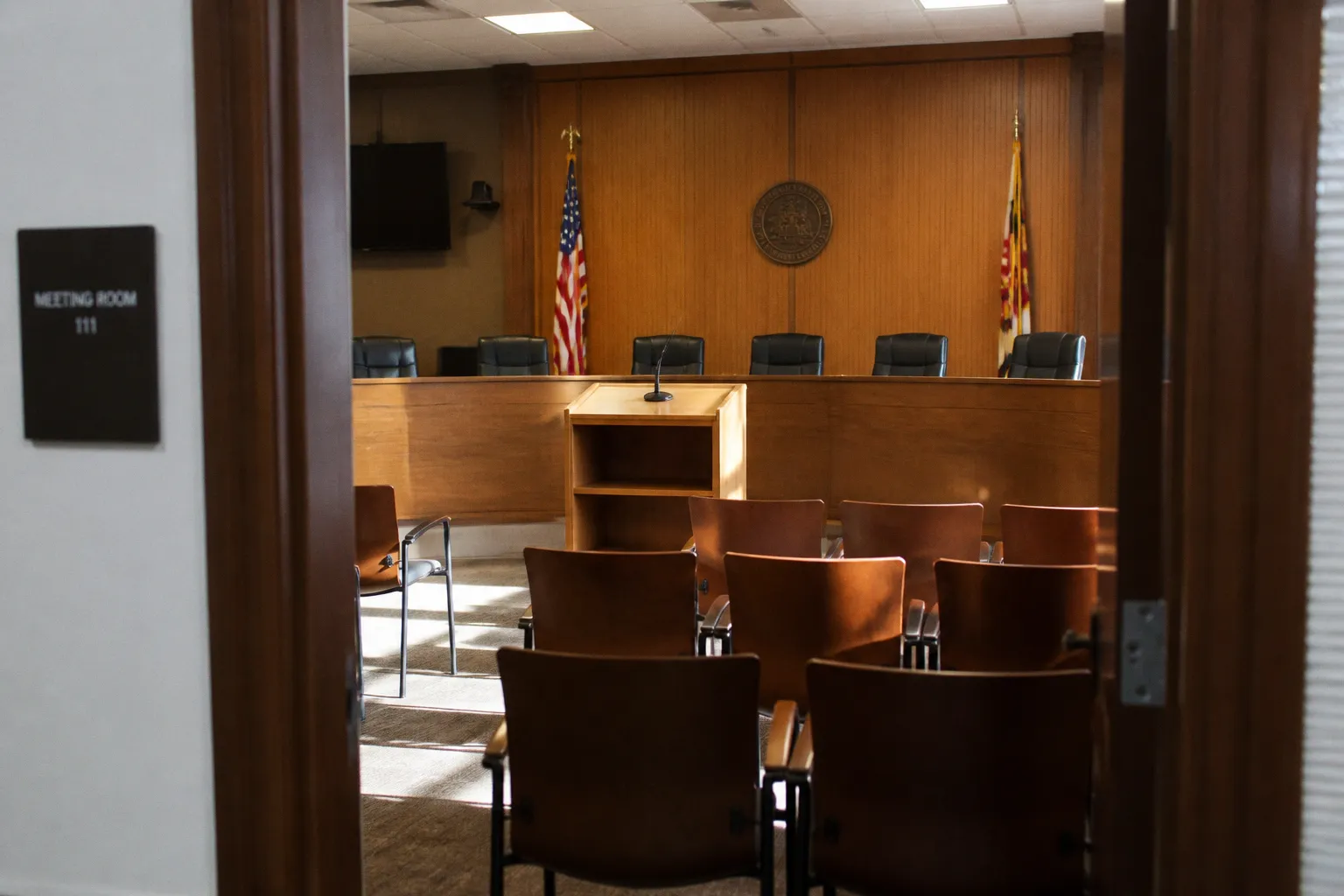
A Somerset County town hall, planning workshop, Board of County Commissioners hearing, and Planning Commission hearing serve different legal functions.
The Somerset County town halls request process therefore begins with classification. A resident who wants general discussion must pursue a community meeting or workshop. A resident who wants a statement preserved in the official record must use a formal public hearing and satisfy its identification, notice, and testimony requirements.
The distinction is practical, not academic. A workshop can help residents raise an issue while a proposal is still being developed. A hearing is tied to a defined decision and gives testimony a place in the administrative file. Asking for the wrong kind of meeting can leave everyone with a useful conversation but no clear procedural next step.
Step 1: Identify the meeting type before submitting a request
The first procedural error is treating every public gathering as interchangeable. It is not. Somerset County uses several participation formats, and each produces a different administrative result.
Formal public hearings
A formal hearing is part of a statutory or local approval process. It may concern a comprehensive plan, a plan amendment, a zoning matter, or a development application. Testimony is taken under defined procedures. Speakers are required to state:
- Their name.
- Their address.
- Whether they support, oppose, or remain neutral on the matter.
At hearings before the Somerset County Board of County Commissioners, each person who signs up to speak receives a maximum of five minutes. The time limit applies to the individual speaker. A longer written submission does not automatically extend the oral presentation period.
Formal testimony can enter the official legal record when the speaker follows the required procedure. That record may later be used by the decision-making body when evaluating the matter. It is therefore not merely a collection of public opinions. It is part of the administrative file for the proceeding.
That does not mean every sentence spoken at a public meeting carries the same weight. Testimony is more useful when it addresses the proposal before the body, identifies a verifiable planning consequence, and asks for an action the body has authority to take. A hearing is not a substitute for a technical report, but it is the place to explain why the report, application, or recommendation deserves approval, revision, deferral, or denial.
Planning Commission meetings
The Planning Commission evaluates planning matters and issues recommendations under the applicable county and state framework. It does not possess the final legislative authority to adopt a comprehensive plan or zoning change. Its function is analytical and recommendatory.
Under Maryland Land Use Code § 3-203, the commission must hold at least one public hearing before recommending adoption of a comprehensive plan, plan part, or amendment to the legislative body. The statute also requires copies of a recommended plan or amendment to be provided to adjoining jurisdictions and relevant state or regional units at least 60 days before the public hearing.
That 60-day distribution requirement affects the timing of the proceeding. It is not a shortcut for a resident seeking an immediate town hall. It establishes a notice and coordination period for the plan process.
A regular Planning Commission meeting may also include discussion of pending planning work without being the required public hearing. Residents should read the agenda carefully rather than infer the meeting's status from the subject alone. The same topic can appear first in a workshop, later in a staff presentation, and eventually in a formal hearing.
Collaborative planning workshops
A workshop is not the same as a hearing. Somerset County collaborative planning workshops do not require advance statutory notice, do not involve binding votes, and do not place statements automatically into the official evidentiary record.
Workshops can still have practical value. They allow residents, staff, planners, and local officials to identify land-use conflicts before a formal recommendation is prepared. They can surface issues involving road capacity, agricultural land, public services, drainage, easement delineations, or development patterns. They do not, however, substitute for formal testimony.
A workshop is often the better first request when the proposal is preliminary, the residents' concerns are not yet organized, or the group needs an explanation of the county's process before deciding whether to submit testimony. It is also a useful setting for narrowing a broad concern into a question that staff can answer.
A workshop can influence the drafting process. A formal hearing creates the procedural record. The distinction controls what happens to a resident's statement afterward.
Town halls and community meetings
A town hall is generally a public discussion forum rather than a statutory decision point. The meeting may be requested to address a neighborhood concern, explain a pending planning issue, or gather information before a formal application or hearing.
The available research does not establish a single online form or a current dedicated contact for requesting a new town hall outside the scheduled hearing calendar. A resident should not assume that an informal request automatically creates a legally noticed meeting. The request must be directed to the relevant county or municipal office, and the organizer should obtain confirmation of the meeting's status, purpose, location, and whether comments will be recorded.
A town hall can be particularly useful when the issue crosses administrative boundaries. A road, drainage pattern, development corridor, or future land-use designation may affect more than one neighborhood. A preliminary meeting can put residents, staff, and elected officials in the same room before positions harden. But the request should still identify the decision that may follow. Otherwise, the meeting risks becoming a general complaint session with no clear route into the planning process.
Step 2: Define the subject and identify the responsible body
A request that describes only a general concern is difficult to route. The subject should be stated in land-use terms and connected to the governmental body with jurisdiction.
A usable request should identify:
- The parcel, road, district, or geographic area affected.
- The planning or zoning instrument involved.
- The specific decision or policy under consideration.
- The requested meeting type.
- The expected participants.
- Whether the requester seeks discussion, formal testimony, or both.
- Any supporting documents that should be circulated in advance.
For example, “Residents want to discuss development” is not a defined planning subject. “Residents request a public meeting concerning the transportation and stormwater effects of a proposed zoning amendment affecting parcels along a named roadway” gives staff a subject that can be assigned and scheduled.
The responsible body depends on the issue:
| Issue or objective | Likely forum | Procedural result |
|---|---|---|
| Discussion of a neighborhood planning concern | Town hall or collaborative workshop | Public discussion; no automatic evidentiary record |
| Recommendation on a comprehensive plan or amendment | Planning Commission public hearing | Testimony may enter the record; commission issues a recommendation |
| Final legislative action on a county plan or zoning matter | Board of County Commissioners proceeding | Board evaluates the matter under the applicable county process |
| Solar Energy Facility floating-zone application generating more than 2 megawatts | Planning Commission and Board hearings | Separate formal hearings may be required as part of the application process |
| Request for explanation before a pending hearing | Workshop, town hall, or scheduled meeting | Information exchange; no substitute for formal testimony |
The classification should be made before a petition is circulated. A petition can demonstrate public interest, but it does not change the statutory role of the Planning Commission or the Board of County Commissioners. It also does not convert a workshop into a hearing.
A petition can nevertheless be useful when it identifies a shared concern and gives officials a reason to convene a discussion. The petition should say what residents are asking for: an informational meeting, a change to a draft plan, additional technical review, or an opportunity to speak at a scheduled hearing. “Stop the project” may express the group's position, but it does not by itself identify the procedural action being requested.
Match the request to the decision stage
The stage of the matter matters as much as the topic. A request concerning a draft comprehensive plan is different from one concerning an application already scheduled for a hearing. In the first situation, residents may be asking for explanation or an opportunity to shape the draft. In the second, the relevant question may be how to register, submit written material, and speak within the established rules.
Before sending the request, determine whether:
1. The issue is still general policy or has become a specific application.
2. A staff report, map, or draft amendment already exists.
3. The matter is listed on a Planning Commission or Board agenda.
4. The requester wants an informal conversation or a formal place in the record.
5. The requested body can grant the relief being sought.
This prevents a common mismatch: asking the Planning Commission to make a final legislative decision, or asking a town hall to perform the work of a public hearing.
Step 3: Submit a precise meeting request and preserve confirmation
The third step is administrative. The requester must transmit a defined proposal to the office or body responsible for the subject. The request should not depend on informal assumptions about who will receive it.
A written request should contain a concise subject line and a complete description. The following structure reduces ambiguity:
1. Requested action: State whether the request seeks a town hall, workshop, appearance on an existing agenda, or formal hearing testimony.
2. Subject: Identify the plan, amendment, application, ordinance, parcel, or infrastructure issue.
3. Geographic scope: Name the affected town, district, road corridor, or property.
4. Participants: List the resident group, civic association, property owners, or other organizations requesting the meeting.
5. Requested outcome: Specify whether the group seeks information, staff explanation, public discussion, or placement of an item on an official agenda.
6. Attachments: Include maps, written comments, photographs, traffic information, drainage observations, or draft recommendations.
7. Contact information: Provide one responsible contact for scheduling and follow-up.
The requester should retain a copy of the submission and any delivery confirmation. If the office replies that the issue belongs before another body, that response should also be preserved. It establishes the administrative path and prevents repeated submissions to the wrong forum.
The request should distinguish between an informal meeting and a statutory hearing in direct language. A suitable formulation is:
“This request seeks a community planning meeting for information exchange. It is not submitted as formal testimony. If the matter is scheduled for a public hearing, the undersigned requests information on the procedure for registering to speak and submitting written comments.”
That distinction protects the integrity of the record. It avoids claiming that workshop remarks have the same status as hearing testimony.
A requester seeking a formal hearing should instead ask how to register for the specific proceeding. The relevant procedure may depend on the agenda, the type of application, and the body conducting the hearing. The available facts establish the five-minute speaking limit at Board hearings and the required identity and position statements. They do not establish a universal online request form for every Somerset public meeting.
What to confirm after sending the request
A response that merely says “we received your email” is not the same as confirmation that a meeting has been scheduled. The organizer should seek a clear answer about:
- Which public body or office will handle the request.
- Whether the proposed gathering is a town hall, workshop, regular meeting item, or formal hearing.
- Whether the meeting will be publicly noticed.
- Whether comments will be recorded or summarized.
- Whether the group may distribute written materials.
- Whether the matter will later appear on an official agenda.
- What additional filing or registration steps apply.
The point is not to turn an informal meeting into a legal proceeding. It is to prevent confusion about what the meeting can accomplish. Residents should know whether they are asking officials to listen, staff to explain, a commission to recommend, or the Board to take final action.
Location and attendance logistics
Public hearings and Planning Commission meetings are held in the Commissioners Meeting Room, Room 111, at the Somerset County Office Complex, 11916 Somerset Avenue, Princess Anne, Maryland.
A meeting location does not by itself establish the legal status of the event. A gathering held in the same complex may be a hearing, workshop, regular meeting, or administrative session. The agenda and notice control the procedural context.
Before attending, the requester should confirm:
- The meeting date and start time.
- The body conducting the meeting.
- Whether the matter appears on the published agenda.
- Whether advance speaker registration is required.
- Whether written materials must be submitted before the meeting.
- Whether the meeting is a formal hearing or an informal workshop.
- Whether remote participation is available, if relevant.
If the purpose changes between the request and the meeting, the organizer should ask for an updated description in writing. A meeting initially described as a workshop should not be treated as a public hearing simply because many residents attend or because officials discuss a pending application.
Step 4: Prepare testimony that can be used in the record
The fourth step applies when the objective is formal participation. A five-minute limit requires compression. A speaker should not use the opening minutes for background that does not relate to the pending decision.
A technically usable statement has four components.
1. Identify the speaker and position
The speaker should state the name and address for the record and identify the position: support, opposition, or neutral. This is not optional presentation etiquette. It is part of the information required for the testimony to be entered properly.
A group should also decide whether one person will present a coordinated statement or whether several residents will speak separately. Separate speakers should add distinct information rather than repeat the same paragraph. Repetition consumes the available time without giving the body a clearer basis for action.
2. Identify the legal or planning subject
The speaker should name the plan, amendment, zoning application, or development proposal under consideration. If the issue concerns a specific parcel or corridor, the location should be stated precisely.
A listener should be able to tell from the first part of the statement which item is being discussed. This is especially important when an agenda contains several planning matters or when residents are addressing officials who have received comments on more than one proposal.
3. Connect the objection or support to measurable effects
General statements have limited analytical value. Stronger testimony connects the requested action to a concrete land-use consequence, such as:
- Roadway access and traffic conflict points.
- Capacity of water, wastewater, or drainage infrastructure.
- Setback requirements and the relationship between structures.
- Compatibility with an adopted future-land-use designation.
- Agricultural preservation or resource protection.
- Emergency access and fire-service circulation.
- Easement delineations and the effect on construction or maintenance access.
- Parcel configuration and the ability to comply with applicable dimensional standards.
The statement should separate established facts from conclusions. “The proposal violates the setback requirement” is a legal assertion. It should be supported by the applicable measurement, plan sheet, or ordinance provision. “The proposed structure appears to be located within the required setback based on the submitted site plan” is a more precise evidentiary statement if the speaker has not completed the legal determination.
The same discipline applies to traffic, drainage, and public-service concerns. A resident can describe recurring ponding at a particular location, identify the roadway used by the neighborhood, or point to a feature shown on a submitted map. The resident should not present an unverified assumption about engineering capacity as a settled agency finding.
4. State the requested action
The body needs a specific request. Examples include:
- Recommend denial of the amendment.
- Defer the recommendation pending revised traffic information.
- Require a revised site plan showing easement delineations.
- Maintain a specified land-use designation.
- Request additional drainage analysis.
- Accept the written submission into the hearing record.
- Schedule a separate informational workshop before the formal recommendation.
The request should correspond to the authority of the body. The Planning Commission may analyze and recommend. It does not exercise the final legislative authority to adopt a comprehensive plan or zoning change. A demand directed to the wrong body produces an inaccurate record of the requested action.
For a Board of County Commissioners hearing, the request should also distinguish between the decision on the pending matter and broader policy changes that would require a separate process. A speaker may ask the Board to deny or revise an application while separately asking staff to study a countywide planning issue. Combining those requests without explanation makes the testimony harder to evaluate.
Written materials and evidentiary discipline
Written testimony should use page numbers, a clear title, the speaker's name, the date, and the matter under consideration. Maps should identify north orientation, parcel boundaries, roads, and the source of the displayed information. Photographs should include dates and locations when those details affect the argument.
A packet should not contain unsupported allegations about ownership, code violations, public expenditures, or agency decisions. Statutory compliance depends on traceable facts. If a point cannot be verified, it should be identified as an observation or request for further review, not presented as an established violation.
A useful five-minute structure is:
1. Fifteen to thirty seconds for identity and position.
2. Approximately one minute for the specific matter and location.
3. Two to three minutes for the strongest factual and regulatory points.
4. The remaining time for the requested action and any direct response to staff findings.
The speaker should submit the written version even if the oral statement is shorter. The written document gives the body a stable reference and reduces the risk that a technical term, parcel number, or statutory citation is misunderstood during oral delivery.
Do not confuse volume with evidence
A large number of speakers can show that an issue matters to the community. It does not eliminate the need for specific planning analysis. The strongest local testimony often combines individual experience with a concrete document: a map showing access, a photograph of drainage conditions, a comparison with the adopted plan, or a focused question about a submitted site plan.
Residents organizing a joint presentation should assign roles before the hearing. One speaker can address transportation, another can address drainage, and another can explain the requested action. Written materials can contain the full detail while each oral presentation concentrates on a separate point. This is more effective than asking every participant to read the same general statement.
Step 5: Track the proceeding after the meeting
Submitting testimony is not the end of the process. The final step is to track what the public body does with the matter.
For a Planning Commission proceeding, the county zoning ordinance provides a 30-day period for the commission to render its decision and issue its recommendation after a public hearing. That period should be distinguished from the time required for later action by the Board of County Commissioners or another legislative body.
The requester should monitor:
- The meeting minutes or other official record.
- The Planning Commission's decision or recommendation.
- Any revised plan, map, staff report, or application.
- The date of the next Board of County Commissioners proceeding.
- Whether the matter has shifted from workshop discussion to formal hearing.
- Whether new materials require additional testimony.
- Whether the body imposed conditions, requested revisions, or deferred action.
The 30-day Planning Commission timeline does not mean that the entire land-use matter concludes within 30 days. It concerns the commission's decision and recommendation after the hearing. A comprehensive plan or zoning amendment may continue through the legislative process.
Residents should compare the final recommendation with the issue they addressed. If a plan was revised, the relevant question may no longer be whether the original proposal should be approved. It may be whether the revision resolves the transportation, drainage, agricultural, or compatibility concern raised at the hearing.
A resident who attended a workshop should not assume that the workshop discussion will be repeated in the formal record. If the issue later reaches a hearing, the resident should register and present the position under the hearing rules. The same substantive argument may be relevant, but the procedural act must occur in the correct forum.
A town hall creates access to officials. A hearing creates a procedural record. The participant must decide which result is required before choosing the meeting.
Managing dual-hearing requirements for large-scale solar projects
Large-scale solar proposals require particular care because the application process may involve hearings before both the Planning Commission and the Board of County Commissioners. The relevant example is a Solar Energy Facility floating-zone application generating more than 2 megawatts.
The dual-hearing requirement applies to the application process. It does not mean that every resident must appear before both bodies, and it does not turn every community discussion about solar development into a required hearing. The two hearings are separate procedural opportunities associated with the application and the roles of the respective bodies.
Residents may participate before either body or before both. A resident who wants to speak at both hearings should confirm the registration and submission rules for each proceeding rather than assume that signing up once carries over automatically. Written material submitted for one hearing may be relevant to the other, but the resident should ask whether it must be resubmitted or separately identified in the second proceeding.
The roles should remain clear:
- The Planning Commission reviews the planning aspects of the application and acts within its recommendatory role.
- The Board of County Commissioners considers the matter in the proceeding assigned to it under the applicable county process.
- A workshop or town hall may help residents understand the project, but it does not replace either formal hearing when the application process requires them.
The most useful preparation is to separate questions about the project from the action requested of each body. Questions about site layout, access, setbacks, agricultural land, drainage, screening, and compatibility may be relevant to the Planning Commission's review. The Board hearing may involve the next decision in the application process. The resident can raise related concerns in both places, but should frame the requested action according to the authority and stage of the body being addressed.
A group may choose to attend only the hearing most directly connected to its concern. For example, residents focused on the planning analysis may concentrate on the Planning Commission hearing. Others may want to address the Board of County Commissioners as well. Participation before one body is not described here as a prerequisite to participation before the other; the practical question is where the resident wants the concern considered and whether the resident has complied with that hearing's procedures.
Organizing a solar-project presentation
A solar application can generate a wide range of concerns, from land-use compatibility to road access and drainage. A presentation should avoid treating all of them as one undifferentiated objection. The speaker should identify the specific feature of the application, explain the effect, and state what change would address it.
For example, a resident might request additional analysis of construction access rather than make a general claim that the project will damage roads. Another might ask for revised easement delineations or clearer information about maintenance access. A third might compare the proposal with the applicable future-land-use designation. Each point can be supported with a map, application page, photograph, or precise question.
The same approach applies to support. A resident who favors the proposal can explain why the use is compatible with the area, what conditions would protect neighboring properties, or what revisions would make the application more workable. Formal testimony is not limited to opposition; it is a structured way to state a position and connect it to the decision before the body.
A better request begins with the result sought
The most reliable way to navigate Somerset MD town halls and public hearings is to begin with the result rather than the meeting label. If the goal is explanation, request a town hall or workshop. If the goal is to shape a draft before recommendation, seek a planning discussion and provide specific written material. If the goal is to place a position in the official record, identify the formal hearing and follow its registration and testimony rules.
For a comprehensive plan, plan part, or amendment, the Planning Commission's hearing requirement under Maryland Land Use Code § 3-203 is part of the formal planning sequence. The later 30-day decision and recommendation window is another stage in that sequence, not a deadline for the entire matter. For a qualifying Solar Energy Facility floating-zone application, the application process may involve hearings before both the Planning Commission and the Board of County Commissioners, with residents free to participate before either or both bodies under the applicable procedures.
That is the core of local government transparency in Maryland: not simply having a meeting, but knowing what kind of meeting it is, what question is before the public body, and what will happen to a resident's contribution afterward. A precise request, a disciplined presentation, and careful follow-up give public participation a better chance of affecting the decision that matters.