Vermeer Centrum Delft Tickets: Pre-Purchase Checklist
A visit to Vermeer Centrum Delft is easy to misjudge if you expect a traditional museum filled with original paintings.
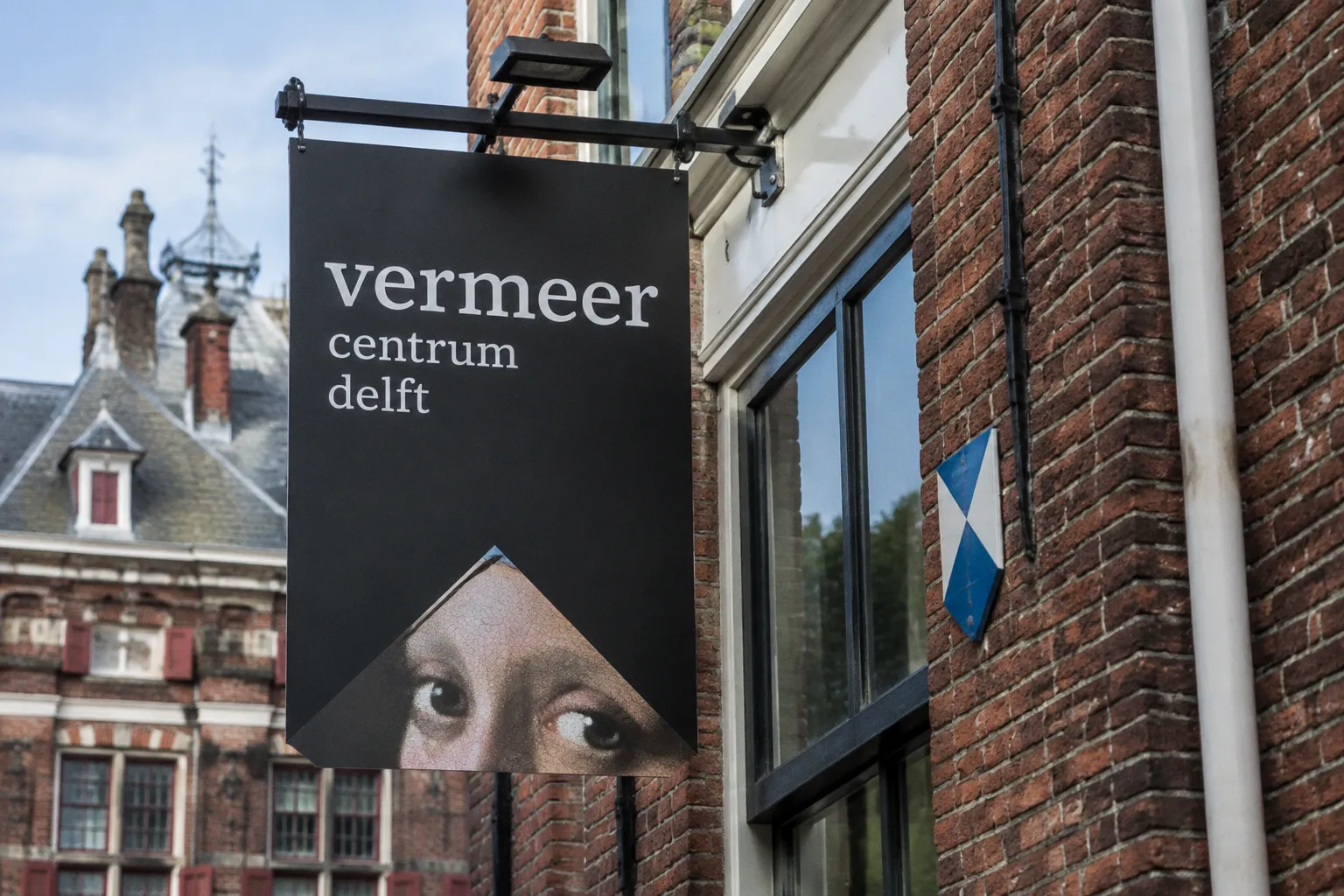
Johannes Vermeer’s famous works are not displayed here in the original, so the most useful question before you buy tickets to Vermeer Centrum Delft is not simply, “How much does admission cost?” It is, “What kind of experience am I booking?”
Tickets and prices
Vermeer Centrum Delft
Delft
01 · GetYourGuide
Entry ticket · Audioguide & activities
€15
02 · Official
Official ticket · Adult
€15
Box office and online booking
Vermeer Centrum Delft — At the box office
The centre in Delft is an interpretation and education space devoted to Vermeer’s life, working methods, surroundings, and complete known body of work. You will see life-size reproductions, interactive displays, and an included audio tour rather than original canvases. Once that distinction is clear, the visit becomes much easier to plan—and much less likely to disappoint.
This checklist walks us through the practical details: ticket types, booking choices, entry requirements, opening hours, location, and what the museum experience is actually like.
Start with the right expectation: this is not a gallery of originals
The Vermeer Centrum Delft tells the story of one of the best-known painters of the Dutch Golden Age, but it does so through carefully presented reproductions and explanatory exhibits. The centre displays life-size reproductions of all of Vermeer’s known works, allowing visitors to follow the development of his subjects, interiors, light, and composition in one place.
That matters because many visitors arrive in Delft hoping to see Girl with a Pearl Earring or View of Delft as original paintings. Those works are held elsewhere. At Vermeer Centrum Delft, the focus is interpretation: how Vermeer may have worked, what is known about his life, how Delft shaped his visual world, and why his paintings continue to attract such close attention.
For our community of travellers, families, and first-time museum visitors, this is a useful distinction rather than a warning. A reproduction-based museum can offer something an original-painting collection usually cannot: a coherent overview of the artist’s entire known output, with room for context and explanation.
Before purchasing admission, make sure the experience matches your plans:
- Choose Vermeer Centrum Delft if you want an accessible introduction to Vermeer and his work in Delft.
- Expect life-size reproductions rather than authenticated original paintings.
- Allow time for the interpretive displays, not only the images themselves.
- Consider the audio tour if you prefer a guided narrative rather than reading every panel.
- If you are travelling with children or relatives who do not usually visit museums, the interactive approach may make the subject easier to enter.
The best ticket choice begins with an honest expectation: Vermeer Centrum Delft is a place to understand the painter’s world, not a vault of original masterpieces.
Check which admission category applies to your group
Ticket pricing can change, and the current amount is best confirmed at the point of purchase. The centre offers several admission categories, so we should identify the correct one before clicking through to a booking page or joining the entrance queue.
Standard adult admission is available, alongside reduced admission for several groups. These include young visitors, students, and holders of selected cultural or city benefit cards. Children in the youngest age group can enter free of charge, and some local or regional discount cards also provide free entry.
Because eligibility rules differ between cards, bring the card or proof that supports your reduced admission. A discount is not usually something we can assume from age, residence, or general museum membership alone. The Museumkaart, for example, does not mean that entry is automatically free at this centre; it is associated with a reduced admission arrangement. That small detail is worth checking before arrival.
A simple way to organise your group is to separate visitors into these categories:
| Visitor type | What to check before buying |
|---|---|
| Adults | Select the standard adult ticket |
| Young visitors | Confirm the age band shown for the current ticket |
| Children | Check whether the child’s age qualifies for free or reduced entry |
| Students | Bring valid student identification |
| Cultural-card holders | Confirm that the specific card is accepted and bring it with you |
| City-pass holders | Check the applicable local pass conditions before arrival |
| Groups | Look for the group admission option if travelling with the required number of people |
| Visitors wanting extra guidance | Consider a separately booked guided tour |
For a family, the practical step is to count each visitor by category before beginning the booking. That keeps the transaction straightforward and helps avoid discovering at the desk that a child’s age band or a discount card has been entered incorrectly.
If you are arranging a larger group, group admission is available for groups meeting the centre’s minimum size. Guided museum tours can also be booked separately, which may make sense for a school visit, organised tour, or family group that wants more structure than the standard audio guide provides.
Decide whether to book online or at the entrance
Vermeer Centrum Delft does not require visitors to reserve a specific time slot in advance. That gives us two practical routes: buy tickets online before the visit or purchase them at the entrance desk.
Online ticket booking is useful when you want to settle the logistics before reaching Delft. It can be especially helpful when the museum visit is one part of a tightly planned day, or when you are coordinating several people with different admission categories. Digital booking may also make it easier to keep your ticket details together with the rest of your travel documents.
Buying at the entrance can be the better choice when your schedule is flexible. You do not need to commit to a mandatory timed entry, so you can decide how the visit fits around a canal walk, lunch, the Nieuwe Kerk, or another Delft attraction.
Before choosing, consider these questions:
1. Do we need certainty before leaving our accommodation?
If your day has little flexibility, online purchase may make the morning feel calmer.
2. Are we still deciding how long to stay in Delft?
If so, buying at the desk allows you to keep the itinerary open.
3. Does anyone in our group need a discount?
Check the accepted documentation and current conditions before completing an online order.
4. Are we booking through a third-party platform?
Review the product description carefully. Some platforms offer different ticket formats or tour combinations, and their processing conditions may not match the centre’s entrance-desk process.
5. Are we arranging a guided visit?
A guided tour is a separate consideration from ordinary admission and should be planned in advance if your group needs a particular format.
There is no need to create unnecessary urgency around a timed reservation when none is required. The best booking method is the one that matches your day, your group, and your comfort with making decisions on arrival.
What to have ready at the entrance
Whether you book online or at the desk, keep the practical details close at hand:
- Your digital or printed admission confirmation, if you purchased online.
- Valid identification for any reduced ticket.
- The relevant Museumkaart, student card, CJP Cultuurkaart, VriendenLoterij VIP-kaart, Ooievaarspas, Rotterdampas, or Delftpas, where applicable.
- Details of your group size if you are travelling as an organised party.
- A little flexibility in case your wider Delft itinerary takes longer than expected.
This is the kind of small preparation that makes navigating the board—and the entrance desk—much less stressful. You are not trying to outsmart the system; you are simply making sure the category you selected matches the person standing in front of the staff member.
Use the included audio tour instead of rushing through
Every admission ticket includes a free audio tour, available in eight languages: Dutch, English, German, French, Italian, Spanish, Japanese, and Chinese. For many visitors, this is one of the strongest practical reasons to include the centre in a Delft itinerary.
An audio tour changes the pace of the visit. Rather than looking at a reproduction and moving on after a few seconds, you have a narrative thread that connects Vermeer’s life, his city, his techniques, and the paintings represented in the centre. It is also helpful when members of the same group prefer different levels of detail: one person can listen closely while another takes in the displays more independently.
The available languages make the experience more inclusive for international visitors, but it is still worth checking how your group prefers to learn. Some visitors absorb a museum best through spoken explanation; others want to read, pause, compare images, and return to the same display. The centre allows room for both approaches.
To get more from the audio tour:
- Choose your language at the beginning rather than assuming you can change it easily later.
- Start with the introductory material, even if you already know Vermeer’s most famous paintings.
- Pause when a reproduction raises a question; the educational displays are part of the visit, not background decoration.
- Give younger visitors permission to move at their own pace rather than treating the audio tour as a school assignment.
- Leave enough time to connect the explanations with the images and interactive exhibits.
A little patience pays off here. The centre is not only showing what Vermeer painted; it is helping us notice how he used space, domestic settings, light, and visual balance. That context is what turns a sequence of reproductions into a meaningful visit.
Plan the arrival around the opening hours
Vermeer Centrum Delft is open daily from 10:00 a.m. to 5:00 p.m. It is closed on December 25. On Boxing Day, December 26, and New Year’s Day, January 1, the opening hours are shorter, from 11:00 a.m. to 5:00 p.m.
The centre is located at Voldersgracht 21, 2611 EV Delft. This address places the visit within Delft’s historic urban fabric, where narrow streets, canals, and other attractions can make travel time feel less predictable than a map suggests. If you are moving through the city with children, luggage, or a mobility concern, build in a little breathing room rather than planning your arrival down to the last minute.
A workable day might look like this:
- Arrive in central Delft with enough time to find Voldersgracht without rushing.
- Visit the centre earlier in the day if you prefer a quieter start and want to keep the afternoon open.
- Pair the museum with nearby historic sights, but avoid stacking too many fixed reservations immediately afterward.
- If you are visiting during a holiday period, check the special hours before setting out.
- Treat the five o’clock closing time as a real endpoint, especially if you want to complete the audio tour rather than make a quick circuit.
The indoor temperature is maintained at approximately 21°C through air conditioning. That is comfortable for most visitors, although a light layer can be useful if you are coming in from a warm, crowded street or spending much of the day indoors.
Understand what the exhibits can—and cannot—show you
The reproductions are central to the Vermeer Centrum Delft experience, but they are not presented as substitutes for original works in terms of material, surface, or provenance. Their purpose is to let visitors study the full range of Vermeer’s known paintings together and to support the educational story around them.
That makes the centre particularly useful for visitors who want to place the famous images in a wider sequence. Girl with a Pearl Earring is not an isolated cultural symbol here; it belongs to a larger body of work shaped by recurring questions about light, interiors, gesture, attention, and everyday life. View of Delft can be considered alongside the artist’s relationship with the city itself.
The displays also introduce the working environment associated with Vermeer, including ideas connected with the camera obscura and the Guild of Saint Luke. These subjects should be approached as part of the centre’s interpretation of Vermeer’s techniques and professional setting, not as an invitation to treat every theory about his process as settled fact.
For first-time visitors, the most rewarding approach is to look for patterns:
- How often does Vermeer place a single figure near a window?
- What changes when the subject is engaged in a task rather than looking outward?
- How do domestic interiors create a sense of privacy or concentration?
- Which details draw your eye first, and which reveal themselves only after a longer look?
- How does Delft appear in the stories surrounding the paintings?
These questions are simple, but they help us move beyond recognition. Seeing a famous title is one thing; understanding why the image has endured is another.
Common ticket-planning mistakes to avoid
Most problems with a visit are not dramatic. They come from a mismatch between expectation and preparation: selecting the wrong admission category, assuming a timed reservation is mandatory, or arriving without realising that original paintings are not on display.
Here are the mistakes worth catching before the day begins:
1. Booking for the wrong kind of museum experience
If your main goal is to see an original Vermeer, confirm which institution holds the work you want. Vermeer Centrum Delft offers reproductions and interpretation.
2. Assuming every museum card means free entry
Discount and pass arrangements vary. Check the specific card conditions and bring the required proof.
3. Treating the audio tour as an optional extra with a separate charge
The audio tour is included with admission and is available in eight languages.
4. Searching for a mandatory time slot that does not exist
Visitors can purchase tickets online or at the entrance without reserving a specific entry time.
5. Leaving the visit until the last few minutes before closing
The centre closes at 5:00 p.m. on regular days. A rushed final visit will not give the educational displays or audio tour the attention they deserve.
6. Forgetting holiday variations
December 25 is a closure day, while December 26 and January 1 have later opening times.
7. Ignoring the needs of the group
Older relatives may appreciate seating and a slower pace; children may need a break between audio stops; international visitors may want to select their preferred language immediately.
A good Delft museum plan is not complicated: choose the right ticket category, allow time for the interpretation, and arrive knowing exactly what the centre does and does not display.
The final pre-purchase check
Before you buy tickets to Vermeer Centrum Delft, run through this short preparation list:
- Have we confirmed that the centre displays life-size reproductions rather than original Vermeer paintings?
- Do we know which admission category applies to each person?
- If we are using a discount or cultural card, will we bring valid proof?
- Do we prefer the flexibility of entrance-desk purchase or the certainty of an online ticket?
- Have we noticed that a timed entry reservation is not mandatory?
- Will everyone in the group be able to use the included audio tour in a suitable language?
- Have we checked the opening hours, especially if travelling around the winter holidays?
- Do we know the address at Voldersgracht 21 in Delft?
- Have we left enough time for the exhibits, audio tour, and interactive elements?
- If we want a guided tour or are travelling as a larger group, have we selected the appropriate option rather than an ordinary individual ticket?
The centre works best when we approach it as a thoughtful introduction to Vermeer and Delft, not as a quick stop for one iconic image. Once the ticket details are settled, the visit itself becomes pleasantly straightforward: enter, choose your language, follow the story, and give the reproductions enough time to reveal the visual decisions behind them.
That is what this means for your day in Delft. You are not simply checking off a museum entrance. You are creating a clearer path into Vermeer’s community, working world, and artistic language—and doing so without the confusion that can come from unclear ticket expectations.
Practical info
Currency: EUR
Driving: on the right
Emergency number: 112