Public records in Somerset: MPIA request steps
A Somerset County public records MPIA request is not a casual email sent into a general government inbox. It is a written records demand directed to the custodian who controls the material.
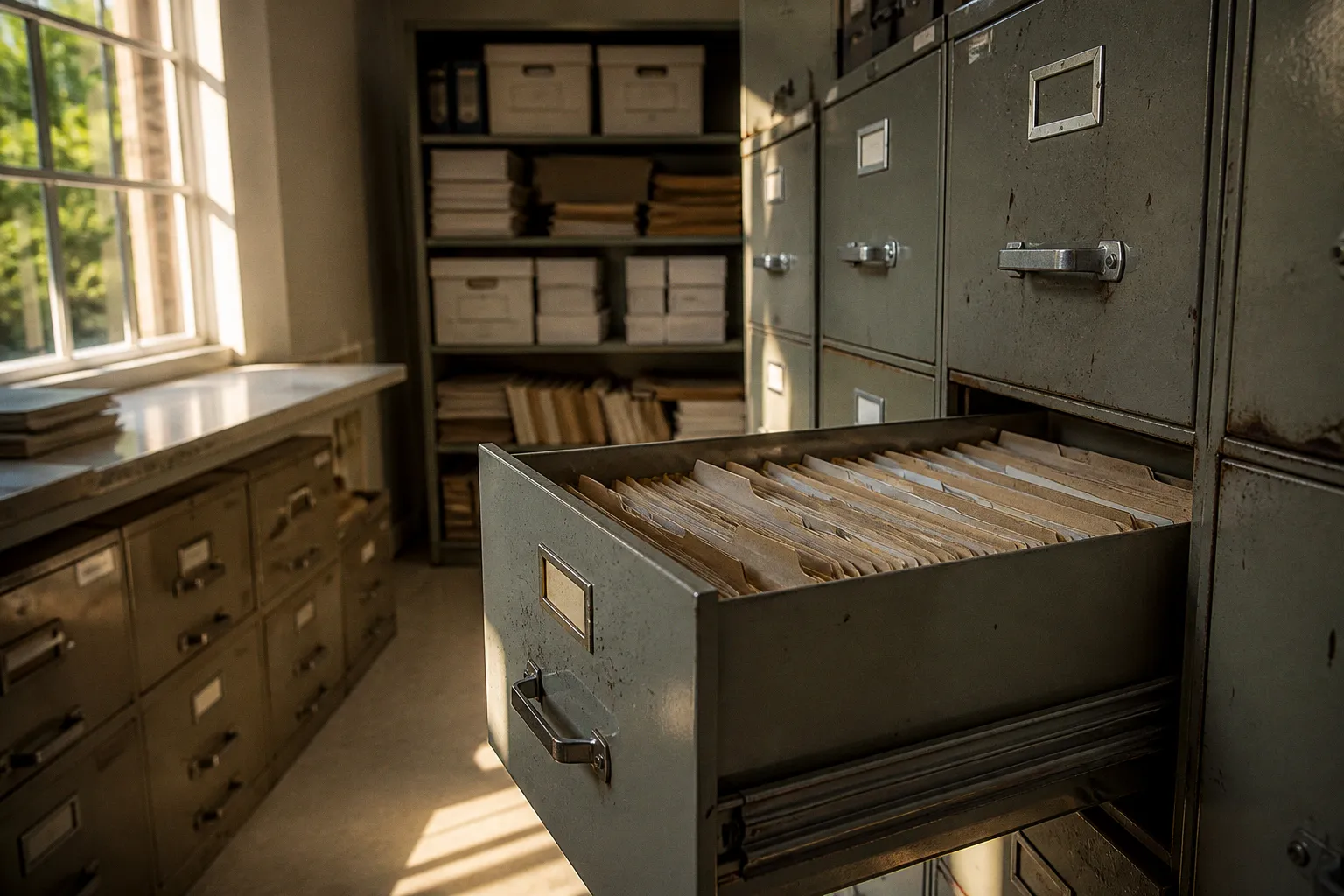
Send it to the wrong office, describe the records loosely, or ignore the department’s fee rules, and the request can stall before anyone starts searching.
That is the practical problem. Somerset County has no single public-records portal that handles every department. County government, the Sheriff’s Office, the Health Department, and the Board of Education operate under different procedures and maintain different records. A request for zoning files is not handled the same way as a request for incident reports. A request for one property is not necessarily treated like a request for an entire development history.
The Maryland Public Information Act gives the public a route into government records. It does not remove the mechanical work. You still have to identify the record, name the agency, submit the request in writing, manage fees, and track the response.
Start with the office that owns the record
Before writing anything, identify where the record was created or maintained. This is the load-bearing part of the process. If it fails, everything built on top of it fails too.
For Somerset County government records, the official custodian is the County Administrator-Clerk. Under Somerset County Commissioners Resolution No. 1182, effective January 31, 2023, MPIA requests must be submitted in writing to the County Administrator-Clerk or the Board of County Commissioners. The County Administrator-Clerk directs the request to the Executive Aide, who handles the response and must be present while a requester reviews records in person.
That rule applies to county records. It does not mean every Somerset County public record should be sent to the County Administrator-Clerk. The agency holding the record remains the correct starting point.
Use the department’s own custodian when the subject is controlled elsewhere:
- County planning, zoning, land-use, permits, and commission material: direct the request to the county office or municipality that maintains the specific file. A Somerset MD zoning records request should identify the property, parcel, application, hearing, or decision with enough precision for staff to locate it.
- Sheriff’s Office records: follow the Sheriff’s Office MPIA procedure and send the request digitally or by U.S. Mail to its Westover office.
- Health Department records: use the Health Department’s separate process, particularly when requesting property-specific files or certified copies.
- Board of Education records: direct requests to the school system’s records custodian. Do not assume that county government procedures apply to the school board.
- Municipal records: a town hall, planning commission, or municipal office may hold records that look like county records but are not. A town zoning decision, for example, may sit with the municipality rather than the county.
The distinction matters because public bodies do not share one filing cabinet. They share a legal framework, but the records are distributed across agencies, offices, databases, and paper files.
A public-records request is only as strong as its routing. The wrong custodian can turn a straightforward search into weeks of avoidable delay.
Write a request that staff can actually search
A useful MPIA request describes records, not grievances. State what you want, where it likely exists, and the date range. Do not make the custodian reverse-engineer a broad political question.
A weak request says:
“Give me everything about development in Somerset County.”
That could include planning files, emails, meeting packets, maps, permits, inspection records, consultant reports, tax records, and correspondence across multiple offices. The search burden is large, the scope is unclear, and the resulting fee estimate may be ugly.
A workable request is narrower:
“Please provide records maintained by the Somerset County planning office concerning the proposed rezoning of [property or parcel number], including the zoning application, staff report, planning commission agenda materials, public comments, written decision, and related maps, for the period January 1, 2024, through December 31, 2025.”
That request gives the custodian several usable anchors:
1. The subject: a particular property, project, application, or decision.
2. The record types: application, report, agenda materials, comments, decision, and maps.
3. The time period: a defined beginning and end date.
4. The likely office: the planning office or other named agency.
5. The delivery target: records responsive to the defined scope, rather than every document vaguely related to growth.
For a Somerset planning commission public records request, name the meeting dates when possible. Include the project name, applicant, parcel number, case number, or agenda item. Planning files often contain similar project names and repeated hearings. A parcel number is more useful than a neighborhood nickname. A case number is better than “the housing project discussed last spring.”
What to include in the written request
A practical request should contain:
- Your name and contact information.
- A clear statement that the request is made under the Maryland Public Information Act.
- The specific department or public body receiving the request.
- A description of the records sought.
- A date range.
- A preferred format, such as electronic copies where available.
- A request for an estimate before substantial fees are incurred.
- A request that the custodian identify any withheld or redacted material and the legal basis for doing so.
- A statement that non-exempt portions should be released if a record contains exempt information.
You do not need to write like a lawyer. In fact, legal fog often makes a request worse. Use ordinary language and enough physical detail to make the search possible.
If the request concerns a property, list each property separately when required. The Health Department requires a separate request for each unique property. Combining five properties into one vague demand may look efficient from the outside. It is not efficient if the department’s procedure treats each property as its own search.
Records versus explanations
The MPIA is a records-access law. It is not a command for an employee to create a new report, answer a policy question, or conduct an analysis that does not already exist.
Ask for:
- Approved plans and amendments.
- Zoning applications and decisions.
- Inspection reports.
- Meeting minutes and recordings.
- Staff memoranda.
- Written comments.
- Permit records.
- Emails or correspondence within a defined scope.
- Maps, drawings, and supporting exhibits.
- Contracts, invoices, and change orders.
Do not frame the request as:
- “Why did the commission approve this?”
- “Explain the county’s growth strategy.”
- “List every reason the project was delayed.”
- “Tell me which officials opposed the plan.”
If the explanation exists in a staff report, meeting minutes, email, or written decision, request that record. Do not force the custodian to manufacture an answer.
Department-specific procedures are not optional details
The broad legal right is statewide. The operating conditions are department-specific. That is where many requests hit a wall.
Somerset County government
For county government records, submit the request in writing to the County Administrator-Clerk or Board of County Commissioners under Resolution No. 1182. The county provides the first two hours of search and preparation time free of charge. After that, it may charge the actual hourly rates of the employees involved.
The county may also impose an overhead fee of up to 50% if the request causes employee overtime or schedule disruptions. That is not a theoretical concern for a broad request that requires staff to pull people away from regular work. A request for a few identified documents is one thing. A demand covering years of correspondence across several divisions is another.
Ask the county to notify you before work beyond the free period creates a charge. Put a spending limit in the request if you have one:
“Please provide an estimate before incurring fees above $100. If the estimated cost exceeds that amount, pause work until I approve the additional expense.”
That does not guarantee the estimate will be exact. It puts a hard stop in the process and prevents a small records request from becoming an unplanned invoice.
Sheriff’s Office
The Somerset County Sheriff’s Office requires MPIA requests to be submitted digitally or by U.S. Mail to its Westover office. It also requires advance payment of estimated fees by check or money order. Cash, credit cards, and PayPal are not accepted under the stated procedure.
That payment rule changes the timing. A request may be complete in substance but not processed until the required payment arrives. If you are mailing the request, keep a copy of the letter, payment instrument, and mailing record. If submitting digitally, retain the sent message and all attachments.
Law-enforcement records also tend to contain material that may be withheld or redacted under applicable exemptions. That does not mean the entire file automatically disappears. Ask for any reasonably segregable non-exempt portions and for an explanation of the basis for withholding or redaction.
Health Department
The Somerset County Health Department’s fee structure is more specific:
- The first two hours of search and preparation are free.
- Standard copies cost $0.50 per page.
- Certified copies cost $0.20 per page under the stated schedule.
- Administrative time after the first two free hours is charged at $25 per hour.
- A separate request is required for each unique property.
- The department’s general response expectation is within 10 business days.
The copy rates are not interchangeable with the county commissioners’ standard-copy rate. County government lists $0.25 per page for standard 8.5-by-11-inch copies, while the Health Department lists $0.50 per page. Treat the custodian’s applicable schedule as controlling for that request.
If you need a certified copy for a permit, transaction, hearing, or legal filing, say so at the beginning. Do not wait until the department has processed an ordinary-copy request and then ask staff to rebuild the order.
Fees follow labor, not just paper
People often focus on the copy charge because it is easy to see. The bigger cost is usually staff time.
A 20-page file is cheap to copy. A 20-year email search across multiple custodians is not. The physical pages are the least expensive part of the job. Search, review, redaction, preparation, and coordination consume the hours.
Somerset County’s first two hours of search and preparation are generally free. After that, actual employee hourly rates may apply. If the work triggers overtime or disrupts schedules, the county may add overhead of up to 50%. The Health Department applies a $25-per-hour administrative charge after two free hours. The Sheriff’s Office may require advance payment based on an estimate.
Here is the practical cost picture:
| Requesting office | Free search/preparation time | Copy or administrative charges | Special handling |
|---|---|---|---|
| Somerset County government | First 2 hours | Actual employee rates after the free period; $0.25 per standard 8.5-by-11-inch page | Up to 50% overhead may apply for overtime or schedule disruption |
| Sheriff’s Office | Procedure requires fee handling based on the request | Estimated fees may be required in advance | Payment by check or money order; no cash, credit card, or PayPal |
| Health Department | First 2 hours | $0.50 per copy page; $0.20 per certified copy; $25 per hour after the free period | Separate request for each unique property |
The table is not a substitute for asking for a current estimate. It is a warning against assuming that all Somerset County offices bill the same way.
Keep the first request narrow
If you need a complete project history, build it in stages. Start with the documents that establish the official record:
1. The application or petition.
2. The staff report.
3. The planning commission agenda packet.
4. Meeting minutes or recording.
5. The final decision and conditions.
6. Permits, inspection reports, or compliance documents.
Once those records show a gap, send a targeted follow-up. For example, if the staff report refers to a drainage study that is not included, request that study by name. If the minutes say the commission reviewed revised plans, request the dated revision.
This is faster and cheaper than opening with an unlimited request for every email, draft, attachment, and internal note.
The copy fee is the visible cost. The real meter runs when staff have to search, review, redact, and explain what can be released.
Managing a zoning or planning records request
Land-use records have a physical logic. A project moves through applications, technical review, public notice, hearings, decisions, revisions, permits, and inspections. Request the file in that order and you can see where the process changed.
For a Somerset MD zoning records request, identify:
- The property address and parcel number.
- The applicant or property owner, if known.
- The zoning case or application number.
- The existing and proposed zoning designation.
- The relevant hearing or meeting dates.
- The type of record sought.
- The period covered.
If the concern is drainage, traffic, septic capacity, or road access, request the technical material rather than relying only on public comments. A meeting transcript may show that residents raised flooding concerns. The engineering memorandum, drainage plan, soil evaluation, or inspection record may show how the agency treated those concerns.
This is where civic oversight becomes more than attendance at a meeting. A public hearing captures what was said. The underlying records show what was measured, what was omitted, and what conditions were attached to approval.
For planning commission materials, request both the agenda packet and the final minutes. They are not the same thing. The packet may contain maps, staff recommendations, revised conditions, and applicant exhibits. Minutes usually provide the formal record of action but may compress the discussion. If a meeting was recorded, request the recording separately.
Municipal records require another routing check. Somerset County and its towns do not automatically hold one another’s planning files. If a town planning commission heard the case, send a request to that municipality as well as to the county when the county may hold related technical or permitting material.
What happens after submission
A request is not complete until you can prove what you sent and when.
Keep:
- The final request.
- Any attachments.
- The delivery confirmation.
- The name of the custodian or office.
- Payment records.
- Fee estimates.
- Follow-up correspondence.
- The records received, including file names and dates.
The Health Department and general MPIA guidance identify a 10-business-day response period for acknowledgment or response. That does not necessarily mean every responsive record will arrive in 10 business days. A complex search, consultation, review, or redaction process may take longer. The agency should still communicate about the request rather than let it disappear into administrative dead space.
A response may contain:
- Full production.
- Partial production with redactions.
- A fee estimate.
- A request for clarification.
- A statement that no responsive records were found.
- A denial of some or all records.
- A notice that records are held by another agency.
- A production schedule.
Read the response against the request line by line. If you asked for six categories and received three, identify the missing categories specifically. Do not send an angry paragraph claiming that the agency “withheld everything.” State which requested records are absent and ask whether they do not exist, are maintained elsewhere, are still under review, or were withheld under an exemption.
If the agency produces electronic files, preserve the original file names and metadata when possible. Do not reorganize everything immediately into a new folder structure that erases dates or source information. Records are evidence of an administrative process. Their original context matters.
Redactions, denials, and agency silence
A denial should identify the legal basis for withholding the record or portion of the record. A redacted document should not be treated as a complete answer if the agency has released only a black rectangle and no explanation.
Ask for:
- The specific exemption relied upon.
- The records or portions withheld.
- Whether non-exempt material can be segregated and released.
- The date by which any remaining review will be completed.
- The identity of the custodian handling the response.
Do not assume that a disputed record is either completely public or completely secret. Many government records contain mixed content. A personal phone number may be redacted while the project correspondence is released. Protected law-enforcement information may be removed while factual incident material remains available. The question is whether the agency has separated exempt and non-exempt material reasonably.
The Board of Education illustrates why tracking matters. In April 2026, the ACLU of Maryland filed a lawsuit in Baltimore City Circuit Court alleging that the Somerset County Board of Education violated the MPIA by failing to produce records requested in August 2025 and February 2026 concerning book removals and curriculum decisions. The filing is an allegation, not a final court ruling, and the current outcome should not be presented as settled. The practical point is simpler: an unanswered or delayed request can become an accountability issue in its own right.
For requesters, preserve the timeline. The original request date, follow-up dates, agency replies, fee demands, and partial productions may matter more than a single hostile exchange.
Using the Compliance Board when fees become unreasonable
Maryland provides a route for assistance when an agency imposes an unreasonable fee. If a requester believes the Somerset County Sheriff’s Office or another agency has charged an unreasonable fee exceeding $350, the requester may seek assistance from the State Public Information Act Compliance Board.
That threshold is not a magic number that makes every fee below it acceptable. It is a trigger identified in the available guidance for seeking the board’s assistance. Keep the estimate, invoice, calculation of hours, copy count, and communications explaining the charge.
Challenge a fee with facts:
- The agency estimated 14 hours but did not explain the search scope.
- The request was limited to one parcel and one hearing date.
- The custodian included duplicate copies.
- The agency charged labor for work outside the request.
- The agency failed to apply the first two free hours.
- The fee schedule used does not match the office handling the request.
Do not challenge a charge merely because it is inconvenient. A broad, multi-year request can legitimately require substantial staff labor. The stronger argument is that the fee does not match the records sought or the work actually performed.
Common failures that waste time
Most MPIA problems are not dramatic. They are administrative failures repeated until the request dies.
Sending one request to every agency
A county administrator, Sheriff’s Office, Health Department, town clerk, and Board of Education do not share one custodian. Route separate requests to the offices that hold the records.
Asking for “all records”
That phrase creates search problems and fee exposure. Define the project, property, dates, and record types. Expand later if the first production shows a gap.
Leaving out the date range
Without dates, staff may have to search years of material. A defined period is not a limitation to apologize for. It is a tool that keeps the request load-bearing.
Assuming a hearing equals the whole record
Public comments and meeting minutes do not replace staff reports, exhibits, maps, engineering reviews, permit files, or final conditions.
Paying before seeing the estimate
Where an agency requires advance payment, confirm what the estimate covers and what happens if the actual cost differs. For the Sheriff’s Office, use the accepted payment method: check or money order, not cash, credit card, or PayPal.
Treating silence as a final denial
Follow up in writing. Ask for the status, the assigned custodian, the anticipated production date, and any problem with the request’s scope. A documented follow-up is more useful than a phone call no one records.
Accepting an unexplained “no records” response
Ask how the search was conducted and whether another department or municipality may maintain the material. “No records found” can mean the records do not exist. It can also mean the request went to the wrong office or used terms the agency does not use.
A workable sequence for Somerset requesters
The process does not need to be elaborate. It needs to be disciplined.
1. Identify the decision or event. Start with the property, project, hearing, incident, permit, or policy action.
2. Locate the likely custodian. Separate county, municipal, Sheriff’s Office, Health Department, and school-board records.
3. Define the record set. Name documents and date ranges instead of asking for an entire subject.
4. Submit in writing. Use the custodian’s required method and retain proof of delivery.
5. Request electronic copies where practical. This reduces paper handling and may limit copying charges, though it does not eliminate search or review labor.
6. Set a fee ceiling. Ask for an estimate before charges exceed a stated amount.
7. Track the response period. Mark 10 business days for an acknowledgment or response where that timeline applies.
8. Review the production against the request. Identify missing categories, redactions, and unexplained gaps.
9. Follow up narrowly. Ask one question at a time and cite the specific missing record.
10. Escalate with documentation. Preserve the request history before seeking assistance over unreasonable fees or pursuing another formal remedy.
The purpose is not to bury staff in paperwork. It is to create a clean record of what the public asked for, what the agency searched, what it produced, and what remains unresolved.
Somerset County’s planning decisions leave physical traces: graded ground, altered drainage, new traffic loads, added utility demand, and maintenance obligations that do not disappear when a meeting adjourns. Public-records access is how residents connect those physical outcomes to the decisions and documents that produced them.
A well-built MPIA request does not guarantee a favorable answer. It does something more useful. It removes avoidable excuses, limits unnecessary cost, and puts the agency’s response on measurable ground. In local government, that is where transparency becomes operational rather than decorative.