Rethinking Local Zoning: Lessons in People-Centered Urban Development
Ever wonder what a reporter's trip to Shanghai has to do with what happens at the next Somerset County zoning hearing? Stick with me, because the connection is more direct than you might think.
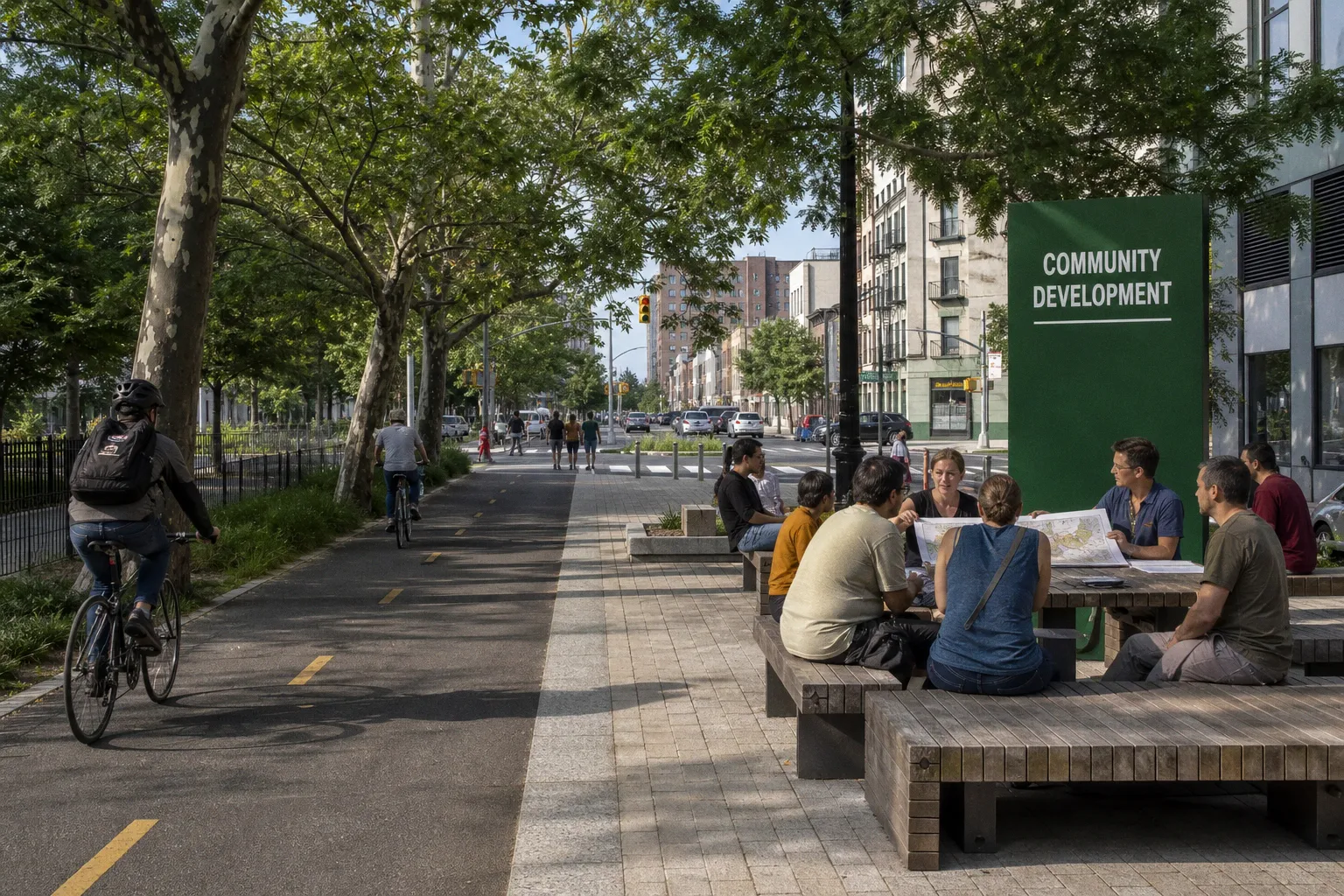
According to a recent Global Times report out of Shanghai, two Latin American scholars — Mariana Escalante and Francesco Faiola — spent time touring Chinese cities to study what the outlet describes as people-centered urban planning. Their itinerary, as the reporter tells it, included the Shanghai Urban Planning Exhibition Center, an eco-friendly power company in Nanjing, and a walk along the Bund. The piece frames their visit as a study in how community renewal and sustainable transit can be woven together in cities that honestly dwarf anything we'd see here on the Eastern Shore.
Why a global story lands on our block
It's tempting to flip past a piece about Shanghai and Nanjing and get back to worrying about the property notice in front of your house. Fair enough. But here's the thing: this isn't really a story about China. It's a story about a question every community eventually asks itself — who is our planning actually for?
The same week that Global Times was running that piece, planners in Nigeria reportedly pledged a stronger commitment to sustainable urban development, per the Guardian Nigeria. Over here, Smart Growth America published something called "Planning as misdirection" — a headline that, for any of us who have ever sat through a confusing comprehensive plan briefing, probably lands a little close to home. And Rising Kashmir carried a feature asking what it really takes to build cities that breathe, grow and endure.
So while the geographies look different, the through-line is the same. People are asking whether planning shapes genuine community life, or whether it just rearranges the furniture.
What this means for your next planning meeting
Here's where I'd encourage you to slow down and look at our own county. Somerset County is working through its Comprehensive Plan, and the language we use at public hearings — density, growth corridor, mixed-use, by-right — can feel like a foreign country. It isn't. It's the same vocabulary those scholars in Shanghai were reading, just translated into Crisfield and Princess Anne.
A few things worth tracking as we move into the fall:
- How our commissioners talk about people-centered outcomes. Are we hearing about walkability, housing affordability, and transit access — or mostly about parcel counts and setback lines?
- Whether public comment is genuinely shaping the draft, or whether it's being received and filed away. That's the part the Smart Growth America piece seems to be probing.
- Where infrastructure dollars are actually landing. You can read every plan in the world, but until the sidewalks and the water lines follow, the plan is just paper.
If you want to do exactly one thing this month, pick one — just one — agenda item from the next County Commissioners meeting, read the staff report the night before, and bring one written question. Not a speech. Just a question. That's how the community fabric gets stronger, one curious neighbor at a time, and it's how we get better at navigating the board instead of feeling navigated by it.
The cities that breathe and grow and endure aren't built by the people flying overseas to study them. They're built by the folks who show up on a Tuesday night, stay for the whole agenda, and ask the planner to slow down and explain.