Maryland DNR Regenerative Farming Leases: Navigating Local Land Use and Compliance
The Maryland Department of Natural Resources is seeking proposals from farmers to lease state land for regenerative agriculture.
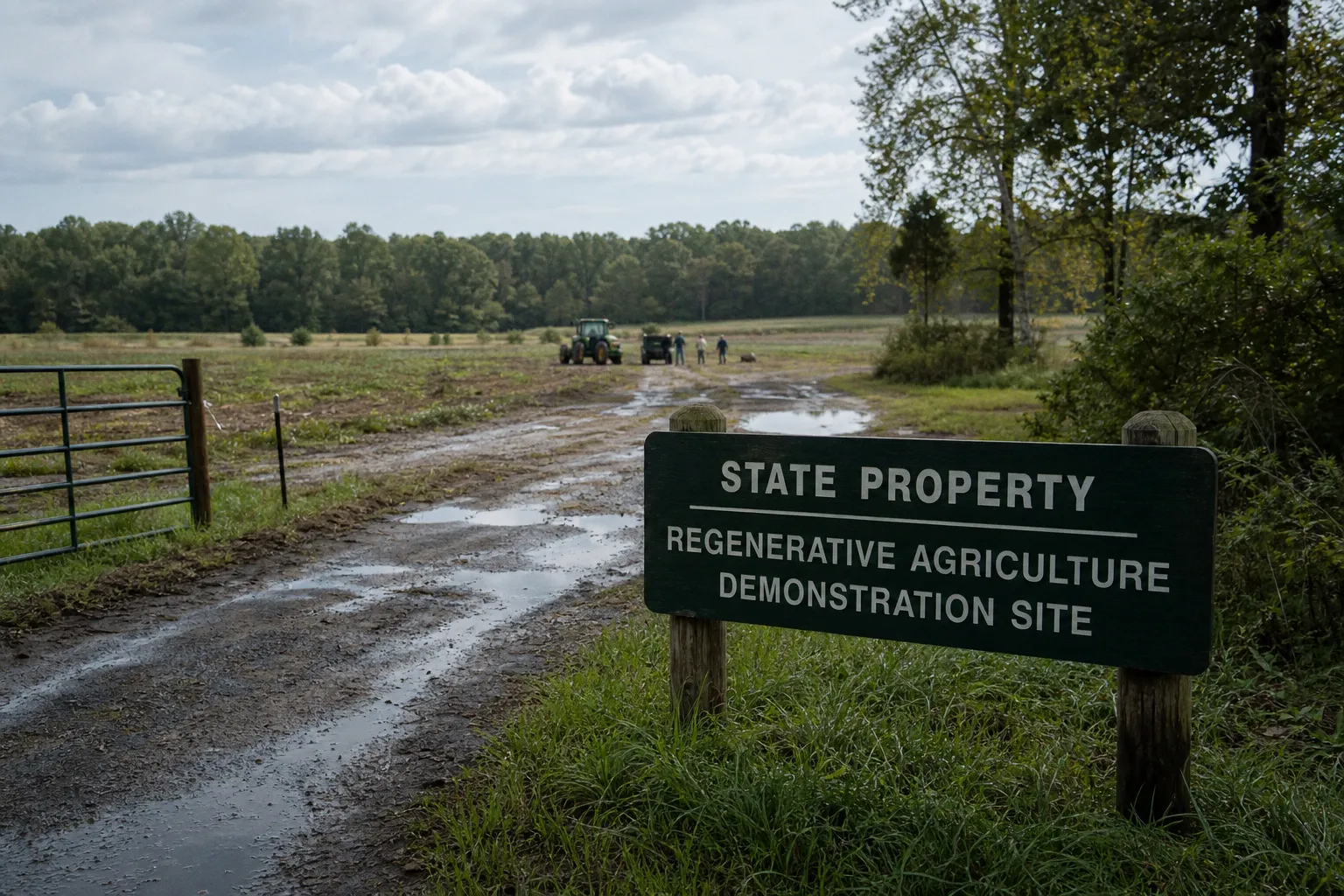
The initiative prioritizes practices intended to improve soil health and water quality. For Somerset County, the immediate issue is not a new county zoning ordinance but the potential interaction between state land leasing, agricultural operations, and local land-use review.
The state-land opportunity
The confirmed notice establishes three operative points:
- The landowner is the Maryland Department of Natural Resources.
- The arrangement would involve leasing state land to farmers.
- Proposed agricultural practices should address soil health and water quality.
The available information does not identify specific parcels, acreage, lease terms, application deadlines, eligibility standards, or required supporting documents. Those omissions are material. A proposal cannot be evaluated for statutory compliance or site feasibility without knowing the parcel boundaries, existing easements, access arrangements, and applicable restrictions.
Regenerative agriculture is described here as the policy objective of the initiative, not as a separately defined zoning classification. The notice indicates the state will prioritize practices with soil and water benefits. It does not establish that a particular farming method is mandatory for every parcel or that local land-use requirements are displaced.
What Somerset County applicants should verify
A farmer considering the opportunity should separate the state leasing question from the local land-use question.
1. Identify the parcel.
Confirm whether the proposed state land is located in Somerset County or elsewhere in Maryland. The available notice does not name participating properties.
2. Confirm the controlling landowner and lease authority.
State ownership determines who controls the lease proposal. It does not, by itself, establish the full set of permissions required for site access, structures, water use, drainage work, or other physical changes.
3. Review local zoning requirements.
If the parcel is in Somerset County, determine the applicable agricultural zoning district and any setback requirements, access standards, use limitations, or development review procedures. The evidence does not specify how county zoning applies to any parcel under consideration.
4. Map environmental and property constraints.
Soil-health and water-quality objectives make site conditions central to the proposal. Applicants should verify drainage patterns, stream or wetland constraints, conservation easements, utility corridors, and access easements before describing a project as feasible. No parcel-specific easement delineations or environmental maps are provided in the available notice.
5. Obtain the operative application documents.
The snippet confirms that proposals are being sought, but it does not provide the submission channel, deadline, scoring criteria, or required format. Those details must be confirmed directly through the Department of Natural Resources before filing.
This sequence prevents a common compliance error: treating a state invitation to submit a proposal as approval to conduct every proposed activity on the land.
Why the distinction matters
The initiative places agricultural performance objectives—soil health and water quality—inside a land-leasing process. That can affect how proposals are prepared, but the available facts do not support a conclusion that the program changes Somerset County’s comprehensive plan, rezones agricultural land, or overrides local development controls.
The practical consequence is limited but clear. Farmers should first determine whether a relevant state parcel exists, then review the lease conditions and the local regulatory framework governing that parcel. County planners and property owners should likewise avoid assuming that participation in the state program resolves questions involving access, setbacks, easements, or site improvements.
At present, the confirmed information supports only a state solicitation for farmer proposals. Parcel-specific land-use conclusions require the Department of Natural Resources’ full opportunity notice and the applicable county records.