Navigating HB 538: How Maryland’s Housing Act Impacts Somerset County Zoning
According to analysis from The Maryland Wire, Maryland's Housing Expansion and Affordability Act (HB 538), enacted under Governor Wes Moore, imposes state-mandated density bonuses and procedural caps…
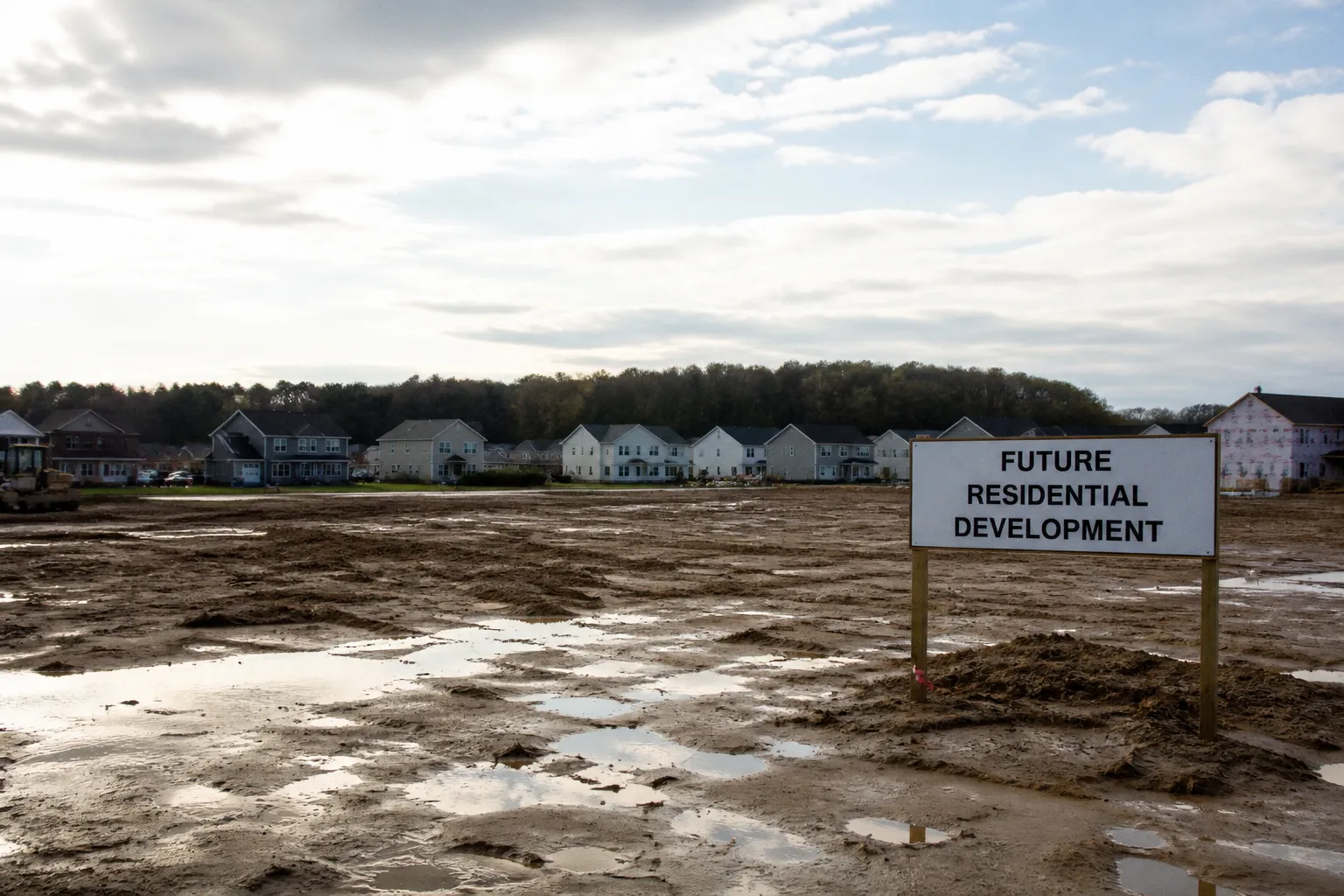
According to analysis from The Maryland Wire, Maryland's Housing Expansion and Affordability Act (HB 538), enacted under Governor Wes Moore, imposes state-mandated density bonuses and procedural caps on local zoning authority. The legislation overrides local restrictions across three operational domains: transit-oriented density, manufactured and modular housing, and streamlined permitting. For Somerset County, the practical question is which provisions attach locally, given the absence of qualifying passenger rail stations within county borders.
The Three Statutory Pressure Points
HB 538 codifies three mechanisms that displace conflicting local provisions. The Transit-Oriented Density (TOD) provision mandates density bonuses within three-quarters of a mile of passenger rail stations for projects setting aside qualifying affordable units. The Manufactured and Modular Preemption strips local jurisdictions of authority to ban modular and manufactured housing in single-family residential zones. The Streamlined Permitting clause caps the number of public hearings local boards may require for qualified projects, curtailing delay-based opposition procedures.
Each provision operates independently. Somerset County must audit local code against each clause. The TOD mandate applies only where qualifying rail infrastructure exists; the manufactured housing preemption applies categorically across all single-family zones; the streamlined permitting cap applies to any project meeting the statutory affordability threshold.
The Implementation Variance
Compliance outcomes diverge sharply by jurisdiction. Howard County's Department of Planning and Zoning issued formal policy guidance integrating HB 538 into local code shortly after enactment, according to reporting from The Maryland Wire. Land-use attorney Tom Coale identified Howard County as a model for implementation, stating to the publication that "many jurisdictions are doing a great job implementing the state's housing guardrails." Several charter counties, by contrast, spent early 2025 attempting to carve out local loopholes or delay zoning map adjustments.
The variance is structural, not discretionary. Jurisdictions that proactively map their code against the three statutory mechanisms achieve clean integration. Jurisdictions that treat HB 538 as litigation fodder produce contested compliance pathways.
Local Verification Sequence
Three items require confirmation before any compliance assertion for Somerset County. First, audit current zoning text on manufactured and modular housing within single-family residential districts against the preemption clause. Second, count public hearing steps in the local approval pipeline for multifamily projects meeting the affordability threshold. Third, confirm whether any parcel within county borders falls within three-quarters of a mile of a passenger rail station. Somerset County lacks MARC or Metro service, but parcels adjacent to active freight corridors warrant review for potential future transit reclassification.
The statute operates as a regulatory floor. Local provisions falling below that floor are unenforceable as written.