Main Street Maryland: how the revitalization program works
A downtown can have historic buildings, local businesses, community pride, and still struggle to turn those assets into steady economic activity.
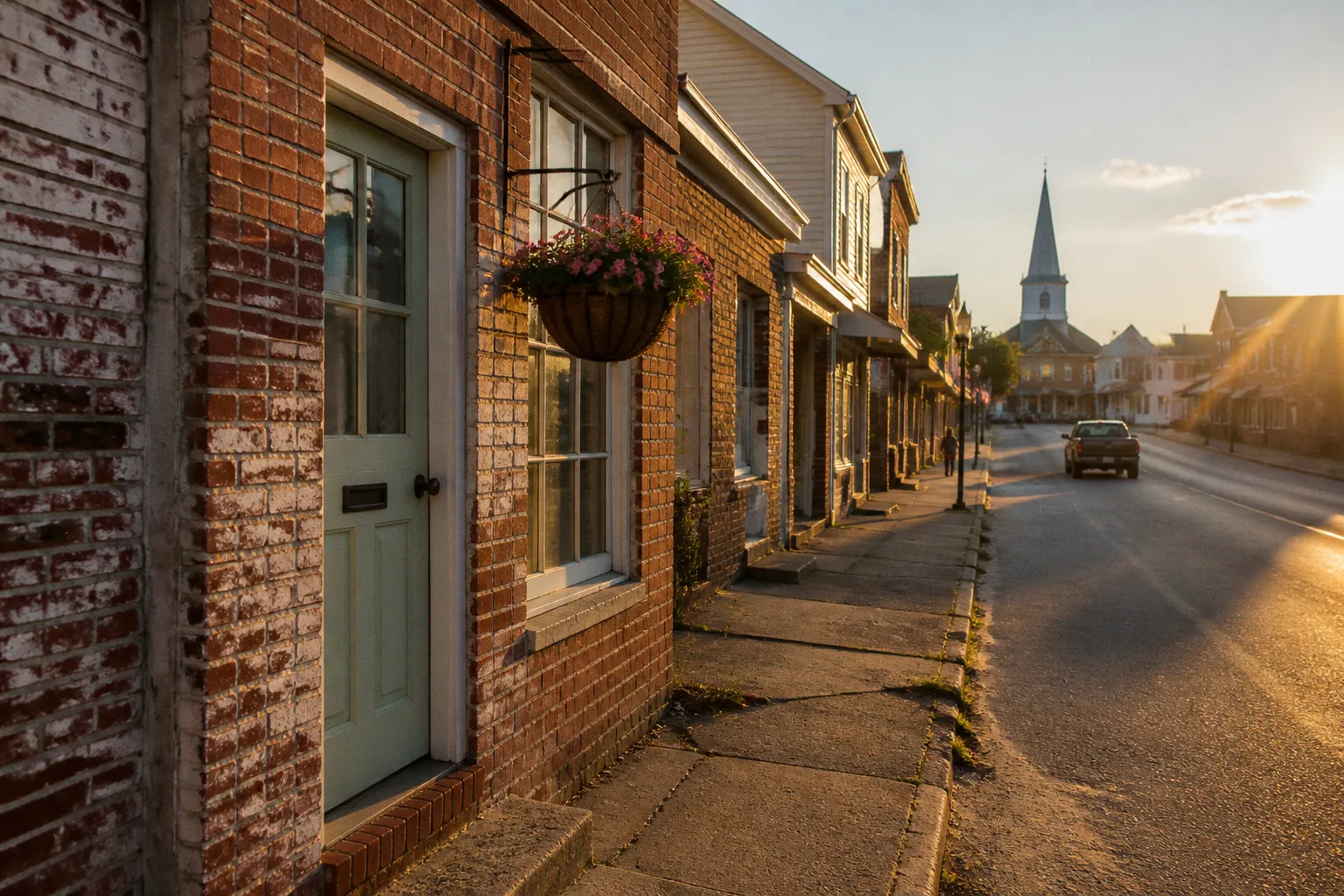
Empty storefronts remain empty, property owners delay repairs, small businesses work in isolation, and residents hear about revitalization plans without seeing a clear path from public discussion to visible change.
That is the gap the Main Street Maryland designation program is designed to address. It is not a single construction grant, a storefront makeover campaign, or a promise that every participating town will receive the same funding. It is a locally led framework for organizing downtown revitalization around business growth, historic preservation, public spaces, community participation, and long-term management.
For Somerset County and other Maryland communities, the value is practical: Main Street can help residents, municipalities, nonprofits, and business owners work from one coordinated plan instead of pursuing disconnected projects. The question is not simply whether a town has an attractive historic district. The question is whether the community is ready to build the organization, partnerships, and work plan needed to keep revitalization moving.
What Main Street Maryland actually does
Main Street Maryland is housed within the Maryland Department of Housing and Community Development. The state program coordinates with the National Main Street Center, a subsidiary of the National Trust for Historic Preservation, and adapts the Main Street Approach for Maryland communities.
At its core, the program helps a community answer five connected questions:
- How will local businesses become stronger and more resilient?
- What should the downtown look and feel like as buildings, streets, and public spaces improve?
- How will the community invite people downtown and give them reasons to return?
- Who will coordinate the work once the initial enthusiasm fades?
- How can the district become cleaner, safer, greener, and more welcoming without losing its local character?
Maryland organizes this work through four nationally recognized areas:
1. Economic Vitality focuses on business recruitment, retention, entrepreneurship, property use, and the financial health of the commercial district.
2. Design addresses historic buildings, storefronts, streetscapes, public spaces, signage, accessibility, and the visual qualities that shape how people experience downtown.
3. Promotion includes events, marketing, storytelling, cultural programming, and efforts to connect local businesses with residents and visitors.
4. Organization creates the structure behind the work: volunteers, committees, local leadership, partnerships, fundraising, and a sustainable program.
Maryland adds a fifth principle: Clean, Safe, and Green. This brings Smart Growth, sustainability, litter reduction, and vibrant public spaces directly into the revitalization conversation. It recognizes something residents already know from walking their own blocks: a downtown does not feel economically healthy if it feels neglected, difficult to navigate, or uncomfortable after dark.
Main Street is less about making one building look better and more about giving an entire commercial district a way to keep improving together.
That distinction matters when we talk about Maryland Main Street program benefits. A designation does not automatically pay for every needed roof, sidewalk, sewer upgrade, or housing project. Instead, it can strengthen the local system that identifies priorities, organizes people, develops projects, and connects those projects with the right public and private funding sources.
The three Main Street Maryland tiers
Maryland communities do not have to begin at the highest level. The program uses three tiers—Connected, Aspiring, and Designated—so that communities can build capacity at a realistic pace.
| Tier | What it means | What the community is building |
|---|---|---|
| Connected | The community uses one or more Main Street principles | Early coordination, focused projects, and familiarity with the approach |
| Aspiring | The community completes a two-year training program while working toward designation | Local leadership, committees, work plans, partnerships, and organizational readiness |
| Designated | The community uses the full Main Street Approach | A fully coordinated local Main Street program with ongoing management and measurable goals |
Connected Main Street communities
The Connected tier is the most flexible entry point. A community may use one or more Main Street principles without immediately taking on the full responsibilities of a Designated Main Street program.
This can be useful for a town that has a committed group of residents, business owners, or local officials but is still learning what kind of downtown organization it needs. The work might begin with a business inventory, a clean-and-green initiative, a storefront improvement effort, a public-space project, or a more organized calendar of downtown events.
Connected status should not be confused with a scaled-down designation that provides the same benefits. It is better understood as a starting structure: a way to test the approach, build relationships, and see whether the community can sustain regular coordination.
For a small community in Somerset County, that first step may be more productive than announcing a broad revitalization campaign without anyone responsible for carrying it forward. What this means for your block is simple: a modest, well-managed project can reveal which partnerships are strong, where local capacity is thin, and what residents actually want to see next.
Aspiring Main Street communities
The Aspiring tier is designed for communities that are preparing for full designation. Maryland’s process generally involves a two-year training program, during which the community develops the skills and organizational foundation needed for long-term work.
That preparation is not administrative busywork. It helps the community move from enthusiasm to operating practice. Who convenes the business owners? How are volunteers recruited? What happens when a committee chair steps down? Which projects are realistic for the first year? How will progress be tracked? How will local government, property owners, nonprofits, and residents share responsibility?
These are the questions that determine whether a downtown program becomes part of the community fabric or remains dependent on one energetic organizer.
Designated Main Street communities
Designated Main Streets are the top tier. They use the full Main Street Approach and are expected to maintain a local program with staff or management capacity, volunteer involvement, committees, annual goals, and a community transformation strategy.
A community seeking Designated Main Street status must generally meet several conditions. The May 2025 eligibility FAQ lists a minimum population of 1,000 residents. The community must also be a state-approved Sustainable Community, contain a defined central business district with a significant number of historic commercial buildings, and lie within a Maryland Priority Funding Area.
The applicant may be a municipality, county, or nonprofit organization with local-government support. The applicant must demonstrate a commitment to employ a local Main Street Manager, fund the local program, and maintain volunteer committees that include public- and private-sector participants.
That requirement for a manager is one of the clearest signs that designation is a serious operating commitment. A volunteer board may provide direction and accountability, but downtown revitalization involves daily coordination: following up with business owners, preparing grant materials, organizing events, tracking projects, communicating with agencies, and keeping committees connected to the annual plan.
How a community prepares for designation
The Maryland Department of Housing and Community Development recommends that prospective applicants assess readiness, learn the Main Street Approach, build support among local leaders and residents, visit established Main Street communities, and set program goals before applying.
We can turn that guidance into a practical sequence.
1. Start with the district, not the application
Before navigating the board or assembling a designation package, define the place you are trying to strengthen. A downtown district should have a recognizable commercial center, a reason for people to gather, and a group of properties and businesses that can benefit from coordinated work.
Walk the area at different times of day. Note which storefronts are occupied, which buildings are vacant, where pedestrians naturally move, and where the public realm creates friction. Look at lighting, crossings, sidewalks, parking, wayfinding, vacant lots, upper-floor spaces, and building conditions.
This is not a beauty contest. A district with visible maintenance problems may still be a strong candidate if local partners understand the challenges and are prepared to address them. A polished downtown may struggle if no organization exists to manage the work.
2. Build a broad local table
A Main Street program cannot be carried by the municipality alone. Local government may control some public improvements, but business owners, property owners, residents, cultural organizations, schools, civic groups, and regional partners all see different parts of the district.
The strongest early conversations are specific. Instead of asking whether people support revitalization in general, ask:
- Which vacant or underused properties create the biggest barrier to activity?
- What prevents existing businesses from expanding or staying open?
- Which events bring people downtown, and what do visitors do afterward?
- What would make the district easier to walk, shop, visit, or live near?
- Which historic features should be protected as the area changes?
- What can volunteers accomplish in the next twelve months?
- Which projects require municipal, county, or state investment?
This is where public participation becomes more than a hearing at the end of a planning process. You are gathering local knowledge before priorities harden into a formal plan.
3. Define the role of local government
Local-government support does not mean that county or municipal staff must manage every Main Street activity. It does mean that the local program needs a dependable relationship with government.
That relationship may include help with permits, code questions, public-space maintenance, infrastructure coordination, event logistics, planning, economic development, and grant administration. It can also help a Main Street organization understand which decisions belong before the planning commission, which belong before the town council, and which require coordination with county or state agencies.
When residents ask how a downtown plan will affect their property, business, or neighborhood, a clear division of responsibilities makes the answer easier to follow. It also prevents the common mistake of treating Main Street as a substitute for zoning, transportation planning, housing policy, or capital budgeting.
4. Create a work plan with visible and structural goals
A good work plan includes projects people can see and the less visible work required to sustain them.
Visible projects might include a façade improvement campaign, better downtown signage, seasonal events, litter reduction, a vacant-storefront display program, or improvements to a small public gathering space. Structural goals might include recruiting a program manager, creating a business directory, establishing volunteer committees, developing a property database, or setting up a regular communication system.
Both categories matter. A community needs early wins to maintain public confidence, but it also needs systems that prevent those wins from becoming isolated one-time efforts.
What the grant program covers—and what it does not
One of the most persistent misunderstandings about Main Street Maryland is the idea that designation automatically brings construction money. It does not.
The Main Street Improvement Program grant is intended primarily for operating expenses, including salaries, professional services, technology, and program administration. Current guidance states that a funding match is not required. Grant-funded activities are expected to align with the applicant’s annual work plan and community transformation strategy and to be completed within one year.
Capital project costs are not supported through this grant. That means a local program should not assume that Main Street funding will pay for a new streetscape, major building rehabilitation, sewer replacement, sidewalk reconstruction, or other construction expense. Those projects must be pursued through other Maryland Department of Housing and Community Development programs or through additional public and private sources.
This distinction changes how a community should build its funding strategy:
1. Use Main Street operating support to strengthen the local program. Staff time, professional assistance, technology, and administration can make the organization capable of managing larger initiatives.
2. Match each capital need to the right funding source. Building rehabilitation, transportation, infrastructure, housing, and public-space improvements often belong in different grant or budget programs.
3. Tie requests to a documented work plan. A project is easier to explain when it responds to a known district need and has a clear local owner.
4. Track outcomes beyond dollars awarded. New businesses, improved properties, volunteer participation, foot traffic, job creation, and private investment can all help show whether the strategy is working.
The 2025 Main Street Maryland Impact Report illustrates the scale of activity reported by designated communities statewide. It lists 193 new businesses, 448 full-time jobs created, 437 part-time jobs created, 249 properties improved, 39,070 volunteer hours, and $84.4 million in public and private investment during 2025.
Those figures are reported statewide for designated communities, not promised results for every applicant. They also should not be treated as proof that designation alone creates jobs or investment. The outcomes reflect organized local work, partnerships, projects, and conditions that vary from one district to another.
What designation can mean for Somerset County
Somerset County community development includes more than downtown appearance. It touches housing, transportation, employment, historic preservation, local business growth, public services, and the ability of residents to remain connected to the places where they live.
A Main Street framework can contribute to that larger picture by giving a commercial district a focused organization and a shared set of priorities. In Princess Anne, for example, the documented local example is Main Street Princess Anne, Inc. That does not establish a countywide Main Street Maryland designation, and it does not mean every Somerset County community meets the requirements for Designated status.
Crisfield deserves the same careful distinction. Crisfield is established in the available information as a Sustainable Community and has received other state revitalization support, but the reviewed material does not establish that Crisfield is currently a Connected, Aspiring, or Designated Main Street Maryland community.
That precision is not a technical footnote. It protects residents from confusing separate programs and helps local leaders ask better questions. A community may qualify for one type of revitalization assistance without qualifying for Main Street designation. It may also benefit from Main Street principles without pursuing the Designated tier.
For residents thinking about crisfield md revitalization or neighborhood work elsewhere in the county, the useful questions are:
- Is there a defined commercial district that would benefit from coordinated attention?
- Are enough historic commercial buildings present to support the program’s purpose?
- Does the proposed area lie within a Maryland Priority Funding Area?
- Does the community have state-approved Sustainable Community status?
- Who would serve as the local applicant?
- What organization would employ or contract with the Main Street Manager?
- Which businesses, property owners, residents, and public agencies would participate?
- What funding could support operations, and what separate funding would be needed for capital work?
- What should residents be able to see change within the first year?
Historic preservation is part of the economic strategy
Historic preservation is sometimes treated as a constraint placed on economic growth. The Main Street Approach takes a more useful view: historic buildings and district character can be economic assets when they are maintained, adapted, and connected to active businesses and public life.
That does not mean every building must remain unchanged or that preservation resolves every development question. It means the community should understand what makes its downtown distinctive before replacing those features with generic improvements.
For Somerset County towns, this may include documenting historic commercial buildings, encouraging appropriate rehabilitation, finding productive uses for upper floors, improving storefronts without erasing their character, and helping owners understand available assistance. The goal is not to freeze a district in time. It is to make the existing character work for present-day residents and businesses.
Affordable housing belongs in the wider conversation
Main Street Maryland designation does not automatically provide affordable-housing funding. Still, downtown commercial health and housing conditions are connected.
Upper-floor apartments, small-scale infill, adaptive reuse, and housing near services can support a more active district, but each project still has to meet applicable planning, building, zoning, financing, and affordability requirements. Main Street can help identify opportunities and coordinate stakeholders; it cannot replace a housing program or guarantee that a building conversion will be funded.
This is another reason to keep the local conversation broad. When we discuss a vacant downtown building, we should ask whether it could support retail, offices, community space, housing, or a combination of uses—and then identify the rules and financing that apply to each option.
Common mistakes that slow revitalization
Communities often lose time by treating designation as a label rather than a working system. A few recurring mistakes are worth naming.
Treating the program as a façade grant
Storefronts matter, but a new sign or painted façade will not solve weak business coordination, poor building access, vacant upper floors, or a lack of reasons to visit downtown. Design improvements work best when they are connected to economic vitality, promotion, and organization.
Promising construction funding too early
If residents are told that Main Street will pay for sidewalks or major building work, disappointment is built into the process. The more honest explanation is that operating support can help a local program become capable of pursuing capital funding from other sources.
Making the district too broad
A designation effort needs a defined central business district. If the proposed area includes every nearby neighborhood, rural road, and commercial site, the program may lose the focus that makes its work manageable. A clear boundary also helps residents understand which projects belong to the Main Street plan and which belong to a broader countywide strategy.
Depending on one champion
A passionate mayor, business owner, planner, or volunteer can start the work, but no one person should have to carry it indefinitely. Committees, written responsibilities, succession planning, and a paid manager create continuity when local leadership changes.
Measuring only events
A crowded festival can be valuable, but events are one part of promotion. A healthy program also tracks business openings and closures, property improvements, volunteer participation, storefront occupancy, partnerships, and progress on public-realm projects.
Confusing statewide examples with local guarantees
The statewide 2025 impact figures show what designated communities collectively reported. They do not establish the result a particular town will receive, nor do they prove that one community’s model can be copied without adjustment.
A practical readiness test
Before a community moves toward the application process, we can look for evidence in five areas:
- Place: There is a recognizable commercial district with historic or locally significant buildings and a realistic boundary.
- People: Businesses, residents, property owners, civic groups, and local officials are willing to participate.
- Structure: A qualified applicant and a future management arrangement have been identified.
- Plan: The community can name a small number of achievable first-year goals connected to a longer transformation strategy.
- Resources: Local partners understand the difference between operating support and capital funding and are prepared to sustain the program beyond one grant cycle.
The state recommends that prospective applicants visit established Main Street communities and learn how their programs operate. That kind of visit can be more useful than collecting polished project photos. Ask who does the daily work, how committees make decisions, how businesses participate, what the first year looked like, and which early assumptions proved wrong.
The application process itself can take six months to one year, according to the Maryland program’s FAQ. Newly designated communities may then need one to two years to meet the National Main Street Center’s accreditation standards. That timeline gives residents a realistic sense of the work involved: designation is a milestone, not the finish line.
The state’s published schedule also includes separate timing for different tiers. The 2026 Connected Tier deadline was announced for August 7, 2026, at 5:00 p.m. Eastern Time, with acceptance decisions expected in late 2026 or early 2027. Applications for the Aspiring and Designated tiers were expected in spring 2027, while the Main Street Improvement Program application was expected to reopen in February 2027. Application windows can change, so a community should confirm the current schedule before building its calendar around these dates.
The larger lesson for local development
Main Street Maryland works best when a community treats it as a way to coordinate local knowledge, not as a badge to place on a website. The program brings structure to questions that are already present in many towns: how to reuse vacant buildings, support small businesses, preserve historic character, improve public spaces, and make downtown feel like a place for everyday life rather than an occasional event.
For Somerset County, that approach can complement broader work in neighborhood revitalization, rural development, historic preservation, and local economic growth. It does not replace county planning, municipal budgeting, housing initiatives, transportation investment, or other grant programs. It gives a focused commercial district a framework for making those conversations more connected.
If you are a resident, start by asking what this means for your block: which building, sidewalk, business, public space, or local connection would make the most practical difference? If you are a business owner, ask what would help you stay open, grow, or collaborate with nearby businesses. If you are a local official or nonprofit leader, ask whether the community has the people and structure to manage the work after the announcement.
The strongest Main Street program is not the one with the most ambitious opening presentation. It is the one that keeps showing up—with a work plan, a manager, volunteers, honest funding expectations, and enough local trust to turn individual improvements into a stronger community fabric.