Somerset County Housing Rehabilitation: Step-by-Step Guide
For a Somerset County homeowner, the first question is not whether the roof leaks, the wiring is unsafe, or the house needs an accessibility modification.
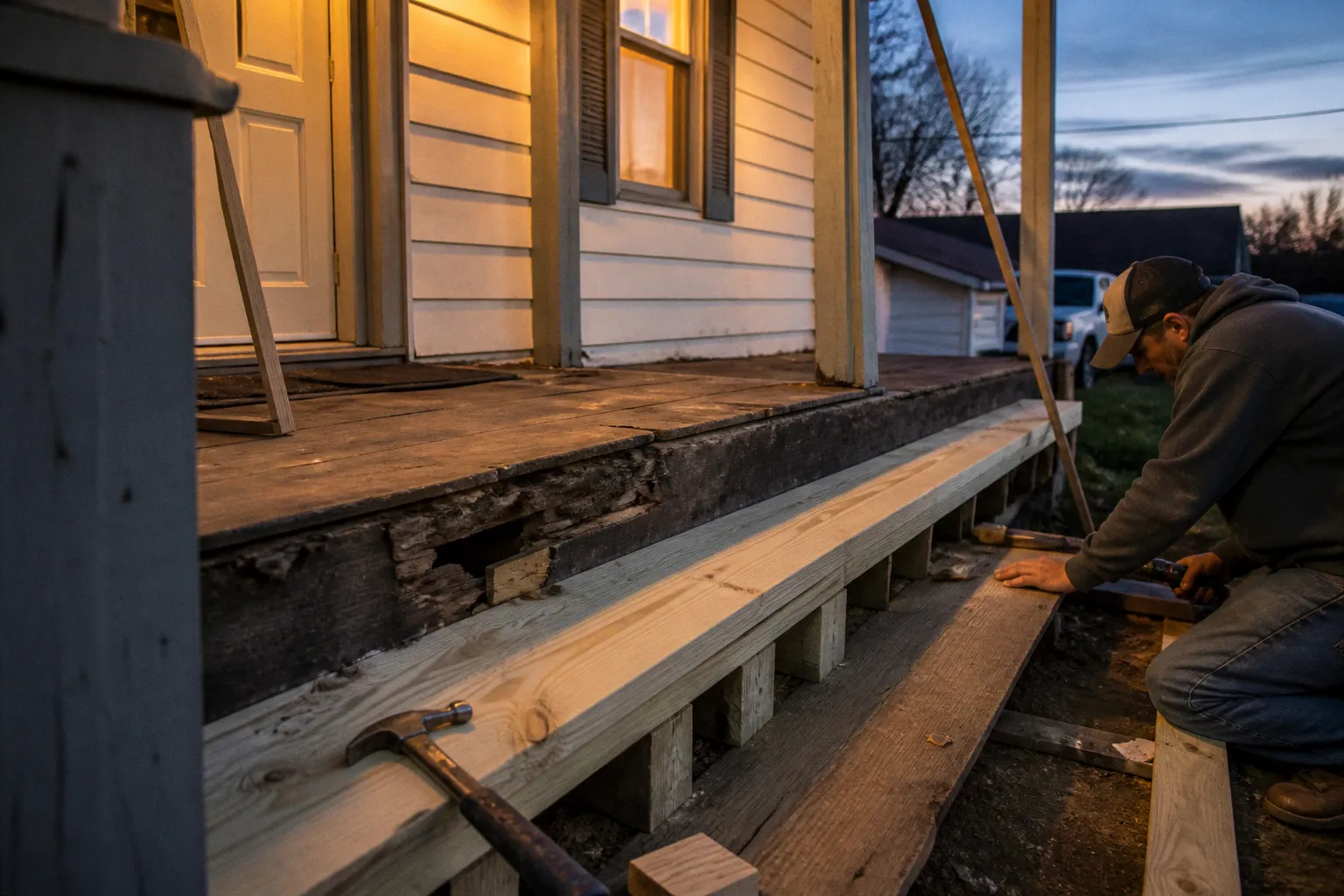
Somerset County Housing Rehabilitation: Step-by-Step Guide
It is whether the household and the property fit the rules of the Maryland Housing Rehabilitation Program (MHRP) and the county’s current method of administering that assistance.
The published 120% Area Median Income threshold listed for a single-person household in Somerset County is $79,800 for 2026; for a four-person household, the listed limit is $114,000. Those figures are ceilings, not targets, and the applicable limit depends on household size and the program year. A homeowner should confirm the current income table before preparing a full application because an outdated threshold can send an otherwise viable application in the wrong direction.
The program is intended for critical repairs involving health, safety, structural integrity, or accessibility. It is not a general home-improvement fund. A deteriorated roof, unsafe electrical service, serious plumbing failure, lead hazard, or accessibility barrier may fit the program’s purpose. New countertops, decorative painting, or a preferred bathroom style generally do not.
The practical work is therefore twofold: establish eligibility and define the project narrowly enough that the agency, the inspector, and the contractor are working from the same description of the problem. That preparation matters more than polished language in the application. A clear packet cannot guarantee funding, but an unclear one makes review harder from the beginning.
Navigating the Department of Technical and Community Services Application Process
The Somerset County Department of Technical and Community Services is identified as the local administering agency for MHRP assistance in the county. Its listed office address is 11916 Somerset Ave., Suite 211, Princess Anne, MD 21853. Before visiting or sending a packet, applicants should contact the department to confirm the current intake method, office hours, required forms, and whether any program details have changed.
The county office is the appropriate starting point for a Somerset County housing rehabilitation program application, but that does not mean every step is handled in exactly the same way for every applicant. State program requirements, local procedures, funding availability, and the condition of the property can all affect the sequence. The following outline is best understood as a working map rather than a promise that every file will move through identical stages.
1. Begin with an eligibility conversation
The first contact should establish several basic facts:
- Whether the property lies within the relevant Somerset County jurisdiction
- Whether the applicant is an owner-occupant or otherwise meets the program’s ownership requirements
- The household size used for income review
- The current income limit for that household size
- Whether the stated repair appears to concern health, safety, structural integrity, or accessibility
- Which forms and supporting documents the department currently requires
This initial conversation may be brief, but it is worth treating it as more than a casual inquiry. Ask which income sources must be reported, whether all household members are included in the review, and whether the department wants contractor proposals before or after the inspection. Those details can affect the order in which money and time are spent.
Applicants should also ask how the county handles documents that are missing or require clarification. The available program materials do not establish a single universal rule for whether an incomplete packet is returned, held while information is gathered, or reviewed with a request for additional material. The safest approach is to submit a complete packet where possible and obtain instructions directly from the administering office when something cannot be provided.
2. Assemble the application packet
The full application generally requires personal, financial, property, and project information. The precise checklist should come from the county because forms and verification requirements can change. Typical materials identified for this program include:
1. Two consecutive months of pay stubs for each employed household member
2. Two years of complete federal income tax returns, including all schedules and pages
3. Two months of bank statements for accounts held by household members
4. Proof of homeownership, such as a deed, recorded land contract, or comparable instrument
5. Evidence of active homeowner’s insurance
6. Information about the proposed repair
7. Any required authorization, affidavit, or consent forms
A self-employed applicant should not assume that a bank statement or a single tax schedule will replace the complete tax documentation requested by the county. Schedule C, Schedule K-1, business records, benefit statements, and other materials may be relevant, but the agency should confirm what it wants for that household’s circumstances.
3. Expect financial and property review
The county may review income, credit, ownership, insurance, property condition, and the proposed scope of work. The draft program materials indicate that a credit report may be obtained and that the applicant may be responsible for that cost under the Reimbursement Affidavit. That obligation should be read carefully before the document is signed.
The timing and order of these reviews are not necessarily identical in every case. Some applicants may be asked for clarifying financial information before an inspection; others may first receive a property visit or a request for a contractor proposal. Do not assume that paying for a detailed bid automatically means the project has been accepted or that an inspection guarantees an award.
4. Review the assistance structure
MHRP assistance may be structured as a loan, a grant, or a combination, depending on factors such as household income, ability to repay, project scope, and program rules. The materials associated with the program describe loan terms ranging from 0% to 6% interest and a maximum repayment term of 30 years. Assistance exceeding $5,000 may be secured by a recorded mortgage on the property.
The exact structure should be stated in the documents offered to the homeowner. Ask:
- Is the assistance a loan, grant, or blended arrangement?
- What event triggers repayment?
- Is there a monthly payment?
- Is the balance deferred until sale, transfer, refinancing, or another event?
- What interest rate and term apply?
- What security instrument will be recorded?
- What happens if the property is sold or ownership changes?
These are not technicalities. A recorded mortgage or other lien can affect a future sale, refinance, estate transfer, or equity calculation.
5. Confirm how payment will work before construction begins
The available facts do not establish one universal disbursement mechanism for every Somerset County project. Some rehabilitation programs pay contractors in stages, some reimburse eligible costs after documentation, and some use a different arrangement approved in the assistance documents. A homeowner should not assume that funds will be advanced, nor should the homeowner assume that reimbursement is guaranteed after work is completed.
Before signing with a contractor, obtain written clarification about:
- Who is paid
- Whether payment is made directly to the contractor or through the homeowner
- Whether draws or inspections are required
- Which invoices, releases, photographs, or completion documents are needed
- Whether change orders require advance approval
- What happens if the final cost exceeds the approved amount
The approval is for a defined repair scope, not a blank authorization to improve the house. Work outside that scope may leave the homeowner responsible for the cost.
There is no publicly documented processing timeline specific to every local application. Funding availability, document completeness, inspection findings, contractor availability, and the complexity of the repairs can all affect the interval between first contact and a final decision. A household facing an active leak, unsafe electrical condition, or loss of essential plumbing should describe the urgency clearly and ask whether any emergency procedure exists.
Financial Eligibility and Income Thresholds for Homeowner Assistance
Income is one of the first eligibility questions, but it is not the only one. A household may fall below the applicable limit and still need to satisfy ownership, occupancy, property, insurance, repair-scope, and documentation requirements.
The listed 120% AMI figures for 2026 are:
| Household Size | Listed Maximum Annual Income |
|---|---|
| 1 person | $79,800 |
| 4 persons | $114,000 |
These figures should be checked against the current program materials before submission. The table does not replace a case-specific determination, and it does not show every household size. If a household has two, three, five, or more members, ask the administering agency for the applicable limit rather than interpolating from the figures above.
What counts as household income?
The application materials identify income sources such as:
- Wages and salaries
- Social Security
- Pensions
- Disability payments
- Child support
- Other recurring income
The important point is disclosure. Applicants should not leave out a source because it is irregular, deposited into a different account, or not treated as wages. At the same time, the precise treatment of different income types can depend on the program’s rules and the documentation available. Ask the county how it handles overtime, seasonal work, self-employment, one-time payments, support payments, and changes in income during the review period.
The draft materials describe the relevant figures as gross annual income. That description should be confirmed with the administering agency for the current application year and household circumstances, particularly where deductions, business expenses, or nontraditional income are involved. Do not convert a net paycheck into an eligibility figure on your own and do not assume that the number on a tax return is automatically the number the program will use.
Income is only one gate
A serious repair does not override an income limit, and meeting an income limit does not guarantee that every requested repair will be funded. The program may also consider:
- Whether the applicant owns and occupies the home
- Whether the property is eligible
- Whether taxes, insurance, or title issues affect the file
- Whether the repair fits the program’s health, safety, structural, or accessibility purpose
- Whether the cost is reasonable and supported by documentation
- Whether funding remains available
For that reason, a household should avoid ordering a large amount of work before learning whether the project is eligible. A contractor can identify a genuine building problem that still falls outside the assistance program.
Documents that make the review easier
A clean financial packet should be organized by household member and account. Place documents in a logical order, label files clearly, and keep copies of everything submitted. If a document does not apply, mark it “not applicable” only if the county allows that approach; otherwise ask what substitute or explanation it wants.
Pay attention to common sources of delay:
- A pay stub is missing from the requested consecutive period
- A tax return is missing schedules or pages
- A bank statement does not show the account holder’s name
- The deed does not match the name used on the application
- Insurance has lapsed or the declarations page is unavailable
- A household member is omitted from the income review
- A document is difficult to read or appears altered by scanning
The goal is not to overwhelm the office with irrelevant records. It is to give reviewers a complete, readable explanation of ownership, household composition, income, and the condition of the property.
Documenting Your Project: Contractor Proposals and Reimbursement Affidavits
A contractor proposal translates a household’s problem into a scope of work that can be evaluated. “Fix the roof” is a starting complaint, not a useful rehabilitation specification. The proposal should explain what is failing, what work will address it, what materials are proposed, and how the price is calculated.
For work within the Maryland Home Improvement Commission’s jurisdiction, the county materials call for a licensed and insured MHIC contractor. Specialized work may also require an appropriately licensed trade professional. Confirm the licensing requirement before hiring, especially when the project includes electrical, plumbing, HVAC, structural, or environmental work.
What a strong proposal contains
A useful proposal should include:
- A description of the observed deficiency
- The location of the deficiency in the home
- The proposed repair method
- Materials, quantities, and relevant specifications
- Separate labor and material costs where practical
- Permit or disposal costs, if applicable
- A realistic schedule or estimated duration
- The contractor’s business name and contact information
- MHIC or other applicable license information
- Proof of insurance requested by the county
- Terms for change orders and unforeseen conditions
Specificity protects both sides. If the proposal says that a roof will be replaced, it should clarify whether sheathing, flashing, underlayment, ventilation, gutters, and disposal are included. If the proposal concerns plumbing, it should identify whether the work addresses a leak, a failed line, sewage backup, or a fixture that is essential to habitability.
The proposal should not be written to make a cosmetic project sound like a safety project. Reviewers are accustomed to distinguishing between a necessary repair and an optional upgrade. A candid scope is more useful than inflated language.
Match the proposal to the inspection without treating either document as infallible
The county may compare the contractor’s scope with its property inspection. That comparison is important because the program must connect the proposed cost to an identified housing deficiency. However, the available facts do not establish that the inspection report is an exclusive or unchallengeable catalogue of every item that can ever be considered.
If the homeowner sees a problem that the inspection does not address, document it with photographs, contractor notes, repair history, utility records, or other relevant evidence and ask the county how it should be handled. The agency may request clarification, conduct another inspection, revise the scope, or decline the item. The point is to raise the discrepancy early rather than adding the work after approval.
Likewise, if an inspected deficiency is missing from the contractor’s proposal, ask whether it needs a second estimate or a revised scope. A proposal that quietly omits a serious item can create a false impression that the house will be made safe when the approved work is complete.
The Reimbursement Affidavit
The Reimbursement Affidavit is a financial document, not merely an administrative signature. The available materials describe it as covering costs associated with processing the application, including possible credit-report and inspection expenses. Read the affidavit for the exact costs, the event that creates the obligation, and the method by which payment is expected.
The supplied program information does not establish one universal procedure for collecting those costs. It does not, by itself, show whether costs are deducted from an award, billed separately, collected at a closing, or handled in another way. Applicants should ask the county to explain:
- Which costs are covered
- Whether the costs are owed if the application is denied
- When payment is due
- Whether the amount can change
- Whether the obligation is secured
- Whether the homeowner receives an itemized statement
If the affidavit creates liability even when the project is not approved, that consequence should be understood before signing. Keep a copy with the rest of the application records.
Do not let construction outrun the approval
A contractor may identify urgent work that cannot wait. Even then, ask the county whether work started before written approval can be included. Many assistance programs cannot fund costs incurred outside the approved process, but the governing rule should come from the administering agency rather than assumption.
Do not authorize substitutions, upgrades, or additional rooms on the theory that the contractor can reconcile them later. If concealed damage is discovered after demolition, stop and ask about the change-order process. A written decision is far safer than a verbal assurance that the extra cost will probably be covered.
Distinguishing Between Critical Health Repairs and Cosmetic Renovations
The MHRP is aimed at preserving safe, habitable housing. Its central question is not whether a repair would improve the home, but whether the existing condition creates a recognized health, safety, structural, or accessibility problem.
Potentially eligible work may include:
- Roof replacement or structural roof repair where deterioration causes active leaks or threatens the building
- Mold remediation where the condition presents a documented health concern
- Lead paint abatement in older housing when required procedures apply
- Asbestos removal or encapsulation where hazardous material is present and disturbed
- Plumbing repairs involving active leaks, sewage backup, or loss of essential fixtures
- Electrical repairs addressing fire hazards, serious code concerns, or failed service
- Accessibility modifications such as ramps, doorway widening, or bathroom changes for a disabled occupant
- Foundation or structural repairs involving settlement, cracking, or water intrusion
The facts of the property matter. A roof may be old but not yet a critical failure. A bathroom may be difficult to use because of an occupant’s disability and therefore present an accessibility need, while a request for new finishes in the same bathroom remains cosmetic. A mold claim may require an inspection or other documentation rather than a contractor’s unsupported conclusion.
Commonly excluded or difficult-to-justify requests include:
- Decorative interior or exterior painting
- Countertops, cabinets, and other aesthetic kitchen upgrades
- Bathroom fixtures that are not connected to a functional or accessibility problem
- Landscaping and fencing
- Driveway resurfacing
- Appliance replacement without a documented safety or habitability concern
- Room additions or expansions beyond the existing footprint
This boundary can be frustrating because homeowners rarely experience a house as a list of separate program categories. A leaking roof may also damage ceilings and flooring. An electrical repair may expose unrelated deterioration. A bathroom accessibility project may reveal plumbing or framing work. Describe the chain of cause and effect, but let the county determine which connected costs fit the program.
The strongest application does not call every inconvenience an emergency. It shows, with evidence, why a particular condition threatens safe occupancy or the home’s basic function.
Evidence is more persuasive than labels
Useful supporting evidence can include:
- Dated photographs showing the condition
- Inspection notes
- Contractor findings
- Repair invoices and prior maintenance records
- Insurance correspondence
- Utility or plumbing records
- Medical or accessibility documentation where relevant and appropriate
- Code notices or other official property records
A photograph of a stained ceiling does not prove the current source of the leak, but it helps establish the condition. A contractor’s proposal may identify the roof assembly that needs replacement, while an inspection may establish the effect on the interior. Together, the documents create a more credible project narrative.
If the county’s inspection does not reflect a condition the homeowner believes is important, ask about the procedure for submitting additional evidence or requesting a further review. The available information does not establish a guaranteed re-inspection right or a formal appeal route for every disagreement. The practical advice is simple: raise the issue promptly, preserve the evidence, and request the agency’s answer in writing.
Alternative Support Pathways: Habitat for Humanity and Operation Rebuild
The MHRP is not the only possible source of help, and it is not designed for every housing problem. A household may exceed the MHRP income limit, need a different type of assistance, or own a structure that cannot reasonably be rehabilitated. Two programs often considered in this context are Habitat for Humanity’s critical repair work and Operation Rebuild.
Program names can conceal important differences. The administering organization, service area, income definition, lien terms, volunteer requirements, and construction process may change. Treat the comparison below as a starting point for questions, not as a substitute for current written program terms.
Habitat for Humanity of Wicomico County: Critical Home Repair Program
Habitat for Humanity of Wicomico County operates a Critical Home Repair Program that may serve eligible households in Somerset County. Its focus is generally on essential repairs affecting health, safety, or the basic condition of the home. The available materials identify a $90 non-refundable credit-report fee and indicate that a lien may be recorded for repairs exceeding $5,000. Income requirements apply, but they may differ from the MHRP standard.
Habitat’s operating model may include volunteer labor and donated materials. That can reduce the cash cost of a project, but it does not mean the homeowner has no obligations. The homeowner may be expected to participate through “sweat equity,” provide access to the property, complete preparation work, or accept a narrower scope than a conventional contractor would propose.
Before applying, ask Habitat to confirm:
- Whether the current service area includes the property
- Which repairs are being accepted
- The current income limits and method of calculation
- Whether the credit-report fee is still required
- Whether a lien will be recorded and how its amount is determined
- What homeowner participation is expected
- Whether licensed contractors are used for regulated trades
- How long the project may take
- What happens if the repair uncovers additional damage
The fact that Habitat may be more flexible about labor or materials does not guarantee that it will approve a cosmetic request. Critical repair remains the center of the program.
Operation Rebuild
Operation Rebuild addresses homes that are beyond ordinary rehabilitation. It is described as serving single-family owner-occupants whose properties require complete reconstruction rather than repair of the existing structure. The listed income condition is no more than 80% of the STAR/Adjusted HOME Income Limits, which is a different and potentially lower threshold than the MHRP’s 120% AMI standard.
The distinction between the programs is structural:
- MHRP is directed toward repairing an existing dwelling.
- Habitat’s critical repair work may address essential deficiencies through its own nonprofit model.
- Operation Rebuild concerns replacement or reconstruction when the existing structure cannot reasonably be rehabilitated.
A property being in poor condition does not automatically make it a rebuild case. The relevant agency will need to assess whether repair is feasible, whether the structure is condemned or otherwise beyond repair, and whether the household meets the program’s current requirements. The homeowner should not order demolition or commit to reconstruction based only on an informal opinion from a contractor.
Compare the programs by questions, not assumptions
| Feature | MHRP | Habitat Critical Repair | Operation Rebuild |
|---|---|---|---|
| Primary purpose | Critical repairs to an existing home | Critical repair assistance under Habitat’s program rules | Reconstruction of a home beyond rehabilitation |
| Income standard | Listed at 120% AMI; verify current limits | Program-specific; confirm with Habitat | Listed at 80% of STAR/Adjusted HOME limits; verify current limits |
| Work model | Agency-approved rehabilitation work | May involve volunteers, donated materials, and licensed trades | Program-specific reconstruction process |
| Homeowner participation | Follow application and project requirements | May include sweat equity or other participation | Confirm directly with the administering agency |
| Lien or repayment terms | Assistance over $5,000 may be secured by a recorded mortgage | A lien may apply to repairs over $5,000; confirm current terms | Confirm whether any lien, repayment, or other security applies |
| Application costs | Review the Reimbursement Affidavit carefully | Materials identify a $90 non-refundable credit-report fee | Confirm directly with the program |
| Payment method | Obtain written terms before work begins | Confirm whether labor, materials, or contractors are paid through the program | Confirm directly with the administering agency |
The table deliberately leaves some terms open. The available information does not establish that Habitat assistance is interest-free, and it does not establish that Operation Rebuild is grant-based. Those are precisely the terms a homeowner should verify before comparing programs by cost.
For an MHRP applicant, the relevant comparison may not be “which program offers the most money?” It may be “which program can address this type of problem, under which ownership and income rules, with what repayment or lien consequences?” A household with a failing roof may need rehabilitation. A household with a condemned structure may need a rebuild pathway. A household that cannot manage a conventional contractor arrangement may need to ask Habitat about volunteer-supported work.
Somerset County housing rehabilitation is therefore less about finding a universal grant than about matching the property’s condition and the household’s circumstances to a specific program’s rules. Start with the Department of Technical and Community Services for MHRP questions, contact Habitat directly for its current Somerset County coverage and requirements, and ask the Operation Rebuild administrator for written eligibility and security terms.
The preparation remains the same across pathways: establish household income, confirm ownership and insurance, document the condition of the home, and describe only the work that addresses the underlying problem. Keep every proposal, photograph, form, and written response. When the program’s rules are uncertain, do not fill the gap with assumptions about approval, payment, liens, or repayment.
A carefully prepared Somerset County housing rehabilitation program application cannot overcome a lack of funding or an ineligible project. It can, however, make the real question visible: what does this house need, which program is authorized to address it, and what will the homeowner be responsible for after the work is done? That is the point at which repair assistance becomes a decision rather than a hopeful stack of paperwork.