Somerset housing rehab: homeowner application checklist
If your roof is sagging, your heat cuts out every cold snap, or you've been quoted a repair bill that would clean out your savings entirely, you're probably scrolling through Somerset County pages…
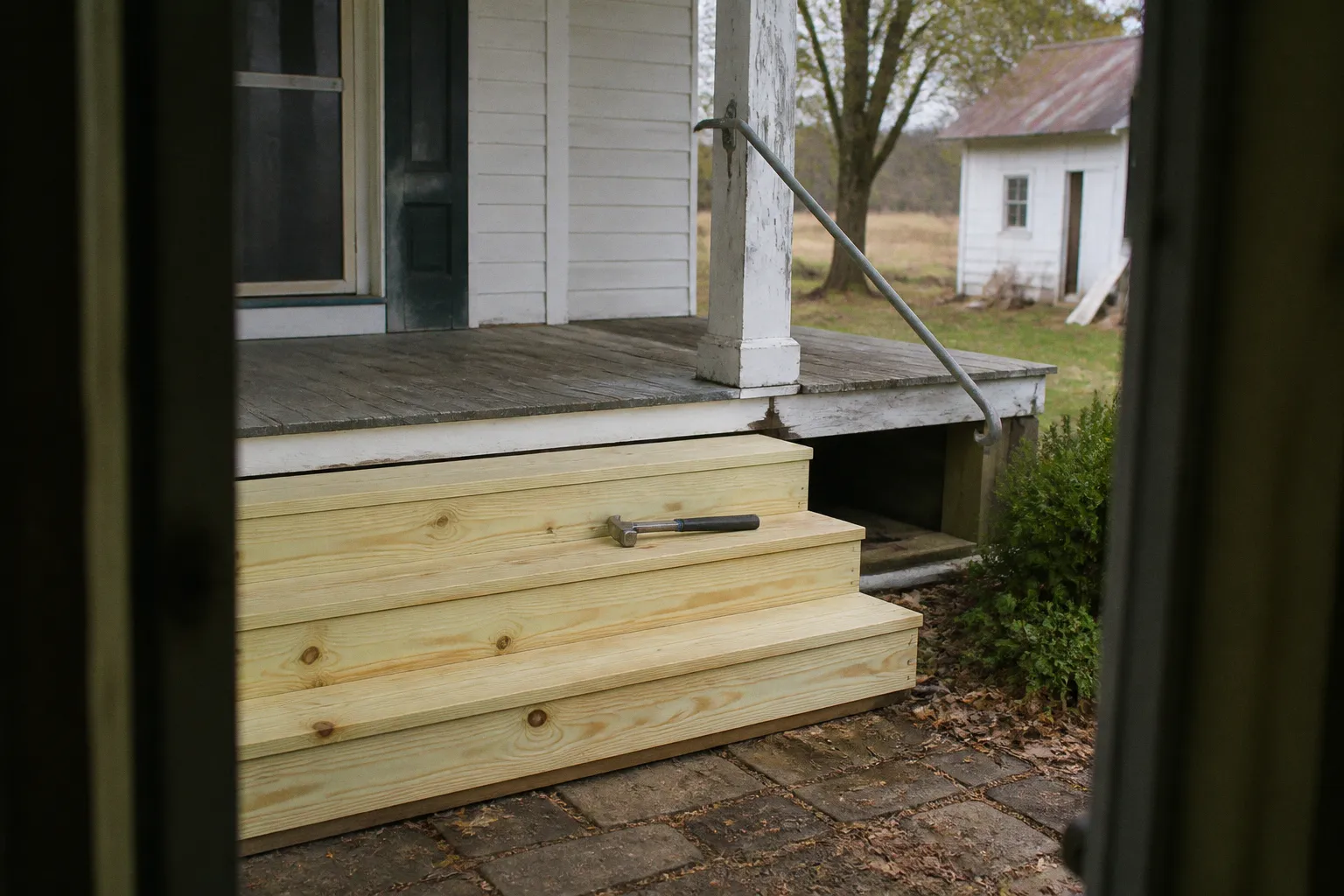
If your roof is sagging, your heat cuts out every cold snap, or you've been quoted a repair bill that would clean out your savings entirely, you're probably scrolling through Somerset County pages trying to figure out whether any of this help is real, who actually qualifies, and how much paperwork is involved before you waste an afternoon. That's a fair question, and it's the one we hear most often from neighbors sitting across from us at community meetings and church basements. The good news is that Somerset County runs a Housing Rehabilitation Program through the Department of Technical & Community Services, and there are also state-level options like the Special Targeted Applicant Rehabilitation (STAR) program that channel money to our county. The not-so-good news is that the application has real requirements, and "rehabilitation" means specific things — not the kitchen reno you've been daydreaming about. Let's walk through it together so you can tell, fairly quickly, whether this is worth your time.
Is this program actually for you? The eligibility basics
The first thing to understand is that these programs aren't designed for everyone, and they're not supposed to be. They're built for owner-occupants with modest incomes whose homes need serious health, safety, or code work — the kind of repairs that, if left undone, make a house unsafe or unlivable. If that's your situation, you're in the right conversation.
The headline number to know is the income ceiling. To qualify for the Somerset County Housing Rehabilitation Program and the related state programs that fund it, your total household income generally cannot exceed 80% of the Area Median Income (AMI) as set annually by HUD. Maryland's Department of Housing and Community Development (MDHCD) updates those limits each year, with the most recent revision landing in 2025; the active application guidelines run on the 2026 framework. You don't have to memorize the AMI tables — your income relative to your household size gets checked against whatever the current year's chart says, and the county staff do that math for you once you submit.
Beyond income, there are three residency and standing requirements that catch a lot of folks off guard:
- You have to live in the home. It's a single-family, owner-occupied property, and you need to be the one actually calling it your primary residence.
- You have to be current. That means your mortgage payments are up to date and your property taxes are paid. If you've fallen behind on either, the program wants to see that resolved before it considers your application — because it doesn't make sense to rehab a home that's already in financial trouble elsewhere.
- You have to be insured. Active homeowners insurance is required, and if your property sits in a designated flood zone, you'll also need flood insurance in place.
For the STAR program specifically — which is the state's more targeted loan option — there's an additional residency history requirement: you must have lived in Somerset County for a minimum of five years. STAR also secures its loans with a Deed of Trust on the property, which means the county holds a lien until the loan terms are satisfied. That's not a dealbreaker, but it's something to understand going in. The general CDBG-funded rehabilitation program does not carry that same five-year residency threshold — it's a STAR-specific condition.
If your household earns under 80% of AMI, you own and occupy the home, and you're current on taxes and insurance, you're likely in the eligible pool. The five-year residency rule applies only to STAR. Everything else is documentation.
Gathering your paperwork: what the county actually wants to see
Once you pass that initial gut-check, the next step is collecting documents, and this is where most people stall out. Not because the paperwork is impossible, but because they don't know what to pull together before walking into the office. Here's the practical rundown of what the Somerset County Department of Technical & Community Services and its Housing Board of Review typically need.
On the financial side, expect to provide:
- Recent pay stubs for every household member who earns income
- Prior-year tax returns (federal and state)
- Social Security award letters, pension statements, or other proof of fixed income if applicable
- Bank statements for checking, savings, and any investment accounts
- A current mortgage statement showing your loan balance and payment history
- Proof that property taxes are paid current (a printout from the County Treasurer's site works)
On the property side, you'll need:
- Proof of ownership — usually the recorded deed, showing you as the legal owner
- Active homeowners insurance policy declarations page (plus flood insurance declarations if your property is in a flood zone)
- A property tax bill or recent statement
- Any prior inspection reports, code violation notices, or contractor estimates you already have
On the personal side, the county typically asks for:
- Government-issued photo ID for all adult household members
- Social Security cards or proof of ITIN
- A completed application form, signed and dated
Pull the financial documents first. They're the longest pole in the tent, and they expire fastest — most lenders and program offices want pay stubs and bank statements from within the last 30 to 60 days.
A practical tip that saves real time: make two copies of everything you bring in. The county keeps one set, you keep one set, and if anything gets lost in the shuffle you're not starting from scratch. We've watched neighbors lose weeks because they brought the originals and had to wait for replacements.
Finding and vetting the right contractor
This is the part of the process that trips up more applicants than any other, and it's worth slowing down on. The county doesn't just accept any contractor's word that your roof needs replacing or your electrical panel is a fire hazard. They want a licensed Maryland Home Improvement Contractor (MHIC) to put eyes on the property, write up a formal work proposal, and submit their own credentials alongside yours.
Here's what that looks like in practice. Once the county determines you may be eligible, you'll work with — or independently find — a contractor licensed in Maryland to visit the home, assess the scope of the failing systems, and produce a written proposal that breaks out labor, materials, and timeline. That proposal becomes the basis for what the program will fund. The contractor's proposal is essentially the budget the Housing Board of Review evaluates.
But the contractor paperwork doesn't end with the proposal. The county also asks the contractor to submit:
- A Maryland Home Improvement Contractor (MHIC) license, currently active and in good standing
- Any trade-specific licenses relevant to the work (electrical, plumbing, HVAC)
- A Certificate of Liability Insurance (COI) showing active general liability coverage
- A Letter of Good Standing from the Maryland Department of Labor or the relevant licensing body
The reason the county is strict about this is twofold: it protects you from fly-by-night operators who take deposits and disappear, and it protects the program from funding shoddy work. A contractor who balks at producing these documents is not the contractor you want, regardless of how competitive their bid looks.
A good contractor in this process isn't just the cheapest — it's the one who's already done CDBG or rehabilitation work and knows what paperwork the county expects.
If you don't have a contractor in mind, the Somerset County Department of Technical & Community Services can usually point you toward MHIC-licensed contractors who have worked on past rehabilitation projects in the county. Local Habitat for Humanity affiliates and the Wicomico County chapter, which serves parts of the Eastern Shore, also maintain referral networks. Don't be shy about asking for two or three names — comparing proposals is both your right and your best protection.
What kinds of repairs actually get funded
This is where we need to set expectations honestly, because it's where disappointment usually happens. The Somerset County Housing Rehabilitation Program — and the state programs that flow through it — are not designed to make your home prettier. They are designed to keep your home safe, sanitary, structurally sound, and code-compliant. If a repair doesn't fall into one of those buckets, it's not going to be funded, no matter how much you need it.
So what does qualify? Based on how the program is structured and the kinds of work funded through Community Development Block Grants (CDBG), eligible repairs generally include:
| Repair category | Typical examples |
|---|---|
| Roof and envelope | Full roof replacement, damaged soffits, failing exterior walls, window and door replacement only when causing heat loss or water intrusion |
| Structural | Foundation repair, sill plate replacement, framing corrections, floor joist reinforcement |
| Electrical | Service panel upgrades, rewiring of hazardous circuits, replacement of knob-and-tube or aluminum branch wiring |
| Plumbing | Repipe of failing supply lines, drain line replacement, water heater replacement when leaking or unsafe |
| Heating and HVAC | Furnace or boiler replacement, heat pump installation, ductwork correction when causing health or safety issues |
| Health hazards | Lead-based paint abatement, asbestos remediation, mold mitigation tied to structural water intrusion |
| Septic and well | Septic system repair or replacement when failing, well pump or pressure tank service |
| Accessibility | Grab bars, ramps, walk-in showers, doorway widening when tied to a documented mobility need |
Notice what's not on that list: new kitchen cabinets because the old ones are dated, a bathroom refresh because the tile is ugly, finished basement conversions, or detached garage construction. Those are quality-of-life improvements, not health-and-safety repairs, and they're explicitly outside the program's scope. If a contractor's proposal is heavy on those kinds of items, that's a signal the proposal may not pass review.
The other thing worth knowing is that the program typically addresses the most critical systems first. If your electrical panel is a fire hazard and your gutters are sagging, the panel gets funded and the gutters might not. The county's Housing Board of Review prioritizes based on severity, and the work that gets approved is the work that addresses the most urgent threats to health and safety.
Repayment, liens, and what the Housing Board of Review actually does
Let's talk about the part nobody likes to bring up: how the money actually works. The financial structure of Somerset County's rehabilitation assistance depends on which funding stream applies to your case, and the two main paths work differently.
CDBG-funded assistance — the Community Development Block Grant dollars that flow through HUD to the county — can be structured as a deferred-payment loan for the lowest-income qualifying households. In practical terms, that means the assistance carries no monthly payment during the deferral period; the lien sits on the property, and repayment is triggered primarily if you sell, transfer, or stop occupying the home before the deferral term expires. For households with income closer to the 80% AMI ceiling, CDBG assistance may instead be structured as a low-interest loan with terms set based on what you can reasonably afford.
STAR loans operate on a more conventional loan model:
- Interest rate: somewhere between 0% and 6%, set based on your household income and overall affordability picture. Lower-income households typically land at the lower end of that range.
- Maximum loan term: up to 30 years, which keeps monthly obligations manageable.
- Security instrument: a lien against the property — a Deed of Trust — until the loan is repaid or the terms are otherwise satisfied.
Across both funding streams, there is a common recapture provision: if you sell or transfer the property within a defined period after receiving assistance, the program generally requires repayment of some or all of the assistance. That's not a penalty — it's a programmatic safeguard designed to keep the funds doing what they were meant to do, which is preserving affordable owner-occupied housing. The specific recapture window and terms are spelled out in the Deed of Trust or deferred loan agreement you sign at closing, so read those documents carefully and ask questions before you commit.
The Housing Board of Review is the body inside the Department of Technical & Community Services that evaluates each application, reviews the contractor proposals, and decides what gets funded. They meet on a regular cadence (specific monthly deadlines and meeting schedules aren't always published in advance, so call the office directly to find out the next submission cutoff). At a typical review meeting, an applicant might present their case, the Board discusses the scope of work and the applicant's ability to repay, and a decision is rendered on what level of assistance will be extended.
The Board isn't adversarial. They're trying to say yes — but they need a complete file and a contractor proposal that lines up with the program's scope to do it.
If your application is approved, you'll work with county staff through the construction phase. The program generally pays the contractor directly rather than reimbursing you, which means you don't need to come up with the construction costs upfront. That's a meaningful detail, because for many homeowners the barrier isn't qualifying — it's bridging the gap between when work starts and when funding clears.
Putting it all together: your realistic next steps
If you've read this far and you can see yourself in the eligibility list, here's what we'd suggest doing this week.
First, call the Somerset County Department of Technical & Community Services and ask for the current application packet. Get the actual paper checklist (or a digital version) rather than working from memory — programs update their requirements, and the 2026 guidelines may differ in subtle ways from what was circulating even last year.
Second, run your household income against the current 80% AMI chart for your household size. If you're well under it, you're in a strong position. If you're sitting right at the ceiling, call the office anyway — some state-level programs have slightly different income thresholds for specific assistance types, and county staff can tell you whether any of those apply to your situation.
Third, start pulling together the financial and property documents listed above. Don't wait until you have a contractor proposal in hand; the personal and financial paperwork is the same regardless of which repairs get prioritized, and you can have it ready to go.
Fourth, start talking to MHIC-licensed contractors about the failing systems in your home. Ask them specifically whether they've worked with CDBG or county rehabilitation programs before, because experienced contractors know how to write proposals that match what the Board of Review wants to see.
Finally, be patient with the process. These programs move at the speed of public funding — which is to say, not always fast. Between gathering paperwork, getting a contractor out to write a proposal, submitting to the Board of Review, and waiting for an approval to clear, you might be looking at several months from first call to first day of construction. That's frustrating when your furnace is out, but it's the honest timeline, and it's faster than letting a major repair go undone and become a bigger problem.
A complete file moves through the Board faster than an incomplete one. Bring everything the first time, and you're saving yourself months.
The Housing Rehabilitation Program is one of the more underused resources in our county, partly because the paperwork looks intimidating and partly because people assume they won't qualify. More often than not, the folks who pick up the phone and start the conversation are exactly the homeowners this program was designed for. If your house needs real work and your budget needs real help, this is worth the afternoon it takes to find out where you stand. The community fabric of Somerset County is stronger when the homes in it are safe, sound, and kept in the hands of the people who live in them — and this program is one of the practical tools we have to make that real.