Somerset historic property tax credit: five application steps
A qualifying homeowner in Somerset County may claim a Maryland state income tax credit equal to 20% of eligible historic rehabilitation expenses.
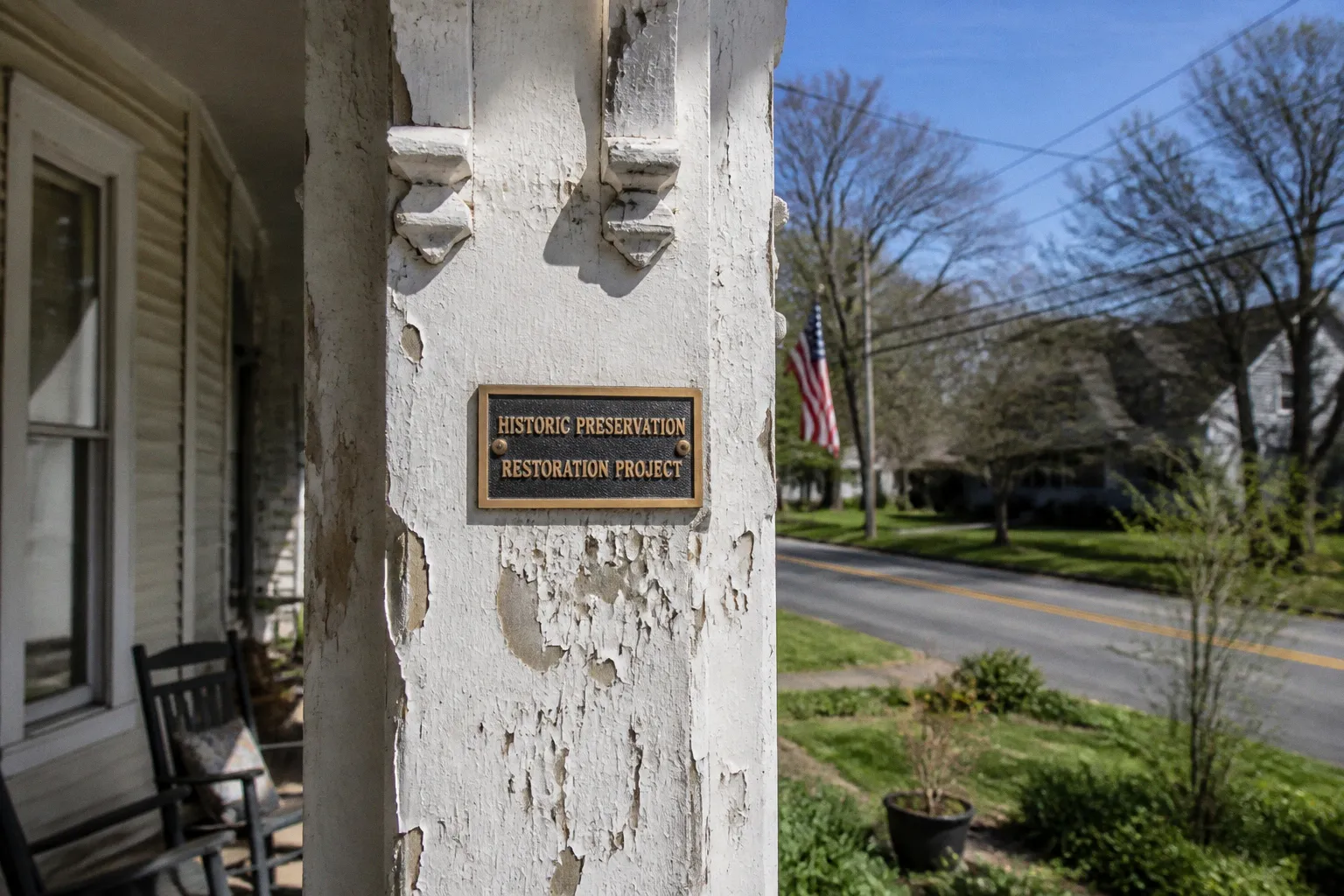
The homeowner credit is capped at $50,000 during a 24-month period, and eligible expenses must total at least $5,000.
This is not a Somerset County property-tax exemption. It is a Maryland Historic Revitalization Tax Credit administered by the Maryland Historical Trust, or MHT. The distinction controls the application route, the approving agency, the timing of construction, and the tax benefit ultimately claimed.
The Somerset County historic property tax credit application is therefore not a county permit form. It is a state historic-preservation process with three formal application parts and a mandatory approval sequence. The applicant must establish the property’s historic status, obtain approval for the proposed rehabilitation work before construction begins, document the completed work, and then use the final certification to claim the credit.
Step 1: Determine whether the property qualifies
The first issue is not the age of the building. Age alone does not establish eligibility.
For the Maryland homeowner historic rehabilitation tax credit, the property must generally satisfy two independent conditions:
- It must be a single-family residence.
- It must be owner-occupied.
- It must qualify as a certified historic structure under the applicable Maryland historic-preservation criteria.
- The proposed work must constitute eligible rehabilitation rather than ordinary maintenance or unapproved alteration.
- Eligible rehabilitation expenses must reach at least $5,000.
- The work must comply with the Secretary of the Interior’s Standards for Rehabilitation.
- The work must receive MHT approval before it starts.
The historic designation requirement can be met through several routes. A property may qualify if it is individually listed in the National Register of Historic Places, contributes to a listed historic district, carries a qualifying local historic designation, or falls within certain Maryland heritage-area or Department of Natural Resources curatorship categories.
The designation route must be established for the specific property. A building located in an old neighborhood is not automatically a certified historic structure. A National Register district does not automatically mean that every building within its boundaries is a contributing resource. The property’s status must be verified through the applicable historic inventory, district documentation, local designation records, or MHT review.
Princess Anne properties
The Princess Anne Historic District is a significant Somerset County reference point. It was listed in the National Register on October 14, 1980. The district contains approximately 270 structures, and nearly 90% are identified as contributing resources.
That percentage makes district status a relevant starting point for owners in Princess Anne. It does not eliminate the need for property-level verification. The applicant still needs to establish whether the specific structure is contributing and whether the proposed work is compatible with its historic character.
The same principle applies elsewhere in Somerset County, including Crisfield and other municipalities. No general countywide assumption should replace a property-specific determination.
A historic address is not enough. Eligibility depends on certified status, owner occupancy, eligible expenses, and approved rehabilitation work.
Distinguish the credit from other Maryland tax programs
Several Maryland tax programs use similar language. They are not interchangeable.
The historic rehabilitation credit concerns qualified work on a certified historic structure. It is separate from the Maryland Homeowners’ Property Tax Credit and the Homestead Property Tax Credit. Those programs address property-tax liability and household circumstances. They do not replace the historic-preservation application.
The state historic credit is also different from a local property-tax reduction. The reviewed program information does not establish a dedicated Somerset County government rehabilitation credit, a municipal credit in Princess Anne, or a Crisfield-specific county application. Unless a current local ordinance and administrative procedure are independently confirmed, the applicable homeowner pathway is the Maryland state program administered by MHT.
Step 2: File Part 1 before seeking approval for the work
The homeowner application uses three formal parts:
| Application part | Function | Required timing |
|---|---|---|
| Part 1 | Establishes the property’s historic significance and eligibility | Generally before Part 2 |
| Part 2 | Describes the proposed rehabilitation work for MHT review | Must be approved before construction |
| Part 3 | Documents the completed project for final certification | After approved work is complete |
Part 1 evaluates the property. It is not an architectural work plan and does not authorize construction.
For most properties, MHT must approve Part 1 before it can process Part 2. The exception identified in the program information is a property already individually listed in the National Register of Historic Places. Even in that situation, the applicant must still submit the required material for the proposed rehabilitation work.
The Part 1 submission should be treated as a factual eligibility record. The applicant needs to provide the information MHT requires to identify the building, establish ownership and occupancy, document historic significance, and show the property’s relationship to a listed district or other qualifying designation.
A weak Part 1 creates avoidable delay. Common deficiencies include:
- Treating the construction date as proof of historic eligibility.
- Identifying a district without establishing whether the property contributes to it.
- Omitting photographs or property descriptions needed to evaluate existing conditions.
- Describing a future renovation before the property’s historic status has been resolved.
- Assuming that a local historic label and a National Register listing have identical legal effects.
- Submitting a property that is not owner-occupied through the homeowner route.
MHT accepts homeowner applications on a rolling basis. Once a complete application is received, the typical review period is approximately 30 to 45 days. That estimate applies to a complete submission. Missing information, unclear photographs, inconsistent descriptions, and complex proposed work can extend the process.
The application is not complete merely because a PDF has been uploaded. It must contain the information necessary for MHT to make the relevant determination. The practical scheduling rule is direct: submit Part 1 early, allow the review period, and do not set a construction start date that assumes immediate approval.
Step 3: Submit Part 2 and obtain approval before construction
Part 2 is the controlling stage for the rehabilitation scope. It describes the work the owner intends to perform and gives MHT the opportunity to determine whether that work meets the applicable preservation standards.
The sequence is mandatory:
1. Establish or confirm the property’s certified historic status.
2. Prepare Part 2 with a complete description of the proposed work.
3. Submit Part 2 to MHT.
4. Wait for MHT approval.
5. Begin only the work covered by the approval.
The fifth step is not optional. Work that begins before MHT review and approval is generally ineligible. In serious cases, premature work can jeopardize the credit for the entire project.
This restriction affects construction scheduling. An owner should not authorize demolition, window replacement, siding removal, porch reconstruction, roof alterations, or other potentially substantive work merely because the contractor is available. The historic-credit process is not a retroactive reimbursement procedure. It is an approval-based program.
What Part 2 must control
The proposed scope should be specific enough for MHT to evaluate the treatment of historic materials and visible architectural features. General statements such as “renovate the exterior” or “modernize the interior” do not define the work with sufficient precision.
A usable Part 2 scope ordinarily identifies the relevant building element and the proposed intervention. Depending on the project, that may include:
- Roof form and roofing materials.
- Exterior siding, masonry, trim, and paint finishes.
- Windows, shutters, doors, and other openings.
- Porches, stairs, railings, and foundations.
- Structural repairs affecting historic fabric.
- Mechanical, electrical, or plumbing work that alters visible features.
- Interior features with documented historic significance.
- Accessibility modifications.
- Energy-efficiency improvements.
- New additions or site work.
The applicant must distinguish repair from replacement. Replacing a deteriorated historic window with a new unit is not equivalent to repairing the existing sash, and the preservation analysis may differ. The same distinction applies to masonry repointing, wood siding, trim, flooring, doors, porch components, and structural members.
The correct approach is to document existing conditions and define the treatment before work starts. Photographs, product specifications, drawings, and clear written descriptions reduce the risk of an approval that does not cover the actual construction.
Secretary of the Interior’s Standards
MHT reviews proposed work under the Secretary of the Interior’s Standards for Rehabilitation. The standards are designed to permit a property’s continued use while preserving its historic materials, character-defining features, and overall integrity.
For a Somerset County homeowner, compliance typically requires control over four categories of alteration:
- Retention: Historic materials and features should remain where they can be repaired.
- Repair: Deteriorated elements should be repaired using compatible methods before replacement is considered.
- Replacement: When replacement is necessary, the new work should match the historic feature in design, materials, dimensions, and other relevant characteristics.
- New work: Additions, accessibility measures, and modern systems should not destroy significant historic fabric or create a false historical appearance.
The standards do not prohibit all modernization. They regulate how modernization is executed. A bathroom upgrade, electrical improvement, heating system, or accessibility modification may be possible. The issue is whether the work damages significant features or changes the building’s historic character without approval.
A contractor’s ordinary building practice is not a substitute for MHT approval. Local permits, building-code compliance, and historic-credit compliance are separate controls. A project may require municipal permits and still fail to qualify for the state credit if the historic work was not approved.
Electronic submission and document control
MHT uses Microsoft Teams for electronic tax-credit submissions and approvals. Applicants must download, complete, sign, and save the required fillable PDF forms according to MHT’s submission procedures and file-naming conventions. The applicant then requests a private Teams channel for the project.
This creates a document-control requirement that should be handled as part of the application, not after the fact. The applicant should maintain a stable project record containing:
- The submitted Part 1 form.
- The submitted Part 2 form.
- Photographs of existing conditions.
- Drawings and specifications.
- MHT approval correspondence.
- Contractor proposals and invoices.
- Approved amendments.
- Photographs showing completed work.
- The final Part 3 submission.
- Any certification or tax documentation issued by MHT.
The record must distinguish approved work from unapproved work. Combining both categories in a single contractor invoice can make the eligible expense calculation more difficult and can create uncertainty during final review.
The same rule applies to change orders. A revised contractor proposal is not automatically an approved amendment. The applicant must obtain MHT approval through the required process before beginning added or changed work.
Step 4: Control amendments during the 24-month project period
A homeowner project operates within a 24-month period for purposes of the credit. During that period, the applicant may need to submit amendments if the rehabilitation scope changes or additional work becomes necessary.
An amendment is required when the proposed work differs materially from the approved Part 2 scope. Examples include:
- Replacing a feature that was originally approved for repair.
- Changing window, door, siding, roofing, or masonry materials.
- Adding work to an elevation not included in the original submission.
- Modifying a porch, addition, foundation, or site feature.
- Introducing a new accessibility or mechanical alteration.
- Expanding the project because concealed deterioration is discovered.
- Changing the design of a previously approved treatment.
The governing sequence remains the same: describe the change, submit the amendment, obtain MHT approval, then begin the added work.
A change order is a construction document. It is not a preservation approval.
Multiple amendments may be submitted during the 24-month period. That flexibility does not authorize the owner or contractor to proceed first and document the change later. The amendment process is prospective.
Manage the project by approved scope
A practical compliance system divides the project into three categories:
1. Approved work. Work expressly covered by Part 2 or an approved amendment.
2. Pending work. Work described in a submission that MHT has not yet approved.
3. Excluded work. Work outside the historic-credit scope or work that does not qualify under the program.
Only the first category should proceed if the owner intends to claim the credit. Pending work must remain pending. Excluded work may proceed only with the understanding that it will not be included as eligible rehabilitation expenses and must not compromise the approved historic work.
The owner should communicate this distinction to the contractor in writing. Construction personnel may not understand that a state tax-credit approval imposes a separate sequencing requirement. A contractor who begins work based on a local permit, a general renovation contract, or an owner’s verbal instruction can create an eligibility problem that cannot be corrected by submitting photographs after demolition.
Common amendment failures
Several errors recur in rehabilitation projects:
- The owner discovers deterioration after demolition and directs immediate replacement.
- A contractor substitutes a different product because the approved material is unavailable.
- A window package changes after the quote is revised.
- Interior work expands into historic rooms not included in Part 2.
- A new addition is treated as a minor field adjustment.
- MHT is notified only after the work has been completed.
These are not administrative technicalities. They affect whether the completed work corresponds to the approved scope. If the project requires a change, the work sequence must stop at the affected element until the amendment is resolved.
Step 5: Complete Part 3 and claim the credit
Part 3 documents the completed rehabilitation project. It is the final certification stage and should be prepared as a compliance record, not as a summary written from memory.
The applicant must show that:
- The approved work was completed.
- The completed work conforms to MHT-approved plans and amendments.
- Eligible rehabilitation expenses meet the $5,000 minimum.
- The claimed expenses fall within the qualifying project period.
- The final project documentation supports the amount claimed.
- The property continues to satisfy the homeowner eligibility requirements.
The $50,000 maximum applies during a 24-month period. The credit is 20% of eligible rehabilitation expenses, not 20% of every project cost. Costs that do not qualify under the program cannot be included simply because they appear on the same construction invoice.
The basic calculation is:
| Eligible rehabilitation expenses | 20% credit calculation | Potential credit before the cap |
|---|---|---|
| $5,000 | $5,000 × 20% | $1,000 |
| $25,000 | $25,000 × 20% | $5,000 |
| $100,000 | $100,000 × 20% | $20,000 |
| $250,000 | $250,000 × 20% | $50,000 |
| More than $250,000 | 20% of eligible expenses | Limited to $50,000 |
This table illustrates the statutory ceiling based on the supplied program parameters. It does not establish that a specific project will receive the maximum amount. The final credit depends on MHT’s determination of eligible expenses, the approved scope, the completed work, and the applicant’s tax position.
Final documentation
The Part 3 package should be assembled while the work is underway. Waiting until the final invoice creates avoidable gaps. The owner should retain:
- Final photographs of each rehabilitated elevation and significant interior feature.
- Before-and-after documentation where available.
- Contractor invoices and payment records.
- Materials and product information.
- Approved drawings and amendment records.
- A reconciliation of approved work to completed work.
- Evidence of owner occupancy where required.
- A schedule separating eligible and noneligible costs.
Photographs should show the result clearly. A single wide-angle image is rarely sufficient to document a window replacement, porch repair, masonry treatment, or alteration to a character-defining feature. The final record should allow MHT to compare the completed condition with the approved proposal.
The owner should also verify that the final project does not contain unapproved substitutions. A project can be substantially complete and still require clarification if the installed materials, dimensions, or treatment differ from the Part 2 approval.
Homeowner projects versus commercial properties
The homeowner process applies to an owner-occupied single-family residence. It should not be used for an income-producing or commercial property.
Somerset County contains historic buildings that may be used for offices, retail, lodging, mixed-use development, or other income-producing purposes. Those projects follow separate Maryland commercial tax-credit pathways. The commercial programs have different eligibility rules, application procedures, funding structures, and deadlines.
The supplied program information identifies a projected $16.5 million appropriation for the FY27 competitive commercial round, with applications due August 31, 2026. It also identifies a 20% credit for qualifying commercial rehabilitation expenses, capped at $5 million under the competitive commercial program.
Those figures do not apply to the homeowner application. A commercial applicant should not use Part 1, Part 2, and Part 3 as though the project were an owner-occupied home. The property’s use, ownership structure, financing, eligible expenses, and program category must be determined before selecting the application route.
The distinction is especially relevant to redevelopment in Crisfield and Princess Anne, where historic buildings may support local business development or neighborhood revitalization. A building’s historic significance may support an incentive application, but the correct credit depends on the building’s use and the applicable commercial or homeowner program.
Errors that can invalidate the process
The following errors create the greatest compliance risk:
1. Calling the program a county property-tax credit.
The homeowner benefit described here is a Maryland state income tax credit. It is not a Somerset County property-tax reduction.
2. Assuming every old house qualifies.
Historic age is not sufficient. The property must meet the certified-structure and owner-occupancy requirements.
3. Starting work before Part 2 approval.
Pre-approval work is generally ineligible and may jeopardize the entire credit.
4. Treating National Register status as automatic approval.
Listing can establish an eligibility pathway. It does not automatically approve the proposed rehabilitation work or guarantee a tax benefit.
5. Failing to verify contributing status.
A property inside a historic district must be evaluated under the district’s specific documentation and designation rules.
6. Using a contractor’s change order as a substitute for an amendment.
MHT approval must precede additional or changed work.
7. Combining eligible and noneligible expenses without a cost schedule.
The applicant must be able to identify the expenses supporting the claimed credit.
8. Using the homeowner route for a commercial building.
Income-producing properties require a separate commercial analysis.
9. Confusing historic rehabilitation incentives with general homeowner tax credits.
The programs have different purposes and eligibility standards.
10. Planning construction around an assumed approval date.
MHT’s typical 30-to-45-day review period applies to a complete submission. It is not a guarantee of approval on a fixed date.
The correct order of operations
For a Somerset County homeowner, the application sequence is narrow and procedural:
- Verify ownership, occupancy, and the property’s historic designation.
- Determine whether the structure is individually listed, a contributing resource, locally designated, or eligible through another recognized category.
- Submit Part 1 where required.
- Wait for the property eligibility determination.
- Prepare a detailed Part 2 scope.
- Submit Part 2 through MHT’s required electronic process.
- Obtain approval before construction begins.
- Maintain separate records for approved work and other renovation work.
- Submit amendments before starting any changed or added work.
- Complete the approved rehabilitation within the applicable 24-month period.
- Assemble invoices, photographs, approvals, and cost records.
- Submit Part 3 for final certification.
- Use the final documentation to claim the Maryland state income tax credit.
The decisive control is timing. The applicant must resolve historic eligibility before relying on the credit, and must obtain work approval before committing the property to construction. A later application cannot reliably cure demolition, replacement, or alteration performed without review.
For owners in the Princess Anne Historic District, the district’s National Register status and high proportion of contributing structures may make eligibility review productive. For owners elsewhere in Somerset County, the analysis remains property-specific. The county location alone does not establish qualification.
The Maryland homeowner historic rehabilitation credit is therefore a controlled approval process, not a general grant for old-house repairs. A qualifying owner may claim 20% of eligible expenses, subject to the $50,000 maximum in a 24-month period, but only after satisfying the designation, occupancy, pre-construction approval, documentation, and final-certification requirements. That sequence determines whether the renovation produces a credit or merely produces renovation costs.