Somerset County historic tax credits: application steps
Maryland’s Historic Revitalization Tax Credit provides a 20% state income tax credit for qualified rehabilitation expenses on eligible owner-occupied single-family residences.
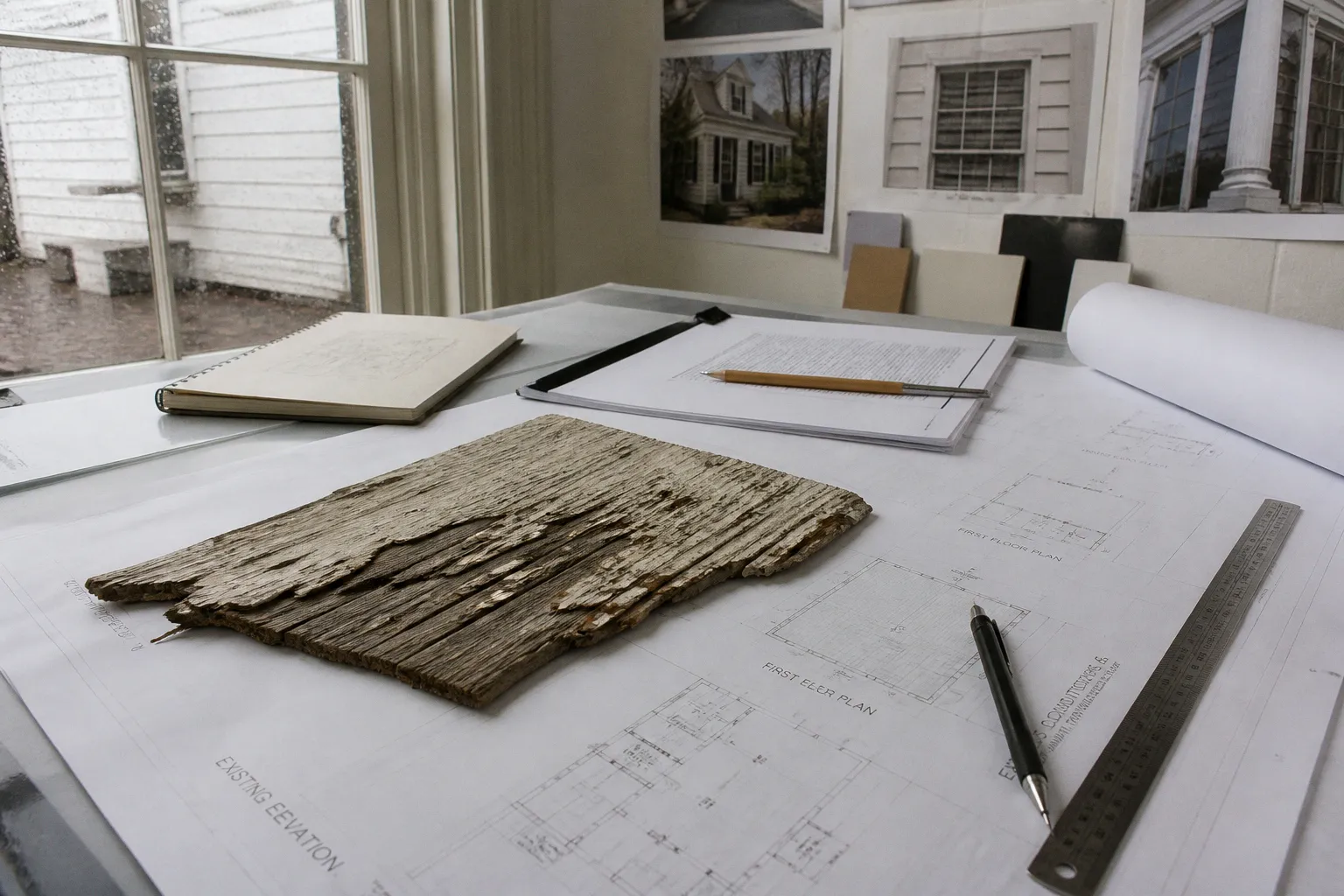
For this residential program, the qualifying expenditure threshold is $5,000, and the credit is capped at $50,000 during a 24-month period.
The credit is not an after-the-fact reimbursement for renovation work. The Somerset County historic tax credit application must proceed through designation, pre-construction review, approval, rehabilitation, and final certification. Physical work that begins before the Maryland Historical Trust approves the proposed plans can compromise eligibility.
Determining Property Eligibility and Historic Designation
The first step is not submitting construction drawings. It is establishing that the property is a certified historic structure.
A property in Somerset County may qualify through one of two principal pathways:
- It is individually listed on the National Register of Historic Places.
- It is located within a listed historic district and is identified as a contributing resource.
The Princess Anne Historic District is an example of the second category. A building’s location inside a historic district does not, by itself, establish that every structure qualifies. The property must have the required historic status, and its contribution to the district must be recognized under the applicable preservation framework.
This distinction controls the rest of the application. A non-historic building, or a building that is not a contributing resource, does not automatically become eligible because the proposed renovation uses traditional materials or because the surrounding neighborhood has preservation protections.
Confirm the property’s status
Before preparing a rehabilitation package, the owner should establish the following:
1. The exact legal and physical identity of the property.
Use the property address and available parcel information consistently across all application materials. Errors in the property description can create avoidable review questions.
2. The applicable historic designation.
Determine whether the building is individually listed, located in a listed district, or otherwise recognized as a certified historic structure under the program.
3. The building’s contributing status, where relevant.
A district boundary and a contributing-resource determination are separate issues. The application must address the status that applies to the specific structure.
4. The proposed scope of rehabilitation.
Identify exterior changes, structural work, systems upgrades, additions, window replacement, masonry work, roof work, and interior alterations before construction begins.
5. The ownership and use category.
The Maryland residential credit applies to eligible owner-occupied single-family residential properties. Income-producing properties follow a separate federal process.
The property owner should resolve designation questions before obtaining final contractor pricing. A construction estimate does not cure an eligibility defect.
Historic designation is a threshold requirement. Rehabilitation quality cannot substitute for the required historic status.
The Mandatory Pre-Construction Approval Process
The Maryland Historical Trust must review and approve the proposed rehabilitation plans before physical work begins. This is the controlling procedural requirement for the state historic preservation tax credit process.
The review is designed to determine whether the proposed work complies with the Secretary of the Interior’s Standards for Rehabilitation. Those standards govern how historic materials, features, proportions, and alterations are treated. The review is not limited to the final appearance of the building. It addresses the proposed work as a whole.
The sequence should be treated as fixed:
1. Define the rehabilitation scope
Prepare a complete description of the work. The scope should not be limited to the most visible improvements. It should identify all work that may affect historic character, including:
- Replacement or repair of windows and doors.
- Changes to siding, roofing, trim, porches, and masonry.
- Structural stabilization.
- Electrical, plumbing, heating, and cooling upgrades.
- Accessibility modifications.
- Interior reconfiguration.
- New additions or changes to building massing.
- Site work that alters the relationship between the building and its surroundings.
A partial scope creates a procedural problem. If the owner submits only the first phase of work and later changes the project, the additional work may require further review. The owner should not assume that an unlisted phase is covered by an earlier approval.
2. Document existing conditions
The application must establish what exists before rehabilitation. Photographs and project descriptions should show the building’s current condition and identify historic features that will be repaired, retained, altered, or removed.
Documentation should be organized by elevation, room, feature, or work category. The objective is traceability. Reviewers need to connect the proposed treatment to the existing condition and later compare the completed work with the approved plans.
3. Prepare the proposed rehabilitation plans
The plans should explain the treatment of historic materials and features. Drawings, specifications, photographs, and written descriptions should be internally consistent.
The submission should make clear:
- Which elements will be repaired rather than replaced.
- Which materials are historic and which are later additions.
- What replacement materials will be used where replacement is necessary.
- How new work will be differentiated from retained historic fabric.
- Whether the proposed work changes the building’s exterior appearance.
- Whether the project introduces an addition or modifies the site.
The application is stronger when the drawings show the actual intervention rather than relying on general statements about preservation.
4. Submit the application before construction
The Maryland Historical Trust reviews complete pre-construction applications. The typical review period is approximately 30 to 45 days.
That timeline is not a construction authorization date. It is a review estimate for a complete submission. Missing information, inconsistent plans, or requested revisions can extend the process.
Physical work should not begin while the application is pending. Demolition, material removal, window replacement, exterior alterations, and other construction activity can alter the conditions that the Trust must evaluate. Starting work before approval creates a direct conflict with the program’s pre-construction requirement.
5. Obtain written approval and follow the approved scope
Approval applies to the rehabilitation plans that were reviewed. It does not create unrestricted authority to revise the project during construction.
If site conditions require a change, the owner should treat the change as a compliance issue. The appropriate response is to document the condition, determine whether the change affects historic character, and seek direction or additional approval before proceeding with the revised work.
Navigating the Maryland Historical Trust Electronic Submission
Application materials for Maryland historic preservation tax credits are submitted electronically through a dedicated Microsoft Teams channel. The channel is requested through the Maryland Historical Trust’s channel request form.
This requirement affects project administration. The owner or project representative should establish electronic access before the submission deadline and organize the application files so that the reviewer can identify the property, existing conditions, proposed work, and supporting documentation without reconstructing the project from disconnected attachments.
A practical submission structure includes the following categories:
| Application component | Function in the review |
|---|---|
| Property identification | Establishes the building and its location within Somerset County |
| Historic designation information | Demonstrates individual listing or contributing status within a listed district |
| Existing-condition photographs | Records the building before rehabilitation |
| Scope of work | Defines the proposed construction and treatment of historic features |
| Drawings and specifications | Shows the physical intervention in sufficient detail |
| Materials information | Identifies repair, replacement, and new construction materials |
| Cost documentation | Supports the qualified rehabilitation expense calculation |
| Owner and project information | Connects the application to the responsible property owner and project |
The table is an administrative framework, not a substitute for the current requirements issued by the Maryland Historical Trust. The Trust’s submission instructions control the required format and content.
Use consistent project terminology
The same feature should have the same description throughout the package. If a drawing identifies a feature as a wood window, the photograph log and scope of work should not describe it as a replacement sash unless that distinction is intentional and explained.
Inconsistencies create three types of risk:
- Eligibility risk: the reviewer cannot determine whether the work concerns a qualifying historic feature.
- Scope risk: the approval may not clearly cover the work the owner intends to perform.
- Final-certification risk: the completed project may not correspond to the approved documentation.
The owner should also separate existing conditions from proposed conditions. A photograph of deteriorated siding is evidence of the pre-rehabilitation condition. It is not evidence that replacement siding is acceptable. The proposed treatment must be described and reviewed independently.
Avoid incomplete submissions
A submission can be technically filed while remaining functionally incomplete. The review process depends on enough information to evaluate the work against the Secretary of the Interior’s Standards for Rehabilitation.
Common defects include:
1. Starting construction before the review is complete.
This is the most serious procedural error. The program requires approval before physical work begins.
2. Submitting a broad description without project drawings.
A statement that the owner will modernize or restore the property does not define the intervention.
3. Failing to identify replacement materials.
The reviewer must know whether a feature will be repaired, replicated, or replaced with a contemporary alternative.
4. Omitting secondary work.
Mechanical systems, accessibility work, site alterations, and interior changes can affect the review even when the primary objective is exterior restoration.
5. Changing the project after approval without documenting the change.
A field decision made by a contractor is not automatically an approved revision.
6. Treating the tax credit as a general renovation subsidy.
The credit is tied to qualified rehabilitation expenses and an approved historic rehabilitation process. It is not a blanket credit for all construction costs.
Financial Requirements and the 20% Tax Credit Cap
For eligible owner-occupied single-family residential properties, Maryland’s Historic Revitalization Tax Credit provides a 20% state income tax credit on qualified rehabilitation expenses. The minimum eligible expenditure is $5,000. The credit is capped at $50,000 over a 24-month period.
The calculation must be based on qualifying rehabilitation expenses, not simply on the project’s total contract price. The owner should maintain a detailed cost record that distinguishes rehabilitation work from unrelated work and identifies the period in which expenses are incurred.
The following distinction is material:
- A project can have a large total budget but a smaller amount of qualified rehabilitation expenses.
- Work that does not qualify under the program should not be included in the credit calculation merely because it appears on the same contractor invoice.
- A project that satisfies the $5,000 minimum is not thereby entitled to the maximum credit.
- The 20% rate does not eliminate the $50,000 cap within the applicable 24-month period.
A simplified calculation illustrates the structure without determining a particular owner’s tax liability:
| Qualified rehabilitation expenses | 20% calculation | Credit before the cap |
|---|---|---|
| $5,000 | 20% of $5,000 | $1,000 |
| $25,000 | 20% of $25,000 | $5,000 |
| $100,000 | 20% of $100,000 | $20,000 |
| $250,000 | 20% of $250,000 | $50,000 |
The table does not establish that every listed expense qualifies. It demonstrates only how the stated rate and cap operate mathematically.
Track costs during the 24-month period
The $50,000 maximum applies within a 24-month period. Project accounting should therefore identify:
- The date and amount of each payment.
- The contractor or supplier receiving the payment.
- The work category.
- Whether the cost relates to approved rehabilitation work.
- Whether the expense falls inside the applicable 24-month period.
- Whether the same cost has been counted elsewhere.
Invoices should be specific. A single invoice stating only renovation services provides weaker documentation than an invoice separating approved repair work, non-qualifying improvements, and unrelated maintenance.
The owner should retain contracts, change orders, invoices, payment records, photographs, and approved plans. The records must support the relationship between the cost and the approved rehabilitation scope.
State residential credit versus federal income-producing credit
The state residential credit and the federal credit for income-producing historic properties are not interchangeable programs.
The federal historic tax credit provides a 20% credit for qualified rehabilitation of eligible income-producing historic properties. It uses a three-part application process:
1. Part 1: evaluation of the property’s historic significance.
2. Part 2: review of the proposed rehabilitation.
3. Part 3: certification of the completed rehabilitation.
The federal process is evaluated jointly by the State Historic Preservation Office, including the Maryland Historical Trust, and the National Park Service.
The property’s use category therefore matters at the start of the analysis. An owner-occupied single-family residence should not be treated as an income-producing commercial rehabilitation project simply because it is located in a historic district. Conversely, a property used to generate income may require the federal three-part process rather than the state residential pathway.
The tax-credit rate is only one component of eligibility. Historic designation, property use, approved scope, qualified expenses, and final certification determine whether the credit can be claimed.
Final Certification and Claiming the Rehabilitation Credits
Approval before construction is not the final step. After rehabilitation is complete, the owner must document the finished work and demonstrate that it corresponds to the approved plans.
For federal income-producing properties, the final review is handled through Part 3. The owner submits documentation and photographs confirming the completed rehabilitation. The final certification depends on the relationship between the approved proposal and the work actually performed.
The same compliance principle controls state residential projects: the completed rehabilitation must remain within the approved scope and satisfy the applicable preservation standards.
Assemble the final documentation
The final package should allow the reviewer to compare conditions before and after rehabilitation. It should include, as applicable:
- Photographs of completed exterior elevations.
- Photographs of rehabilitated interior features.
- Documentation of repaired or retained historic materials.
- Explanations for approved changes made during construction.
- Final cost records.
- Evidence that the work was completed in accordance with the approved plans.
Photographs should be clear, properly identified, and organized so that each completed feature can be compared with its pre-construction condition. A set of uncaptioned images is less useful than a structured photographic record identifying the elevation, room, feature, and treatment.
Reconcile changes before final submission
Construction rarely proceeds without field adjustments. The compliance question is not whether a project changed in some minor respect. It is whether the change altered the approved historic treatment.
The owner should identify changes involving:
- Window dimensions or materials.
- Exterior cladding.
- Porch configuration.
- Roof form or roofing material.
- Masonry repair methods.
- Exterior lighting or site features.
- Additions and new openings.
- Interior features included in the approved scope.
Where the completed work differs from the approved plans, the owner should not conceal the discrepancy in the final package. The change should be documented and submitted for review or direction as required. The final certification stage is intended to verify the finished work, not merely to receive a declaration that construction is complete.
Preserve the project record
The property owner should maintain a permanent project file containing:
1. The historic designation documentation.
2. The submitted application.
3. The Maryland Historical Trust approval.
4. Approved drawings and specifications.
5. All revisions and related correspondence.
6. Before-and-after photographs.
7. Contracts, invoices, and payment records.
8. Final certification materials.
9. Tax records supporting the credit claim.
This record is particularly important when the property changes ownership, when rehabilitation occurs in phases, or when a later project affects the same historic features. The approval package establishes the baseline for determining what work was reviewed and what work remains undocumented.
A controlled sequence for Somerset County property owners
The Somerset County historic tax credit application should be managed as a compliance file, not as a conventional home-improvement purchase.
The correct order is:
- Confirm that the property is a certified historic structure.
- Determine whether it is an individually listed property or a contributing resource in a listed historic district.
- Classify the property as an eligible owner-occupied single-family residence or an income-producing property subject to the federal process.
- Define the complete rehabilitation scope.
- Document existing conditions.
- Prepare drawings, specifications, photographs, and cost information.
- Request the Maryland Historical Trust electronic submission channel.
- Submit the complete pre-construction application.
- Wait for approval before beginning physical work.
- Perform the rehabilitation in accordance with the approved plans.
- Record all project costs and changes.
- Submit final documentation and photographs for certification.
- Claim the applicable credit using the certified rehabilitation record.
Historic preservation tax credits can support neighborhood reinvestment in Princess Anne and other Somerset County communities, but the program does not operate as an automatic grant. Eligibility depends on statutory and administrative conditions. The process is sequential. A property must have the required historic status, the plans must receive approval before construction, expenses must be documented, and the completed work must match the approved rehabilitation.
That is the governing standard for a defensible application. No renovation should begin until the designation, submission, approval, cost, and final-certification requirements have been addressed.