Rocky Top Mountain Coaster Tickets: Step-by-Step Booking Guide
Rocky Top Mountain Coaster tickets are governed by three separate variables: admission type, rider eligibility, and operating conditions. A ticket alone does not establish that every member of a group can use a sled.
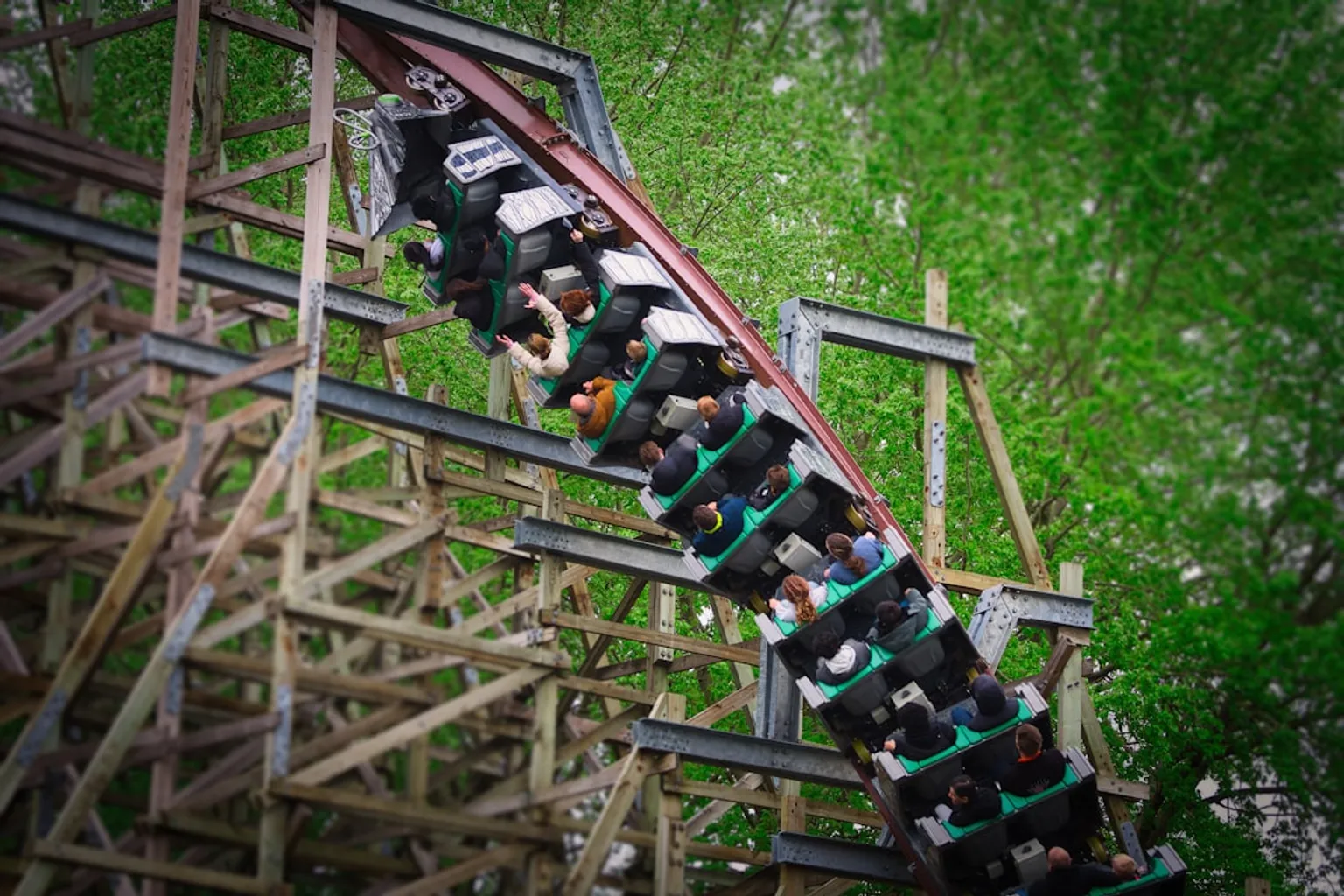
Height, age, passenger configuration, weather, and sled weight limits determine whether the purchased ride can proceed.
Tickets and prices
Rocky Top Mountain Coaster
Pigeon Forge
01 · GetYourGuide
Ticket · 30 minutes
USD17.41
02 · Official
Official ticket · Second ride
USD9.99
Box office and online booking
Rocky Top Mountain Coaster — At the box office
The attraction is located at 2940 Veterans Boulevard in Pigeon Forge, Tennessee. It covers more than 20 acres and uses four uphill sections, four downhill sections, four tunnels, and multiple 360-degree turns. A complete ride lasts more than nine minutes. Individual sleds can reach speeds of up to 30 mph, but the rider controls speed with a manual hand brake.
The correct booking process is therefore procedural. Select the admission format first. Confirm the restrictions before payment. Then match the booking date to the published operating schedule and the group’s physical requirements.
Understanding Rocky Top Mountain Coaster ticket options
Rocky Top Mountain Coaster tickets are available through several admission formats. The appropriate option depends on whether the rider wants one run, a repeat ride, or access combined with other attractions.
The principal ticket categories are:
- Single-ride admission. This is the basic option for one run on the coaster. It is suitable for visitors who are treating the ride as one element of a broader Pigeon Forge itinerary.
- Same-day second ride. A second run may be available at a reduced rate when purchased for the same day. This option is operationally different from buying two unrelated visits: the second ride is tied to the original admission date.
- Multi-attraction or combination passes. These packages combine the coaster with other area attractions. Their value depends on whether the visitor intends to use the additional admissions. A combination pass is not automatically more efficient than a single coaster ticket.
- Online booking or ticket-counter purchase. Tickets can be arranged online or purchased at the attraction. Online booking can reduce the number of decisions required at the venue, while the ticket counter allows the group to resolve eligibility and ride-format questions before admission.
Ticket prices are divided by rider category. Adults and children are not placed in the same pricing group. The child category applies to riders aged 3 through 9 who also meet the minimum height requirement of 38 inches. The price displayed at the time of purchase should be treated as controlling because taxes, package structure, promotional terms, and availability can change.
The lowest ticket price is not the same as the lowest total cost. The correct comparison is between the admission format and the number of rides the group will actually use.
How to compare ticket formats
The decision can be reduced to a short sequence:
1. Count the intended rides. If the group expects one ride only, begin with single admission. If a repeat run is likely, compare the single ride with the same-day second-ride option.
2. Separate coaster admission from broader attraction plans. A combination pass only produces a practical benefit when the additional attractions are part of the itinerary.
3. Classify every rider. Adult and child ticket categories are not interchangeable. The child category has both an age condition and a height condition.
4. Review the booking date. Same-day repeat options are not a substitute for a second visit on another date.
5. Check the final checkout terms. The booking page provides the current price, applicable tax, and any package limitations.
A discount ticket is useful only when its restrictions fit the group. A promotional offer with limited validity, separate redemption rules, or bundled admissions may create more logistical work than a standard ticket. The relevant measure is not the advertised reduction. It is the usable value after the group’s ride plan has been defined.
How to buy Rocky Top Mountain Coaster tickets
The booking process is straightforward, but the order of operations matters. Most preventable problems occur when visitors select a ticket before confirming who can ride and how the sleds will be configured.
Step 1: Establish the rider configuration
Each rider must be assigned to one of two configurations:
- A person riding alone in a sled.
- A driver controlling a sled with one passenger.
Solo riding and tandem riding have different requirements. A person must be at least 56 inches tall to ride alone. A driver must also be at least 56 inches tall to control a sled with a passenger. In addition, the driver must be at least 16 years old when carrying a passenger.
Passengers must be at least 38 inches tall. Children from 3 through 6 must ride with an adult driver. These conditions apply before ticket selection. They are not optional preferences that can be resolved by changing the seating arrangement at the loading area.
Step 2: Choose the admission date
Select the date on which the group will use the attraction. General admission is associated with the selected date and operating period. Available online booking does not establish a guaranteed fixed-hour ride slot unless the booking terms expressly state one.
The attraction normally accepts visitors during its published operating hours. Walk-in redemption is generally possible during those hours, subject to availability and operational interruptions. Online purchase can still be preferable when the group wants to secure a selected admission type before arriving.
Step 3: Select the ticket type
Choose among single admission, a same-day repeat option, or a combination pass. Do not purchase a child ticket solely because the rider is below the adult age threshold. The child must also be at least 38 inches tall.
If the booking platform offers multiple versions of the same attraction, inspect the terms for:
- Number of rides included.
- Same-day validity.
- Whether other attractions are included.
- Redemption instructions.
- Cancellation or modification conditions.
- Whether the product is admission only or part of a guided package.
The term “tickets online” describes the purchase channel, not necessarily a reserved ride time. A digital voucher may authorize admission on a specified date without assigning a minute-by-minute entry interval.
Step 4: Confirm the booking record
After payment, retain the confirmation on the device used at the venue. The confirmation should identify the attraction, date, number of admissions, and any included options. If the booking is made through a third-party platform, the platform’s redemption instructions control the presentation process.
A ticket should not be treated as proof that a rider satisfies the height or age rules. Those requirements remain independent of the booking record.
Step 5: Recheck conditions before departure
The operating schedule and weather policy should be reviewed on the day of the visit. The coaster operates in rain and snow, but thunderstorms and heavy downpours can cause a temporary or full operational closure. A booking made under clear conditions does not eliminate that operational risk.
For visitors arranging a wider Pigeon Forge itinerary, planning transportation and attraction timing in Pigeon Forge can help identify conflicts between the coaster’s operating window and other scheduled activities.
Height, age, and tandem-ride restrictions
The ride’s physical restrictions are specific. They should be treated as access conditions, not general safety suggestions.
| Rider situation | Minimum requirement |
|---|---|
| Riding alone | At least 56 inches tall |
| Driving with a passenger | At least 56 inches tall and at least 16 years old |
| Passenger | At least 38 inches tall |
| Child passenger aged 3–6 | Must ride with an adult driver |
| Child ticket category | Ages 3–9 and at least 38 inches tall |
A rider who is 56 inches tall may qualify to operate a sled alone, but height by itself does not establish eligibility to drive a passenger. The driver must also satisfy the age requirement. Conversely, a passenger may meet the minimum height but still require an adult driver because of age.
The group should determine the seating plan before approaching the ticket counter. This avoids a common failure mode: purchasing admissions for a child who meets the pricing threshold but cannot be paired with an eligible driver under the selected arrangement.
Sled weight limits
The permitted combined weight is weather-dependent:
- Up to 375 pounds per sled in dry conditions.
- Up to 330 pounds per sled in wet conditions.
The wet-weather limit is lower. That distinction affects tandem planning because the same pair may be compliant in dry conditions and non-compliant after rain. Two adults are not permitted to ride together in wet weather.
Weight compliance applies to the sled configuration, not merely to individual ticket ownership. A group should evaluate the combined load for each sled and retain an alternative seating arrangement if weather changes before the ride.
Operating the sled
The rider controls speed with manual hand brakes. The ride includes multiple uphill and downhill sections, tunnels, and tight turns. The braking system is part of the operating procedure. It is not an accessory reserved for emergency use.
Riders must maintain appropriate spacing and may not intentionally bump another sled. A person who intentionally causes a collision can be responsible for resulting injuries or damage. This rule has direct operational consequences: speed control must account for the sled ahead, not only the track gradient.
Open-toed shoes and flip-flops are prohibited. Closed footwear is therefore required for admission. This should be resolved before arrival rather than at the loading platform.
Operating hours and weather-related policies
The published operating schedule is:
- Sunday through Thursday: 10:00 a.m. to 10:00 p.m.
- Friday and Saturday: 10:00 a.m. to 11:00 p.m.
The schedule supports both daytime and evening use. Night rides are a defined feature of the attraction. The track is illuminated with a lighting installation reported to exceed $500,000 in value. The operating experience changes after dark, but the admission process and rider restrictions do not.
Operating hours should not be confused with guaranteed continuous ride availability. Weather interruptions, maintenance requirements, crowd volume, and operational decisions can affect loading. The attraction remains open in rain and snow under ordinary conditions, but thunderstorms and heavy downpours can suspend operations.
Applying the weather policy to a booking
A practical decision sequence is:
1. Check the forecast for the selected date.
2. Confirm whether the group’s sled configuration complies with the wet-weather weight limit.
3. Allow additional schedule tolerance. A temporary closure can disrupt a tightly timed itinerary.
4. Avoid relying on a final-minute ride before another fixed reservation.
5. Recheck operational status if severe weather develops.
The presence of rain does not automatically invalidate the ticket or close the coaster. The relevant distinction is between ordinary precipitation and conditions that create a safety interruption. Thunderstorms and heavy downpours fall into the latter category.
Maximizing the ride across the 20-acre track
The Rocky Top Mountain Coaster is not a short circuit with one lift and one descent. Its layout extends across more than 20 acres and includes four uplifts, four downhills, four tunnels, and 360-degree turns. The full ride lasts more than nine minutes, which makes the admission decision different from a brief amusement-park loop.
A first ride is primarily a procedural orientation. The rider must learn the braking response, maintain separation, and manage speed through changing gradients. A second same-day ride has a distinct operational advantage: the rider already understands the controls and can apply them with less hesitation.
This is the principal reason to evaluate the same-day second-ride option before purchase. The second run is not merely repetition. It allows the rider to adjust braking behavior after observing the track’s sequence of climbs, descents, tunnels, and turns.
Day ride versus night ride
A daytime ride provides clearer visibility of the Smoky Mountain landscape and the track geometry. It may be preferable for a first-time rider who wants maximum visual information.
A night ride changes the visual conditions. The illuminated track becomes the dominant reference point, and the surrounding landscape is less visible. It does not remove the braking and spacing requirements. The rider must still regulate speed and avoid contact with other sleds.
The choice should be based on the intended experience:
- Daytime admission is operationally clearer for riders who want to observe the surrounding terrain.
- Night admission emphasizes the illuminated track and altered visibility.
- Two rides on the same day allow the group to experience both conditions when the operating schedule and ticket format permit it.
Scheduling around other Pigeon Forge activities
The coaster is on Veterans Boulevard, within the main Pigeon Forge attraction corridor. A booking should be placed with sufficient time for arrival, ticket redemption, rider assignment, safety instructions, loading, and any weather-related delay.
A schedule that ends exactly at the coaster’s closing time is structurally weak. The published closing hour is an operating boundary, not a guarantee that every late arrival can board immediately. Friday and Saturday provide a later closing period than the other days, but the additional time should not be interpreted as unrestricted late-night access.
For a multi-attraction itinerary, the strongest sequence is usually the one that preserves flexibility around the coaster. Outdoor operations are more exposed to weather interruption than indoor admissions. A rigid schedule can cause a ticketed ride to become unusable even when the attraction itself resumes later.
Common booking errors
Several errors recur because visitors treat the ticket as the entire access requirement.
Buying based only on age
A child may qualify for the child ticket category only if the child also meets the 38-inch minimum height. Age without height compliance is insufficient.
Treating all tandem rides as interchangeable
A passenger arrangement requires an eligible driver. Children aged 3 through 6 must ride with an adult driver, and the driver must meet both the height and age requirements. Wet weather adds a lower sled weight limit and prohibits two adults from sharing a sled.
Assuming a fixed entry appointment
General operating-hour admission should not be described as a guaranteed timed-entry reservation. Unless the selected product states a fixed interval, the booking authorizes use on the relevant date under the attraction’s operating conditions.
Ignoring the wet-weather limit
The dry-weather limit is not the only applicable limit. If the track is wet, the permitted sled weight decreases from 375 pounds to 330 pounds. Tandem planning must account for the lower threshold.
Arriving in prohibited footwear
Open-toed shoes and flip-flops are not permitted. Changing footwear at the venue is not a reliable contingency plan.
Purchasing a combination pass without an itinerary
A multi-attraction pass has value only when the additional admissions will be used. It should not be selected solely because the package appears broader.
Treating the maximum speed as a required speed
The sled can reach up to 30 mph, but the rider controls speed manually. The operational objective is not to maintain the maximum. It is to maintain controlled separation and comply with the no-bumping rule.
Final booking procedure
The correct method for purchasing Rocky Top Mountain Coaster tickets is as follows:
1. Confirm the visit date and the attraction’s operating hours.
2. Measure or verify every rider’s height.
3. Assign solo riders, drivers, and passengers.
4. Check the driver age requirement for every tandem sled.
5. Calculate the combined sled weight, including the lower wet-weather limit.
6. Select single admission, a same-day second ride, or a combination pass.
7. Review the booking terms and redemption instructions.
8. Retain the confirmation and use compliant closed footwear.
9. Recheck weather and operational status before departure.
10. Allow schedule tolerance for loading and temporary weather interruptions.
Rocky Top Mountain Coaster tickets provide admission, but eligibility is determined by the ride’s operating rules. The decisive factors are not promotional language or the apparent simplicity of the checkout page. They are the rider configuration, height and age requirements, sled weight limits, weather policy, and selected admission format.
A compliant booking is therefore easy to identify: the ticket matches the planned number of rides, every rider fits an authorized configuration, and the itinerary allows for the operating conditions of an outdoor mountain coaster.