Integrating Climate Resilience into Somerset County’s Urban Planning Framework
The United Nations Development Programme hosted a National Urban Forum pressing governments and local officials to build cities that are both inclusive and climate-resilient, according to recent…
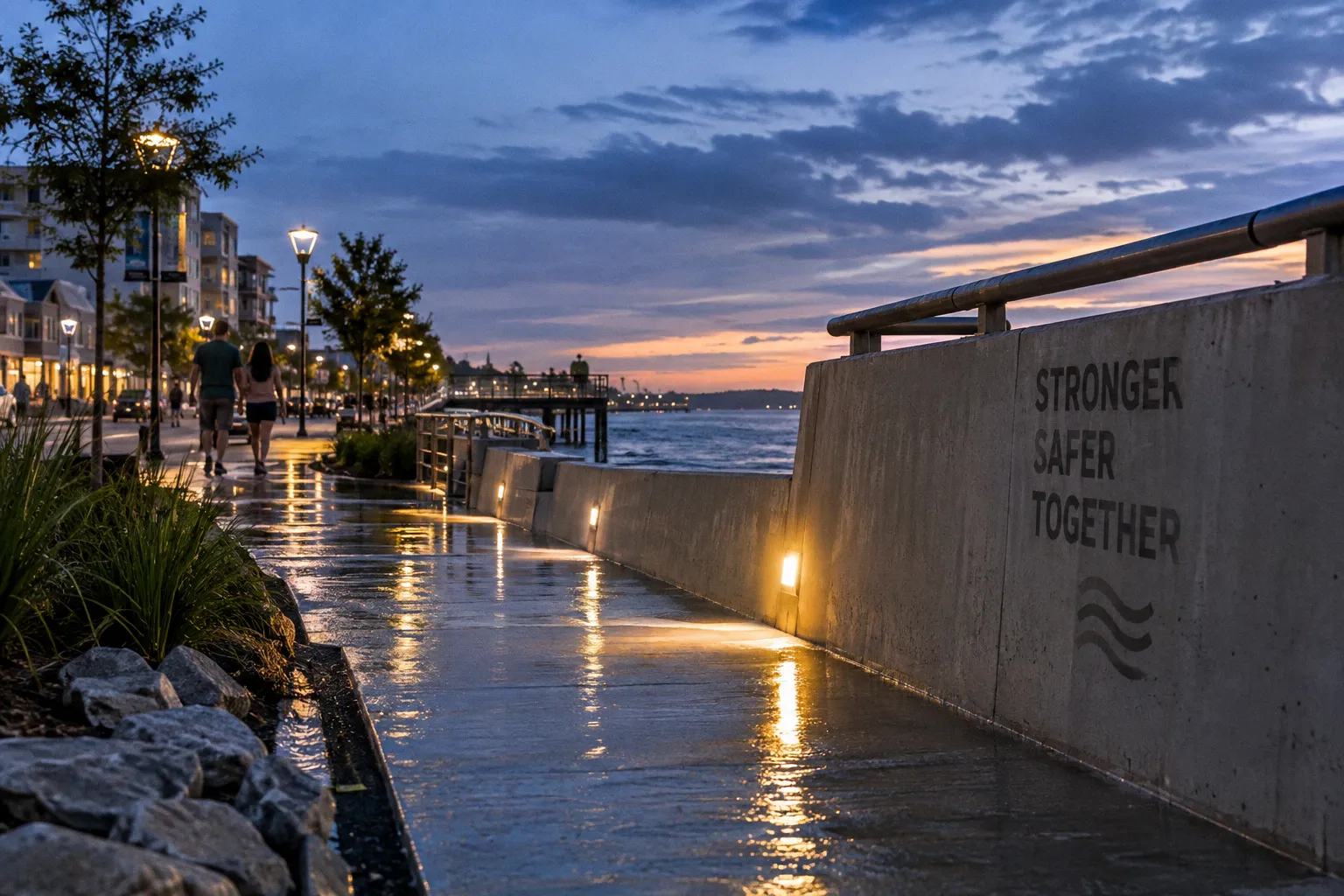
The United Nations Development Programme hosted a National Urban Forum pressing governments and local officials to build cities that are both inclusive and climate-resilient, according to recent coverage from UNDP and parallel reporting from outlets including the Philippine News Agency, UC Irvine's School of Social Ecology, and the UK's Centre for Cities. For Somerset County, where coastal flooding, aging stormwater systems, and tight municipal budgets already dictate land-use decisions, the framing matters more than the slogan.
What the forum is actually pushing
The headline from the UNDP is straightforward: act now on inclusive, climate-resilient cities. The Philippines piece on Bacolod City signals the kind of practical moves this entails — climate-responsive strategies baked into urban development rather than bolted on after the fact. UC Irvine's coverage on advancing climate resilience and the Centre for Cities' look at what's changed in urban policy point to the same converging conversation: resilience is no longer a planning department afterthought, it is a load-bearing criterion for new construction, retrofit, and zoning approval.
That last phrase is the one to underline. If resilience becomes a load-bearing criterion, every site plan, every subdivision review, every drainage easement in Somerset County gets re-examined against a tougher standard — not just a checkbox on a checklist.
Why Somerset County should care
Most of Somerset County's municipalities sit on low-lying land with limited drainage capacity and a long backlog of deferred maintenance. Stormwater infrastructure is the first thing to fail under a heavier rainfall regime, and the repair bill always lands on someone. A county-level move toward climate-responsive planning — the language used in the Bacolod City reporting — translates locally into a few concrete questions:
- Does the Comprehensive Plan require updated floodplain mapping before any new rezoning?
- Are developers being asked to prove drainage capacity for a 100-year storm, not the 10-year event the old code assumes?
- Is there a line item in the capital budget for hardening or relocating critical infrastructure, or just another study that gets shelved?
Those are the kind of entries that determine whether the next nor'easter is a nuisance or a budget-breaking disaster.
What to watch at the local level
The global forum sets a direction; the actual work happens at the planning commission table. Three things are worth tracking in the coming months:
1. Whether Somerset County's Comprehensive Plan update references climate resilience as a binding criterion rather than a guiding principle.
2. Whether the County's MS4 stormwater permit requirements are revisited to match the rainfall assumptions now standard in federal guidance.
3. Whether affordable housing and resilience get treated as one integrated policy or as separate silos. The "inclusive" half of the forum's call only means something if the resilience half is actually funded.
The reality on the ground is unglamorous: culverts, easements, elevation certificates, and money. Forums set direction, but the load still sits on the people reviewing site plans in Crisfield, Princess Anne, and Westover.