CDBG Environmental Review Errors: How to Avoid Funding Delays
A Maryland CDBG project can have a sound budget, a strong local need, and a contractor ready to start—and still lose months because the environmental review was treated as paperwork to finish later.
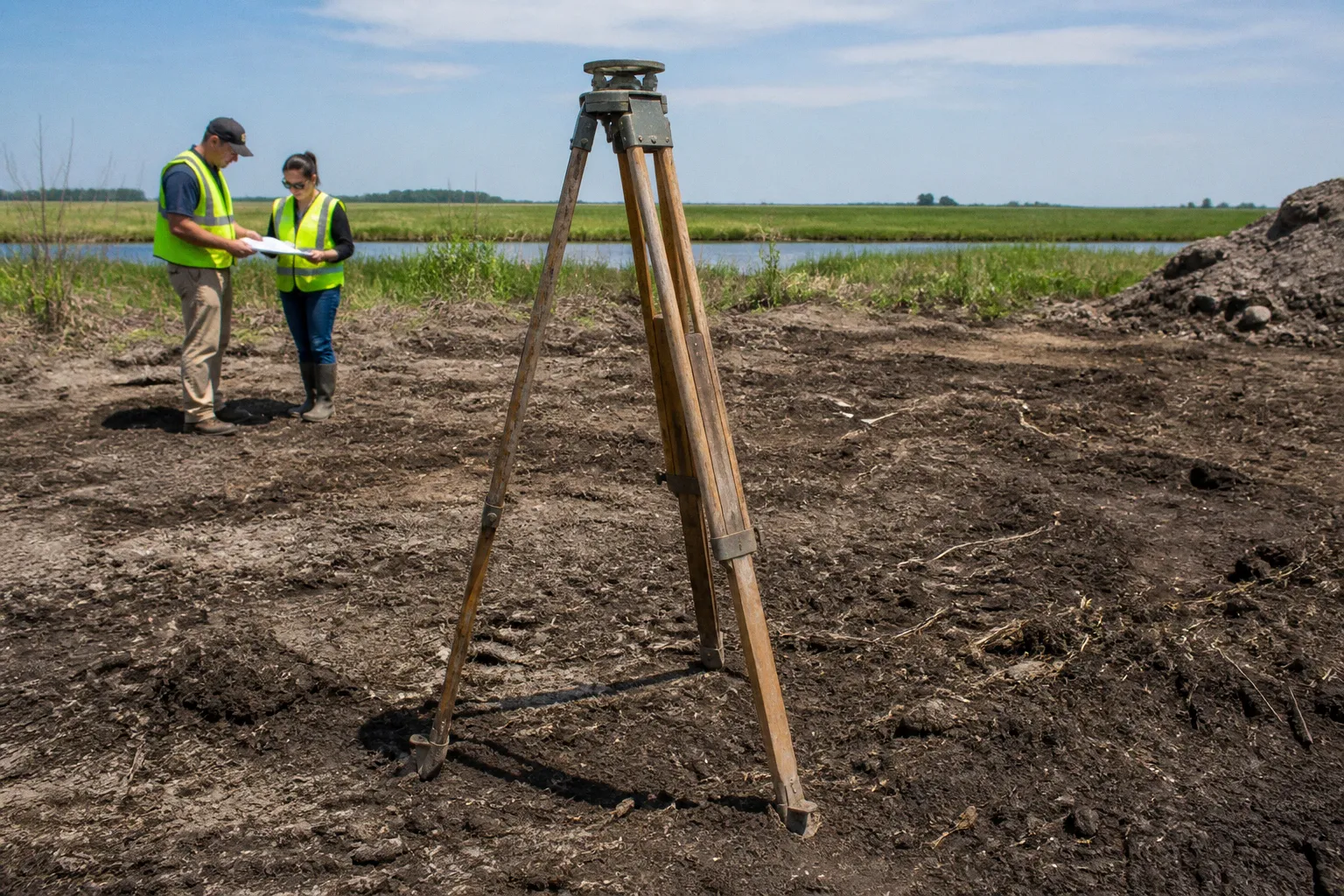
Under 24 CFR Part 58, the responsible entity must complete the required environmental review and obtain the appropriate clearance before the project moves into physical activity or another action that limits the alternatives the review is supposed to consider. That can include construction, rehabilitation, demolition, site preparation, and property acquisition connected to the project. Federal funds do not have to be sitting in the local account for the risk to exist.
For Somerset County applicants, that sequence matters in housing rehabilitation, neighborhood revitalization, façade programs, infrastructure work, and projects that involve several properties. A purchase agreement, a grading subcontract, or an early demolition decision can create a problem before the project team realizes that the environmental review has been compromised.
The Maryland Department of Housing and Community Development reviews the Environmental Review Record and the supporting materials required for the CDBG process. Notices, consultations, site information, public comments, and agency determinations all have to fit together. If something is missing or inconsistent, DHCD may request corrections, require additional review, or delay the decision on the Release of Funds. In a serious case, the project may face denial of CDBG assistance or the loss of the proposed funding.
Environmental review is not the last administrative task before construction. It is part of deciding whether the project can move forward at all.
The 24 CFR Part 58 Trap: Why Timing Matters for CDBG Funding
24 CFR Part 58 establishes the environmental review process used for HUD-assisted projects carried out by a responsible entity. In Maryland’s CDBG program, the review must be completed before the project proceeds to physical work or other choice-limiting activity. The Environmental Review Record is the file that shows how the responsible entity evaluated the project and addressed the applicable environmental requirements.
That distinction is important. The rule is not simply a requirement to collect forms before the first construction invoice. It is a sequencing rule. The review is supposed to inform the project while alternatives can still be considered.
Physical activity is the clearest example. Construction, demolition, rehabilitation, excavation, grading, clearing, and similar work can change the site before the review has evaluated it. But the same concern can arise from a nonphysical decision if that decision effectively commits the project to a site, layout, or scope that the environmental review should still be examining.
Property acquisition requires particular care. An acquisition made with the expectation that CDBG assistance will support the project can be a choice-limiting action before clearance. Using a different source of money does not automatically remove that risk if the property is being acquired for the proposed CDBG activity or if the purchase eliminates reasonable alternatives the review should consider. The funding source and the purpose of the acquisition both matter, but a separate acquisition pathway is not a safe harbor by itself.
The practical question is not whether federal money has already been drawn. It is whether the project has begun to commit itself before the environmental review and release process are complete.
What can happen when the sequence is broken
A premature action does not mean that every project is automatically disqualified in exactly the same way. The consequences depend on the facts, the nature of the action, the project record, and the applicable program and agency requirements. But the risk is substantial enough that local officials should treat the issue as a potential funding problem from the beginning.
Possible consequences include:
- a request for a written explanation of what occurred;
- additional environmental analysis or documentation;
- a requirement to revise the project scope or consider alternatives;
- delays while the state reviews the circumstances;
- ineligibility of costs connected to the premature activity;
- denial or withdrawal of CDBG assistance; or
- the need to identify other funds if CDBG assistance cannot be used.
The fact that a project manager considered the work minor does not settle the question. A small amount of grading can affect drainage. A limited rehabilitation activity can disturb historic materials. A property purchase can remove the possibility of considering another site. The right analysis is tied to what the action changed, not merely to its dollar value.
That is why the environmental schedule belongs in the project schedule. Engineering, planning, and environmental studies may often proceed before clearance when they do not commit the project to a physical course of action. The team should distinguish those preparatory activities from work that changes the property or closes off alternatives.
For a Somerset County application, this review should happen before:
- issuing a notice to proceed;
- allowing a contractor or subcontractor to mobilize;
- authorizing demolition, clearing, excavation, or grading;
- signing a purchase or closing documents for a proposed project site;
- ordering materials for work that cannot reasonably be redirected; or
- making a design decision that eliminates feasible site or layout alternatives.
The question should be asked at each milestone, not only once during grant preparation.
Identifying Prohibited Choice-Limiting Actions Before Clearance
A choice-limiting action is an action that reduces the alternatives available to the environmental review. It can be obvious, such as pouring a foundation, or less obvious, such as acquiring the only property identified in the application before the review has considered whether the location is appropriate.
The concept is easier to apply when the team asks what the Environmental Review Record still needs to evaluate. If the answer is the location, the footprint, the building condition, the access plan, or the possibility of avoiding a sensitive resource, the project should not take an irreversible step that settles that question prematurely.
Common risk areas include:
- starting construction or demolition;
- beginning rehabilitation before the required review is complete;
- clearing trees or vegetation within the proposed project footprint;
- grading, excavating, trenching, or otherwise preparing the site;
- acquiring property for the CDBG-supported activity before clearance;
- entering into commitments that make a particular design or site effectively unavoidable;
- allowing a contractor to perform work under an informal authorization; and
- treating an emergency or maintenance activity as part of the grant project without confirming its status.
Not every pre-clearance activity is prohibited. Administrative work, grant management, preliminary planning, certain engineering studies, and environmental investigations can often proceed when they do not limit the alternatives under review. The key is to document what the activity involves and why it does not commit the project.
That documentation matters because labels can be misleading. Calling work a “survey,” “maintenance,” or “preparation” does not determine its treatment if the activity changes the site or advances the project in a way that cannot be undone. A site survey that records existing conditions is different from excavation performed to prepare a foundation. A structural assessment is different from removing building components as part of the rehabilitation.
| Activity before environmental clearance | Main question | General risk |
|---|---|---|
| Preliminary engineering or planning | Does the work gather information without committing the site or design? | Often manageable when properly limited and documented |
| Environmental studies and field investigations | Is the activity being performed to inform the review rather than advance construction? | Often compatible with the review process |
| Grant administration and staff work | Does the activity involve no physical work or irreversible commitment? | Generally low risk |
| Site grading, excavation, clearing, or demolition | Does the work alter the site or remove an alternative? | Significant choice-limiting risk |
| Property acquisition for the proposed CDBG activity | Does the purchase commit the project to a site before clearance? | Significant risk, even if the purchase is not paid with grant funds |
| Building rehabilitation | Does the work change the structure before the review is complete? | Significant choice-limiting risk |
| Contractor mobilization | Has the contractor begun physical activity or incurred a commitment tied to the site? | Must be reviewed before authorization |
The safest internal practice is a written pre-clearance determination for any activity that sits near the line. It should identify the activity, explain its purpose, state whether it changes the site or limits alternatives, and identify who approved the interpretation. That record will not cure an action that was improperly taken, but it can prevent casual decisions from being made without a clear compliance discussion.
The acquisition question
Property acquisition is often mishandled because local project teams separate the purchase from the later construction grant. They may reason that the acquisition occurred before the CDBG award, or that a different account paid for the property, so the environmental review does not apply.
That reasoning is unsafe when the acquisition is tied to the proposed CDBG project. The relevant concern is whether the purchase commits the project to a site before environmental clearance. If the property is no longer realistically replaceable, the review may no longer be able to evaluate location alternatives in a meaningful way.
Applicants should raise the acquisition issue early with the relevant program and environmental contacts. Do not wait until the closing has occurred and the property has been listed as the project site. If acquisition is necessary before the grant decision, the project file should clearly distinguish the source and purpose of the purchase while also addressing whether the transaction could limit the environmental review.
Executing the Statutory Checklist and Public Notice Requirements
The Statutory Checklist gives the environmental review a working structure. It is not a form to complete with generic language after the project has already been designed. It should connect the proposed scope to the site and to the environmental authorities that may apply.
Depending on the project, the record may address historic preservation, floodplain management, wetlands, contamination, noise, endangered or threatened species, coastal or water-resource concerns, airport hazards, environmental justice, and other requirements associated with the HUD environmental review process. The applicable review level and documentation depend on the project’s scope and circumstances.
For Somerset County projects, a disciplined process usually looks like this:
1. Confirm the proposed scope, sites, funding structure, and responsible entity before beginning the checklist.
2. Use the current DHCD CDBG materials and instructions applicable to the funding round.
3. Complete the checklist with site-specific information, maps, photographs, consultations, and supporting records.
4. Identify which authorities require consultation, concurrence, permits, or additional documentation.
5. Resolve questions raised by agencies or reviewers before finalizing the record.
6. Prepare the required public notice documents and verify the project name, location, scope, and other identifying information.
7. Publish and post notices as required, allowing the applicable comment period to run.
8. Record comments received and explain how they were addressed.
9. Submit the ERR and related materials to DHCD or the designated state review officials for the next decision in the process.
The details of the notice process should be checked against the current DHCD instructions and the applicable Part 58 procedure. The notice is not a formality that can be corrected after the fact without consequence. An incorrect project address, inconsistent project description, inaccurate funding information, defective publication, missing posting, or an improperly calculated comment period can require corrective action and delay the release decision.
Consistency is a compliance tool
One of the most common problems in an environmental review record is inconsistency between documents. The application may describe one number of units, the notice another scope, and the engineering attachment a different footprint. A project address may appear in several forms. A site map may include parcels that are not in the application, while the checklist refers to parcels that are not shown on the map.
Reviewers have to determine which version represents the actual project. If the record is unclear, the state may ask the applicant to reconcile it before the review can proceed.
Before submitting the ERR, compare the following items:
- project name and location;
- parcel or property identification;
- number and type of units, buildings, or sites;
- proposed rehabilitation or construction scope;
- utility, access, and staging areas;
- project boundaries shown on maps;
- funding sources and the relationship between activities;
- notice language and publication dates; and
- agency correspondence and responses.
The record should also explain changes. If the footprint has been reduced, if a property has been removed, or if the project has shifted from rehabilitation to replacement, the environmental review should not quietly continue under the old description. A change in scope can affect the review level, consultations, notices, and conclusions.
Public comments are part of the record
The public notice creates an opportunity for affected people and organizations to raise information that may not appear in the initial application. A comment about recurring flooding, a historic structure, drainage, hazardous materials, or neighborhood conditions should not be treated as an interruption to the schedule. It may identify a factual issue that the ERR needs to address.
The response does not have to agree with every comment. It does need to show that the comment was received, considered, and answered in relation to the environmental decision. A short, specific response is stronger than a general statement that no concerns were identified.
Timing is where many applicants create avoidable delays. The publication and comment period cannot simply be compressed because the contractor’s proposed start date is approaching. Build the notice period into the original schedule, allow time for corrections, and do not treat the expected end date as permission to begin work. The project still needs the applicable clearance and release decision before it proceeds to restricted activity.
Implementing Tiered Reviews for Multi-Site Housing Initiatives
A scattered-site housing program creates a different kind of environmental review problem. The application may describe a single community initiative, but each address can have its own historic, floodplain, wetland, contamination, access, or habitat issues.
A tiered review can make that structure manageable when the program and site-specific components are defined correctly. The broad review establishes the program framework: geography, eligible activities, general scope, foreseeable environmental concerns, and the limits of what the programmatic analysis can conclude. The site-specific review then examines each address against that framework.
Tier 1 does not make every future property automatically cleared. It establishes what can be resolved at the program level and what must be checked when a property is identified. Tier 2 supplies the address-specific evidence and determinations needed for the individual site.
A useful division looks like this:
| Review component | Programmatic review | Site-specific review |
|---|---|---|
| Scope | Overall program geography, eligible activities, and known limits | Exact property, building, and work scope |
| Historic preservation | Program framework and consultation approach | Address-specific Section 106 findings and documentation |
| Floodplain issues | Regional or program-level screening where appropriate | FEMA map and site conditions for the individual parcel |
| Wetlands and water resources | General avoidance strategy and known sensitive areas | Parcel-level screening, delineation, or agency coordination as needed |
| Hazardous materials | Program assumptions and screening method | Building and site information for the particular address |
| Wildlife and habitat | General geographic concerns | Site-specific screening and any follow-up required |
| Clearance | Defines what remains open for each site | Supports the decision for the individual property |
The order matters. The programmatic framework should be complete enough to tell the team what the site reviews must contain. A site should not be treated as cleared merely because the overall application received a program-level environmental review.
At the same time, the work does not have to become one long serial process. Once the programmatic framework is accepted and the site-specific method is clear, individual property reviews can often be developed in parallel. Each address needs its own supporting documentation, and each site must remain within the scope evaluated by the programmatic review. If a proposed property falls outside that scope, the team may need to revisit the review rather than force the parcel into an existing conclusion.
Avoiding the ten-address bottleneck
Multi-site applications often slow down because the applicant waits for every owner document, inspection, map, and consultation before organizing the file. A better approach is to maintain a site register that tracks each address without turning the article’s advice into a rigid compliance checklist.
For each property, the project team should know:
- whether the address is inside the approved program geography;
- what work is proposed;
- whether the building or site has known historic concerns;
- whether floodplain, wetland, habitat, or contamination questions are present;
- which consultations or supporting documents are outstanding;
- whether the property has been acquired or is under contract;
- whether the site is ready for a site-specific determination; and
- whether the proposed work has changed since the application.
This makes it easier to separate a complete site from one that still needs information. It also prevents a contractor from treating the entire program as ready simply because several addresses have finished review.
A common mistake is to treat a programmatic review as a shortcut around site-specific work. It is better understood as a way to define the work that remains. The stronger the Tier 1 record, the less likely each Tier 2 review is to restart the environmental analysis from the beginning. But the site-level questions still have to be answered.
A multi-site grant is not one environmental site repeated several times. It is one program framework with multiple property decisions inside it.
Navigating Maryland DNR Wildlife and Heritage Service Screenings
On the Lower Eastern Shore, wildlife and habitat questions can affect the schedule even when the proposed work appears modest. A project may involve coastal marshes, drainage features, forest edges, waterways, migratory bird habitat, rare plants, or other resources that do not appear in a basic property description.
Maryland Department of Natural Resources Wildlife and Heritage Service screening can help identify potential concerns involving rare, threatened, and endangered species and other sensitive resources. The exact process and level of follow-up depend on the location, footprint, activity, and the response from the reviewing agency. It should be treated as part of project planning rather than an afterthought added when construction is already scheduled.
A screening response may identify no further concern, recommend avoidance measures, request more information, or indicate that additional evaluation is appropriate. A potential species or habitat issue does not necessarily end a project. It may require a revised footprint, seasonal restrictions, a field survey, coordination with another agency, or other mitigation. What it does change is the schedule and sometimes the design.
That is why applicants should begin the DNR-related inquiry while the rest of the ERR is being assembled. Running the screening in parallel can expose a site issue while alternatives are still available. Waiting until the final submission can force the project team to revise a nearly complete record and may require changes to the scope described in public notices or agency consultations.
The screening file should be connected to the actual project, not just to a general county location. Include the project boundary, proposed disturbance area, access route, staging area when relevant, and a description of the work. A vague location can produce a vague response, leaving the team without a reliable answer about the site that will actually be disturbed.
When a response affects the design
Suppose a scattered-site rehabilitation project includes several homes near marshland. The interior rehabilitation may be limited, but exterior work, access improvements, drainage changes, tree removal, or utility work could expand the area that needs review. The environmental record should describe the complete activity, not only the most visible construction item.
If DNR or another reviewing agency identifies a potential concern, the project team should record:
1. what resource or species issue was identified;
2. which part of the proposed work creates the concern;
3. whether avoidance is possible through a change in location, footprint, method, or timing;
4. whether additional information or a field survey is needed;
5. which agency or official must make the next determination; and
6. how the final project scope reflects the response.
This is not a reason to promise a particular outcome. It is a reason to leave room in the schedule and design for the review to do its job.
A local government can also avoid confusion by distinguishing DNR screening from the broader HUD environmental review. One agency’s response may inform the ERR without replacing the other required analyses. Likewise, a state screening does not by itself authorize physical work or substitute for the applicable Release of Funds process.
Keeping the environmental review on the critical path
The strongest CDBG applications treat environmental review as a project-control function. The person managing the grant does not need to perform every technical analysis, but someone must own the sequence and know when a decision could affect the record.
That responsibility includes coordinating the application, design team, property staff, procurement staff, counsel, contractors, and reviewing agencies. It also means putting a hold on physical work until the project has the clearance required for that activity. A contractor’s availability is not an environmental determination, and a closing date is not a Release of Funds.
A practical internal sequence is:
- define the full project scope, including access, staging, utilities, and related work;
- identify every site and determine whether acquisition or control has already occurred;
- separate information-gathering activities from physical or choice-limiting actions;
- start consultations and screenings early;
- prepare the ERR with maps and site-specific supporting materials;
- verify that the public notice describes the same project as the ERR;
- track comments and agency responses;
- resolve open issues before authorizing work; and
- keep the clearance and release documentation with the grant file.
The sequence is not merely administrative. It protects the applicant from making a commitment that the environmental review cannot meaningfully revisit.
If the project has already taken a questionable action, the correct response is not to conceal it or continue as though nothing happened. Stop the affected activity, document what occurred, preserve contracts and photographs, and seek direction from DHCD and the appropriate environmental officials. The consequences may be serious, but a clear record gives the reviewing authorities a factual basis for deciding what can happen next. Pretending that a purchase, demolition, or site disturbance did not occur creates a second problem on top of the first.
Closing
Maryland CDBG environmental review errors usually begin as scheduling decisions: a contractor is allowed to mobilize, a property is acquired before the site question is resolved, or a public notice is rushed to match a construction calendar. The resulting delay is not caused by one missing form alone. It comes from allowing the project to outrun the record that is supposed to support its funding.
For Somerset County applicants, the most important safeguards are straightforward:
- build the Environmental Review Record into the initial project schedule;
- treat acquisition and site commitments as environmental review questions, regardless of which account pays for them;
- keep the application, maps, notices, plans, and agency correspondence consistent;
- start Maryland DNR Wildlife and Heritage Service screening early when the location or scope raises habitat concerns;
- use programmatic and site-specific reviews carefully for scattered-site work; and
- do not begin physical activity until the applicable environmental clearance and Release of Funds process are complete.
A choice-limiting action can jeopardize CDBG assistance, but the result is not best described as an automatic disqualification in every case. The safer and more accurate rule is simpler: do not make an irreversible project decision before the environmental review has had a real opportunity to evaluate it.
When the sequence is respected, environmental review becomes part of responsible project design rather than an emergency obstacle at the end. When it is ignored, even a well-supported grant can be delayed, redesigned, or denied.