Six Flags Over Texas tickets: a guide to booking and access
The gate price at Six Flags Over Texas can run roughly twice the online rate for the same calendar day. That gap is not a promotional fluke; it is the basic design of how the park sells access.
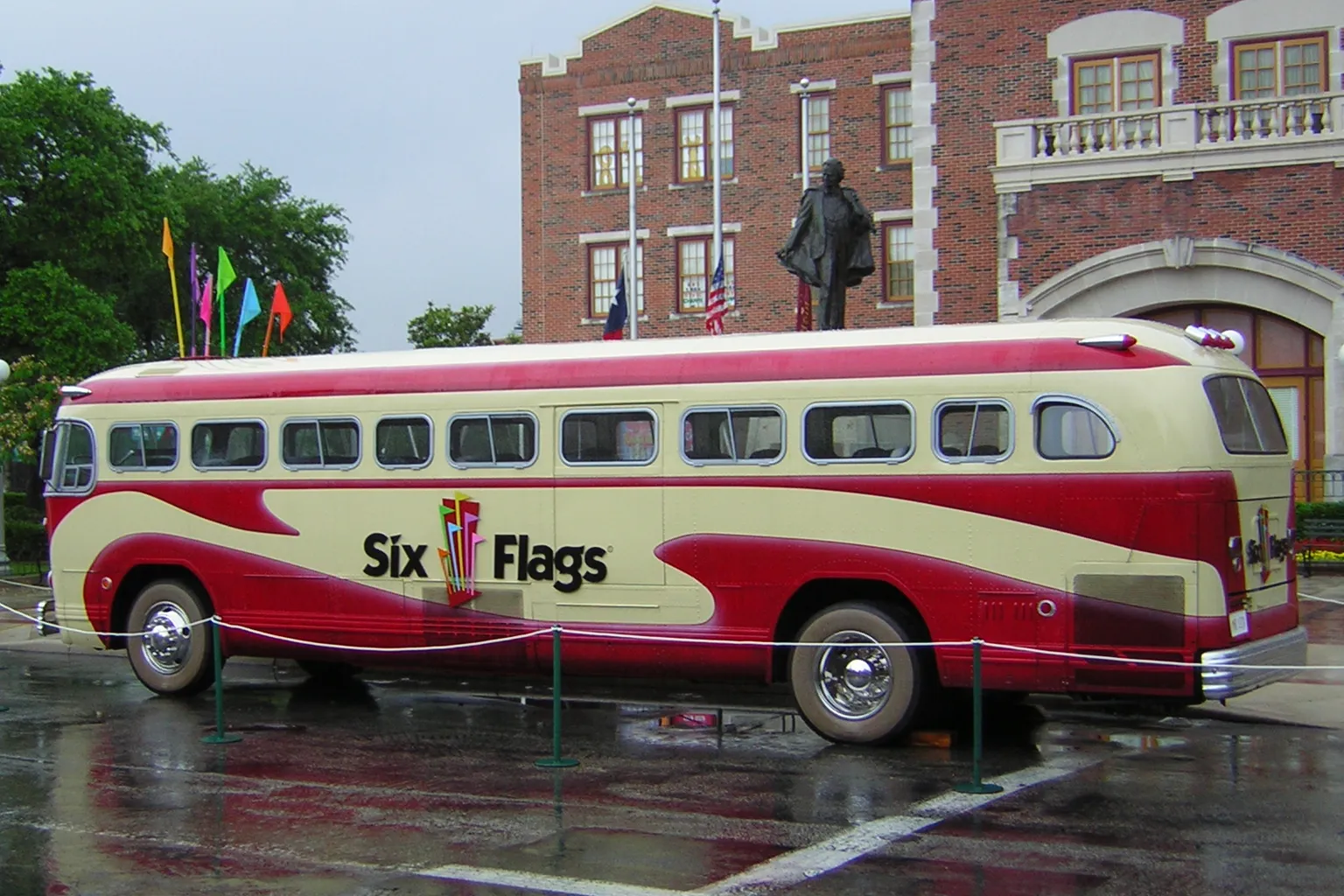
Dynamic online pricing rewards visitors who choose a date in advance and makes the walk-up purchase the most expensive way to improvise. Add an online processing fee, select the wrong date, or assume parking is included, and a family of four can lose a substantial amount before the first coaster leaves the station.
Tickets and prices
Six Flags Over Texas
Arlington
01 · GetYourGuide
Admission ticket · Over 100 rides and shows
USD48.72
02 · Official
Official ticket · Daily admission
USD39
Six Flags Over Texas, the original park in the chain and a fixture of Arlington’s Entertainment District, has layered its ticketing into a stack of daily tickets, multi-day products, annual passes, parking options, queue-management add-ons, and seasonal bundles. The storefront looks simple until you start asking what each product actually covers. This guide follows those layers to the transaction screen: what is included, what is charged separately, and where the apparent bargain changes shape.
Navigating Online Ticket Tiers and Pricing Dynamics
The park’s online storefront is arranged in tiers. Single-day admission sits at the bottom: one selected calendar date and one entry to Six Flags Over Texas. Above it are multi-day products, which can make sense for visitors planning two or more park days during the same trip. Annual products sit at the top, trading a larger initial payment for repeated admission during the applicable operating period.
The important distinction is that these products do not all solve the same problem. A daily ticket is about access on a particular date. A multi-day ticket is about spreading a trip across several dates. A pass is about making several visits economical and, depending on the product, adding benefits such as parking or access to other parks. Comparing only the headline admission price misses the structure underneath.
Online is where the value usually lives, but only if you understand what the platform is doing. Six Flags Over Texas uses date-driven pricing: the date you select influences the amount shown for admission. A Tuesday in mid-September will not necessarily carry the same price as a Saturday in mid-July. High-demand dates cost more, while quieter dates can be substantially cheaper.
That changes the order in which the decision should be made. Pick the likely date first, then compare the available ticket products for that date. Starting with a preferred price and trying to force the calendar around it is how visitors end up with a ticket that does not fit their trip.
At Six Flags Over Texas, the date is part of the ticket. Treat it as a pricing decision, not just a scheduling detail.
The single-day tier
Single-day admission is the workhorse product and the one most visitors actually buy. It provides entry to Six Flags Over Texas on the selected date. It does not automatically turn into a season pass, include every separately sold attraction, or cover every expense associated with arriving at the park.
The basic ticket should be separated from the extras that may appear beside it:
- Parking is generally a separate purchase unless the ticket, pass, or bundle specifically includes it.
- Hurricane Harbor Arlington may require a separate ticket, but some eligible passes and combo products include waterpark access.
- Fright Fest haunted mazes and other premium seasonal experiences may require an upgrade or separate add-on.
- Holiday in the Park’s ordinary lights, shows, and seasonal atmosphere are generally part of regular park admission when the event is operating; selected premium experiences can still cost extra.
That last distinction matters because seasonal marketing often presents the whole event as one visual package. The admission product may get you into the park and into the standard seasonal programming, while a particular maze, reserved experience, or premium attraction sits outside the base ticket.
On top of the ticket subtotal, the booking platform can add a per-order processing fee. The fee is applied to the transaction rather than functioning as a separate admission charge for each person, so it is usually less painful when several tickets and add-ons are placed in one order. A solo visitor feels it more sharply because the same order-level charge is spread across fewer purchases.
The practical move is simple: build the complete order before judging the price. A low advertised admission rate can look very different once parking, a queue product, a seasonal upgrade, and the processing fee are all visible.
Multi-day blocks
Multi-day tickets are designed for visitors who want two or more operating days without purchasing each day as an entirely separate admission. The per-day discount against a comparable stack of daily tickets may be useful, especially for a family staying in the area or a visitor trying to cover the park’s larger coaster lineup without compressing everything into one long day.
The product is less attractive when the itinerary is uncertain. Multi-day tickets can involve date restrictions or selected-use conditions, so the number of included days is not the only question. Check whether the dates must be used consecutively, whether the product is tied to a particular visit window, and whether the terms allow changes. A theoretical discount is not a discount if one of the purchased days goes unused.
For a long weekend, compare three figures rather than two:
1. The total price of the multi-day ticket.
2. The price of the same number of single-day admissions for the dates you actually want.
3. The extra parking and processing costs attached to each option.
That comparison is more useful than assuming that a two-day product is automatically the cheaper choice.
Comparing Daily Admission vs. the 2027 Gold Pass Value
The Gold Pass is not a better daily ticket. It is a different calculation: a larger first payment exchanged for repeated access and pass benefits.
The 2027 Gold Pass was being offered at a marked-down price of $89 during the season-push window described in the draft’s pricing scenario. Its value depends on the benefits attached to that product, including the stated free general parking and access across the participating Six Flags parks in Texas and Oklahoma. Those inclusions should always be confirmed in the pass terms for the purchase date, because annual products can differ in coverage, blackout rules, and upgrade conditions.
The central break-even calculation needs to be stated accurately. If the pass costs $89 and daily admission starts at $45, two daily admissions already total at least $90 before parking. On admission alone, the pass has therefore reached its nominal break-even point by the second visit, not somewhere between the second and third. If the pass also includes general parking and the daily visitor would otherwise pay for parking, the pass can pull ahead even sooner in the total-trip calculation. The exact comparison still changes with the selected dates, admission prices, parking tier, taxes, fees, and any pass restrictions.
Here is the basic distinction:
| Factor | Single-Day Ticket | 2027 Gold Pass |
|---|---|---|
| Entry scope | One selected calendar date | Repeated admission during the applicable pass period |
| Park coverage | Six Flags Over Texas | Participating Six Flags parks covered by the pass terms |
| Parking | Usually a separate purchase | General parking included if stated in the pass benefits |
| Best fit | One-time visitor or fixed travel itinerary | Local or regional visitor planning multiple visits |
| Cost per visit | Depends on the selected date | Falls with each eligible visit |
| Additional inclusions | Only those shown with the ticket or bundle | May include parking, waterpark access, or other benefits depending on the product |
| Transferability | Subject to ticket terms | Usually tied to the passholder and not freely transferable |
The table is not a substitute for the checkout terms. It is a way to keep the products in their proper categories. A pass can include something that a daily ticket does not, but only if that benefit is expressly listed.
When the daily ticket wins
The daily ticket remains the cleanest choice for a visitor who genuinely expects one park day. Someone flying in for a single Saturday, with the hotel and travel dates already fixed and no realistic plan to return during the pass period, should not buy an annual product simply because its headline price looks attractive.
A daily ticket can also win when the selected admission date is heavily discounted and the pass benefit does not match the trip. If a visitor cannot use included parking, will not visit another participating park, and has no second Six Flags day planned, the pass’s unused potential has no practical value.
The correct comparison is not the pass price against the cheapest daily ticket advertised on the home page. It is the pass price against the daily ticket price for the dates the visitor will actually use, plus the costs the pass would replace.
When the Gold Pass wins
The Gold Pass becomes compelling when a second visit is realistic rather than hypothetical. Using the $89 example and admission starting at $45, two admissions reach at least $90 before parking. That is the admission-only break-even point. If general parking would otherwise be purchased on either visit, the pass may produce a positive difference before the second visit is complete.
A local Arlington or DFW family can reach that point through several ordinary patterns: a spring visit followed by a summer day, two separate weekend trips, or one Six Flags Over Texas visit combined with a visit to another park covered by the product. The pass does not require a visitor to be a coaster obsessive. It requires the planned use to match the benefits.
The calculation should include the whole group carefully. A family buying four daily admissions has to compare four admissions per visit with the price of the appropriate number of passes. If only one family member will return for additional visits, buying a pass for everyone may not be efficient. If every member will use the pass twice, the arithmetic changes quickly.
The break-even threshold
The break-even point is best expressed as a range of scenarios, not as a universal third-visit rule.
With an $89 Gold Pass and admission starting at $45:
- One daily admission costs at least $45 before parking.
- Two daily admissions cost at least $90 before parking.
- The pass is therefore at or below the cost of two starting-price admissions before parking is counted.
- Any included general parking increases the pass’s value for a visitor who would otherwise buy parking.
- Higher daily admission prices make the pass break even more quickly; a lower promotional pass price does the same.
That does not mean every visitor should buy the pass after seeing the $89 figure. The daily admissions may be for dates with different prices. The pass may carry terms that limit where or when it can be used. Waterpark access or other benefits may be included only in selected pass levels. A fair calculation uses the actual products shown at checkout, not a generic price from a different calendar window.
The old phrasing — that the pass reaches break-even somewhere between the second and third visit — understates the value in the $89 and $45 example. At those prices, the admission-only threshold is the second visit. Parking can move the total-trip threshold further in the pass’s favor.
Essential Add-ons: Parking and Fast Lane Queue Management
Two add-ons shape how the day feels once the ticket has been purchased: parking determines how much the arrival costs, while queue management determines how much time is spent waiting after entry.
Parking: general versus preferred
Six Flags Over Texas offers general and preferred parking options. General parking is the standard choice and is typically farther from the entrance or less convenient during the busiest arrival periods. Preferred parking costs more in exchange for a closer or more convenient location.
The most important parking question is not simply which tier is nicer. It is whether parking is already covered by the ticket or pass you are buying. A daily admission ticket should not be treated as an all-in admission-and-arrival product. An eligible annual pass may include general parking, while preferred parking can remain an upgrade. A combo product can have its own terms.
Parking should be added to the comparison before deciding between a daily ticket and the Gold Pass. If a visitor buys two daily admissions and two parking products, the pass can reach its effective break-even point earlier than an admission-only calculation suggests. Conversely, if the visitor is being dropped off, staying nearby without a car, or using a pass that includes the relevant parking benefit, the parking line may not belong in the comparison.
Online parking may be cheaper than purchasing at the gate, but the available rates and terms should be read on the same checkout screen as the admission. The point is not to assume that every online add-on is automatically a bargain. It is to avoid treating a separate cost as invisible.
Parking is part of the ticket decision whenever you are driving. Leave it out of the math and the “cheap” day is only cheap on paper.
Fast Lane and queue management
Fast Lane is a separate queue-management product, not a replacement for admission. It is intended to reduce the amount of time spent in regular standby lines, with the precise operating method and available tiers determined by the park and the date. Some versions use mobile reservations or return windows; the visitor should check the current product description and app requirements before purchase.
The add-on does not make the park empty. On a busy summer day, demand for the most popular coasters can still create a wait around the return process or boarding area. On a quieter weekday, the same product may have less value because the regular queue is already manageable.
The most useful way to evaluate Fast Lane is by the day, not by the ride list. Consider:
- Whether the visit falls on a peak weekend, holiday, or school break.
- How many hours the group will spend in the park.
- Whether everyone in the group needs the product.
- Whether the group would rather pay for reduced waiting or accept fewer rides.
- Whether the price changes by date or demand.
A family of four paying peak-season admission, Fast Lane, and preferred parking can turn a modestly advertised ticket into a very expensive day. That may still be reasonable for a rare trip when time matters more than the total. It is harder to justify on a repeat visit during a quiet period.
Whether Fast Lane is worth the add-on
Fast Lane is most defensible when the itinerary is short, the date is crowded, and the group has a clear list of high-priority rides. It is usually less persuasive when the visit is flexible, the park is expected to be quiet, or the group is comfortable treating the day as a relaxed outing rather than a maximum-number-of-rides mission.
Do not purchase it as insurance against an unknown queue. Check the date, the operating hours, and the current price first. The add-on buys time; it does not guarantee a particular number of rides or eliminate every wait.
Seasonal Event Bundles and Fright Fest Access
Seasonal programming is where the difference between base admission and premium experiences becomes easiest to misunderstand. A single event name can cover ordinary park theming, entertainment included with entry, and separate attractions that require an upgrade.
Fright Fest and Tricks and Treats
Fright Fest 2026 is listed in the draft research window as running from September 11 through November 1, with the daytime Tricks and Treats overlay operating alongside the after-dark programming. Visitors should confirm the current calendar before purchasing because seasonal dates, operating hours, and event details can change.
General park admission and Fright Fest’s premium haunted attractions are not the same thing. The park can admit a visitor for the day while charging separately for particular haunted mazes or upgraded after-dark experiences. Those mazes may be sold as a bundle with admission or as an add-on under the event’s current ticket structure.
The safe assumption is not that every Fright Fest feature is included or excluded. Instead, identify the exact product:
- Does it include park admission?
- Does it include the haunted mazes?
- Is it valid for the selected date?
- Does it cover only the event or also daytime entry?
- Are there restrictions on the time or number of entries?
Tricks and Treats and the haunted mazes can sit within the same seasonal marketing campaign while belonging to different access categories. Read the product description rather than relying on the event name alone.
Holiday in the Park
Holiday in the Park follows a different inclusion pattern from the one described in the original draft. Standard lights, seasonal decorations, ordinary entertainment, and the general holiday atmosphere are generally part of regular park admission when the event is running. A visitor with a valid admission ticket for an operating Holiday in the Park date can normally experience the standard seasonal presentation without buying a separate ticket merely to see the decorations or shows.
That does not mean every holiday experience is included. Premium meals, reserved entertainment, special access, character or photo packages, and other designated upgrades can carry an additional charge. A bundle or pass may also include benefits that a basic daily ticket does not.
The right question is therefore not whether Holiday in the Park is included as one indivisible package. Ask which layer is included:
- Regular admission covers entry to the park.
- Standard seasonal theming and ordinary event entertainment are generally part of the operating-day experience.
- Premium or specially reserved experiences may require an add-on.
- A pass or bundle can add benefits beyond the standard daily ticket.
This distinction protects visitors from both common errors: paying extra for an experience already included and assuming that a premium holiday product comes with the base ticket.
Hurricane Harbor Arlington and other exclusions
Hurricane Harbor Arlington also requires more precise language than a blanket exclusion. A standard Six Flags Over Texas admission ticket may not include entry to the adjacent waterpark. That is the normal base-ticket comparison. However, eligible annual passes, waterpark products, and combo tickets can include Hurricane Harbor access or offer it as part of a higher tier.
Before buying, check whether the product says:
- Six Flags Over Texas admission only.
- Hurricane Harbor admission only.
- Admission to both parks.
- Waterpark access on selected dates or under selected pass terms.
- A separate upgrade or reservation requirement.
The same principle applies to other add-ons. The absence of a benefit from the basic ticket does not mean no product in the ticket family includes it.
A clearer way to map the ticket envelope is:
- Base daily admission: entry to Six Flags Over Texas on the selected date.
- Parking: separate unless explicitly included with the ticket, bundle, or pass.
- Hurricane Harbor: commonly separate from base park admission, but potentially included with eligible passes or combo products.
- Fright Fest mazes: generally a premium event component unless the purchased product specifically includes them.
- Holiday in the Park: standard lights, theming, and ordinary entertainment are generally included with admission during the event; premium experiences can cost extra.
That list is less dramatic than saying everything beyond the gate is incremental, but it is more accurate and more useful at checkout.
Avoiding Common Transaction Pitfalls and Processing Fees
The transaction screen is where many ticket decisions go wrong. The problem is rarely one spectacular hidden charge. It is the accumulation of small assumptions: parking treated as included, a date entered incorrectly, a premium event product mistaken for general admission, or a pass benefit applied to the wrong ticket.
The processing fee
Online orders can carry a per-transaction processing fee. The charge is usually more noticeable on a one-ticket purchase because there are fewer admissions across which to spread it. When a family buys several admissions, parking, and an eligible add-on in one order, the same order-level cost has a smaller effect on each item.
That does not mean every product should be forced into one purchase. A visitor should still verify that the products share the same date and terms. But where the terms match, consolidating the order can be more efficient than submitting several separate transactions.
Look at the final total rather than the advertised ticket price. The useful figure is the amount charged for the entire party, including:
- Admission.
- Parking.
- Fast Lane or another queue product.
- Seasonal upgrades.
- Taxes and processing fees.
- Any optional protection or upgrade selected during checkout.
Date lock-in and rescheduling
Single-day and multi-day products can be tied to selected dates or usage windows. The flexibility available after purchase depends on the product’s terms, so the confirmation screen deserves the same attention as the price.
Check the month, day, park, number of tickets, and validity period before submitting payment. A mistyped date is not a minor clerical error when the ticket is date-specific. If travel plans are still moving, a cheaper product with strict date terms may be a worse purchase than a more flexible option.
Multi-day tickets also deserve a closer look. A product that appears to provide several visits may require use within a defined period or impose other conditions. Do not count an unused day as savings.
The third-party reseller trap
Third-party sellers can present a lower-looking price that does not represent the same product. The offer may be a voucher, a restricted date ticket, a ticket requiring separate redemption, or a package with fees that appear later. A discount is meaningful only after comparing the final price and the entry conditions with the park’s own storefront.
Use the park’s official sales channel or a known partner with clear terms. Be cautious when a listing uses the park’s name but does not clearly state:
- The valid date or date range.
- Whether entry is direct or requires redemption.
- Whether parking or waterpark access is included.
- Whether the ticket can be changed.
- Whether fees are included in the displayed price.
A lower headline number is not proof that the product is cheaper. It may simply describe a narrower product.
Mobile app and reservation requirements
Digital tickets, mobile ordering, and queue-management products may rely on the Six Flags mobile app or a linked confirmation. Download the current app before leaving home, sign in if required, and connect the ticket or pass while the phone still has a reliable connection.
This is especially relevant for visitors using Fast Lane or another reservation-based service. If the product requires mobile access, a dead phone battery or an unlinked confirmation can turn a paid convenience into a problem at the entrance. Save the confirmation, charge the phone, and make sure every member of the group knows which device holds the tickets.
That preparation does not change the price, but it prevents a transaction that was technically correct from becoming a slow entry.
Final position
Buy online, build the full order, and select the date before judging the ticket. The advantage at Six Flags Over Texas goes to the visitor who treats the booking screen as a complete trip calculation rather than a search for the lowest admission number.
The Gold Pass deserves a proper break-even calculation. In the $89 example, daily admission starting at $45 reaches $90 after two visits before parking, so the pass can break even by the second visit on admission alone. Included general parking can improve that comparison, while pass restrictions and unused benefits can weaken it. The daily ticket remains the sensible choice for a one-time visitor with no realistic second use.
Parking should be compared separately from admission, but then added back into the total. Fast Lane is a date-specific purchase, not an automatic requirement. Fright Fest haunted mazes can require premium access, while Holiday in the Park’s standard lights, theming, and entertainment are generally included with regular admission during the event. Hurricane Harbor may sit outside a base Six Flags Over Texas ticket, but eligible passes and combo products can include it.
The transaction screen is the final authority. Check the date, the covered park, the parking benefit, the seasonal inclusions, the waterpark language, and the processing fee before paying. A ticket is only a bargain when it includes the access you actually plan to use.
FAQ
Is parking included with my Six Flags Over Texas ticket?
Does a Six Flags Over Texas ticket include access to Hurricane Harbor?
How many visits do I need to make for an annual pass to be worth it?
Are Fright Fest haunted mazes included in my park admission?
Should I buy a Fast Lane pass for my visit?
Why is the price of my ticket changing when I select different dates?
Photo: Chris Hagerman from New Port Richey, FL, US / CC BY 2.0 — Wikimedia Commons